

Roessler reported with an aerial photo that the second world war may be long over, but its weapons remain deadly. This huge crater in a field near the town of Limburg, Germany was created when a bomb exploded without warning during the early hours of 23 June, 2019. Nearby residents heard the explosion during the night. The next day they discovered the crater, which is 10 metres wide and 4 metres deep. Bomb disposal experts think it was created by a 250-kilogram bomb. It may have been faulty or failed to explode because it hit soft soil rather than a hard surface. Around 75 years later, it seems a decaying detonator finally triggered the explosion. Shockwaves from second world war bombs even rattled the edge of space.
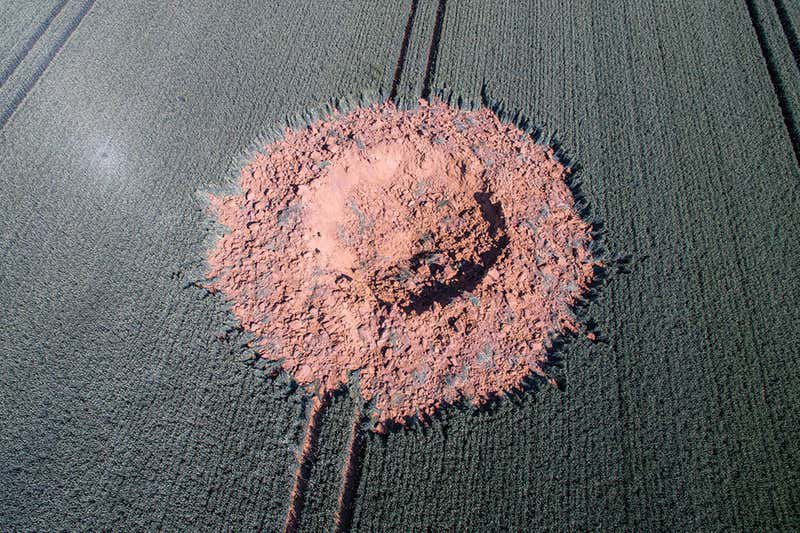
Unexploded ordinance from both world wars remains a major problem in many parts of Europe. In Germany alone, around 2,000 tonnes of unexploded ordinance are found each year. There are bullets, shells, grenades and mines as well as large bombs, and people are still killed occasionally. For instance, a builder in Euskirchen was killed in 2014 when his shovel struck a bomb.
Globally at least 6,500 people are killed or injured each year by the “explosive remnants of war”. The number is declining thanks to the 1997 Mine Ban Treaty. Many land-mines still exist in every country where wars have broken out since WWI to present.
[These devices would be hazardous for geologists doing fieldwork so beware in war-torn countries of Europe and Africa]
Managed & Built by I2M Consulting, LLC | © 2010-
