
In China First, Project Breathes New Life into Ageing Wind Turbines - 2026 
Wind Energy / Economics
Date posted: 08/23/26
Huifeng reported in late August 2026 that China has launched its first batch-scale remanufacturing project for retired wind turbines in Jiuquan, Gansu province, as an ageing fleet enters a new phase of its life cycle and Beijing seeks to encourage recycling in its massive renewable-energy sector.
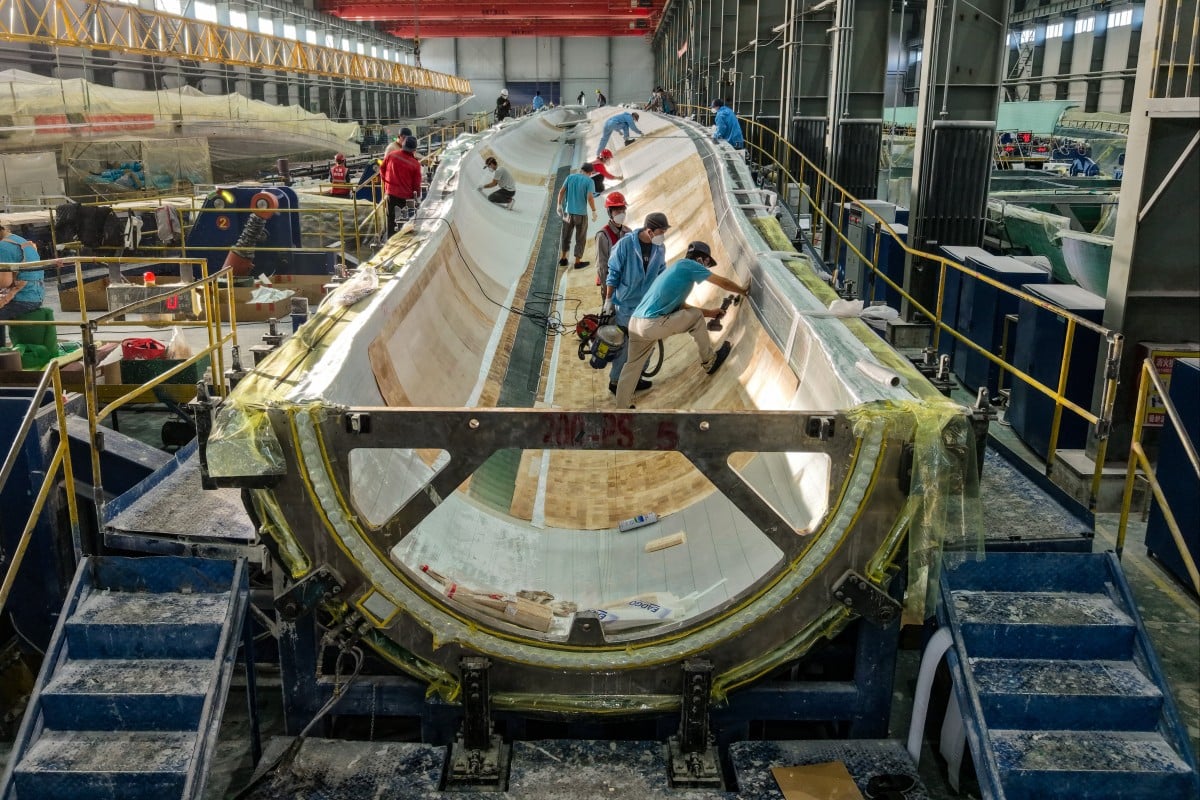
China Resources Recycling Group (CRRG) – a state-owned enterprise established in 2024 with backing from China’s State Council and several industrial giants with the aim of bolstering national resource security – said on its website that its Xinyuan Jiuquan subsidiary had begun remanufacturing an initial batch of 25 wind turbines that had been in service for more than 15 years early this month.
The machines had qualified for retirement due to degradation, falling efficiency and rising maintenance costs, the company said, but engineers remanufactured prototypes using proprietary processes, including structural damage repair, performance reinforcement and precision restoration of transmission systems.
The process improved the turbines’ performance significantly, it added, with core components approaching the standards of comparable new equipment. CRRG said they could be redeployed for distributed wind power, small self-generation plants and auxiliary industrial power supply. China’s earliest wind farms are entering a major retirement cycle, posing a growing challenge for an industry that has spent decades building the world’s largest renewable-energy fleet.
China’s cumulative installed wind capacity had surpassed 680 gigawatts by June, according to data from National Energy Administration. Meanwhile, over 30,000 turbines across the country were expected to reach their operational lifespan by 2030, which the administration’s China Power News Network said translated into 44.7GW in retired capacity and nearly 950,000 tonnes (1.05 million short tons) of waste.
Lin Boqiang, director of the China Institute for Studies in Energy Policy at Xiamen University, said establishing a circular model for renewable-energy equipment could significantly strengthen China’s global advantage in the sector.
“Resource scarcity will drive up raw material costs, giving state-owned enterprises a clear incentive to act,” he said. “Success ultimately hinges on balancing technology and cost … but given our market scale and technology, China is uniquely positioned to clear this hurdle first.”
China leads the world in building clean energy infrastructure, but its power grid can’t keep up
Jiang Dong, the head of the remanufacturing project, said retired turbines had traditionally been treated as scrap, with operators only salvaging basic metal components — leaving the overall material recovery rate at roughly 30 per cent. Hard-to-recycle composite blades were mostly placed in landfills or incinerated.
“By refurbishing core systems and recycling blade materials, this project raises the total recycling and recovery rate of retired wind turbines to 70 per cent, significantly boosting their economic value while avoiding environmental pollution,” Jiang said in a statement published on CRRG’s website.
To address industry bottlenecks such as a lack of technical standards and quality certification, CRRG said it was working with local authorities in Jiuquan to build China’s first integrated recycling and processing base. It said the facility aimed to offer full life cycle services covering “decommissioning, testing, restoration, remanufacturing and certification”, and would serve as a model for a wider network of central hubs, sorting centres and satellite warehouses across major renewable energy bases.
Zhang Min, deputy secretary general of China Green Supply Chain Alliance’s Wind Power Committee, said China led the world in recycling capability.
“Technically, we have already overcome the hurdles,” she said in a recent interview with CRRG, adding that the industry’s next challenge was to establish viable business models.
Zhang said she expected a broader commercial take-off to begin next year, driven in part by more state-owned enterprises investing in the sector.
Lin, from Xiamen University, said economics would ultimately determine how quickly the industry could scale up, because remanufactured equipment needed to be cheaper than new alternatives after accounting for all processing costs, and he estimated that large-scale recycling could take at least five years to fully emerge.
Managed & Built by I2M Consulting, LLC | © 2010-
