


UEC assembled the available ISR photos from the regulatory agency of the day in Texas. One of the best kept secrets in Texas is that uranium has been continually mined since the late 1950s. Uranium mining was initially conducted by open-pit mining followed by conventional milling to produce “yellowcake” which is harnessed to produce electrical energy in nuclear power plants.
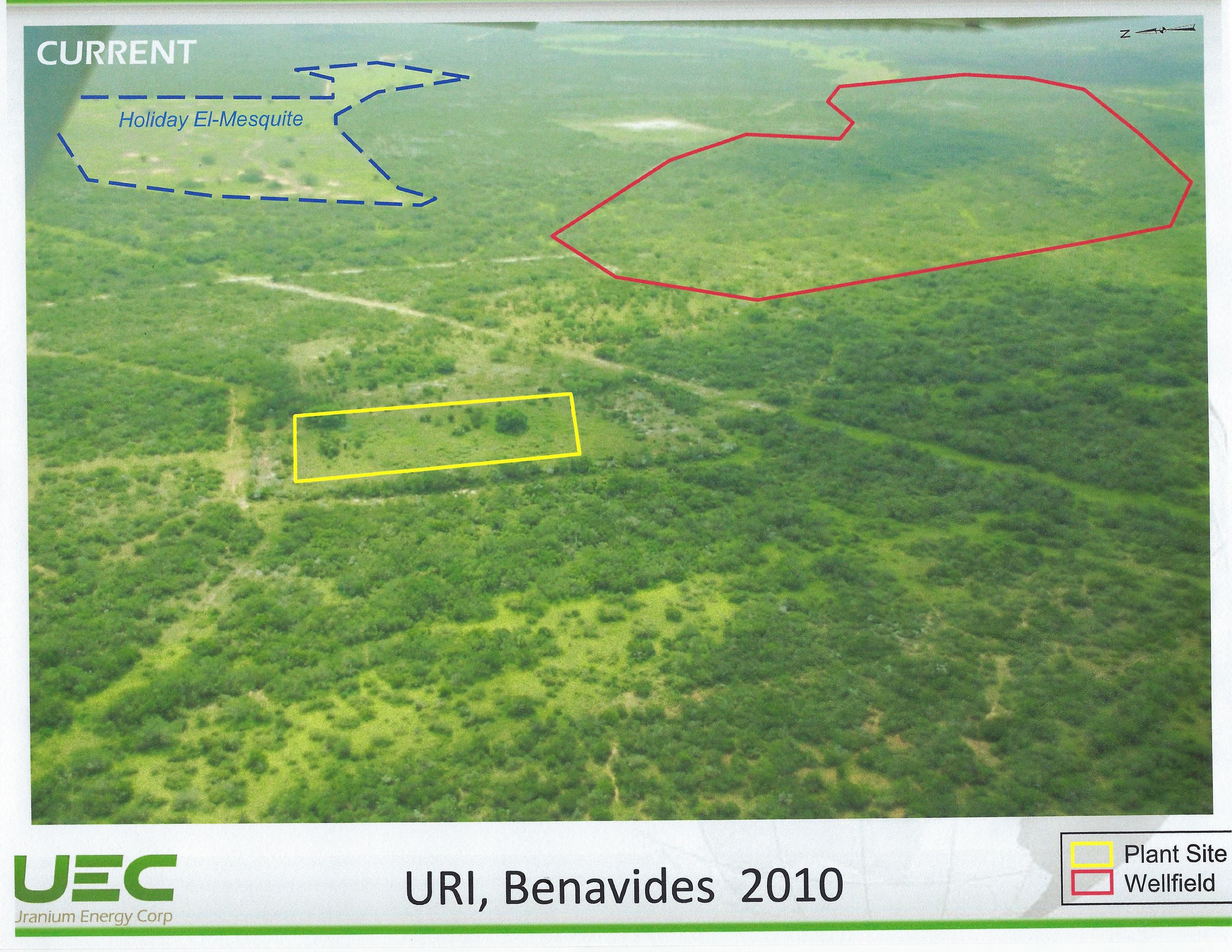
In the early 1970s, a new environmentally sensitive means of extraction was developed in South Texas addressing concerns about the disturbance of the surface of the land, dewatering portions of the aquifer to enable men and equipment to work beneath the surface, and later forming vast areas of mill tailings from the processing of ores. It was at this time that South
Texas gave birth to In-Situ Recovery (ISR) and has ever since been the ISR capital of the western world. The following images were compiled from archived and recent photographs, as well as satellite imagery over a decade of licensed ISR operations in South Texas. In each case, groundwater was restored consistent with baseline quality and approved by the Texas Commission of Environmental Quality (TCEQ).
Subsequently each wellfield and all associated physical structures and equipment were reclaimed and the land returned to the surface owner for “unrestricted use.” Surface reclamation was regulated and final approval was overseen and approved by the TCEQ. The illustrations presented show either cleared land supporting cattle operations and/or reclaimed brush suitable for nature habitat to populate.
Unless you were intimately associated with one of the projects illustrated in the following pages and knew its original location, the existence of prior mining in all these examples is nondetectable. These are successful mining legacies that are quietly unheralded, and optically undetected for all the obvious reasons.
Managed & Built by I2M Consulting, LLC | © 2010-
