

N’Guessan and six co-authors reported in 2010 that they investigated the influence of changes in the microbial community structure on reoxidation of reduced uranium during a postbiostimulation period. Effluent groundwater from acetate-stimulated sediment flow-through columns was analyzed over 60 days after acetate amendment was discontinued.
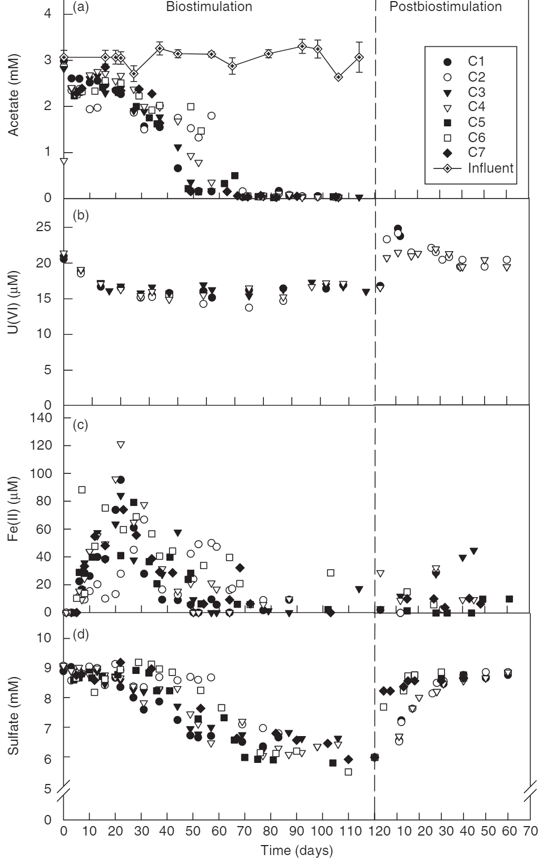 Geochemical changes in flow-through columns’ effluent
groundwater.Acetate (a), uranium (b), iron (c), and sulfate (d).
Only a small reoxidation of iron or uranium (17%) occurred in the presence of 1–2 mg L-1 O2 influent groundwater for the 2-month period. Most uranium reoxidation occurred during the first 2 weeks after biostimulation with acetate was discontinued. Groundwater and sediment microbial community compositions suggested that two processes played important roles immediately after the cessation of acetate addition.
The first process was characterized by a predominance of both sediment-bound and planktonic microorganisms most closely related to Hydrogenophaga sp., Thiobacillus sp., and Gallionella sp., which could oxidize a variety of reduced compounds.
The second process was characterized by organisms closely related to Lysobacter sp. and Sterolibacterium sp., with the potential to feed on complex organic compounds from biomass turnover. The presence of these bacteria and the lack of uranium oxidation implied that after acetate addition was stopped, reduced inorganic compounds and dead biomass became electron donors for a microbial community capable of using low ambient oxygen as a terminal electron acceptor, contributing to the preservation, at least temporarily, of biogenic U(IV).
The authors concluded, in part, that because iron or sulfur oxidizers scavenge the low DO levels (1–2 mg O2 L-1 ), as evidenced by the nondetectable DO levels in the effluent during the postbiostimulation phase, their activity may have protected the reduced uranium from remobilization (Moon et al., 2009). Uranium was detected in the column effluents during the first month, with the highest levels during the first 2 weeks of biostimulation. During this time, about 17% of the uranium that was immobilized during the biostimulation period was remobilized. As shown, the Hydrogenophilaceae family, which includes Thiobacillus sp., was only detected for times longer than 2 weeks of postbiostimulation, when uranium loss from the columns was stabilizing. Therefore, although we cannot rule out that some oxygen reacted abiotically, the results from this study suggest that the activity of oxidizing bacteria contributes towards maintaining the low oxygen levels in the subsurface, hence preventing the reoxidation of U(IV) while these bacteria are actively consuming the DO.
Because uranium remobilization had taken place before the detection of these oxygen-consuming organisms, the results show that abiotic oxygen utilization (for the oxidation of reduced sulfur, iron, and organic carbon) seems to be too slow to prevent oxygen from reaching much of the reduced uranium. Hence, biological reoxidation processes will have to be included in models that are being developed to assess the fate and transport of uranium during biostimulation.
Managed & Built by I2M Consulting, LLC | © 2010-
