

Hernandez reported in later May 2026 that Radiant Industries wants to become the first American company to successfully build a new generation of small nuclear reactors set for eventual deployment in Aurora, Colorado.
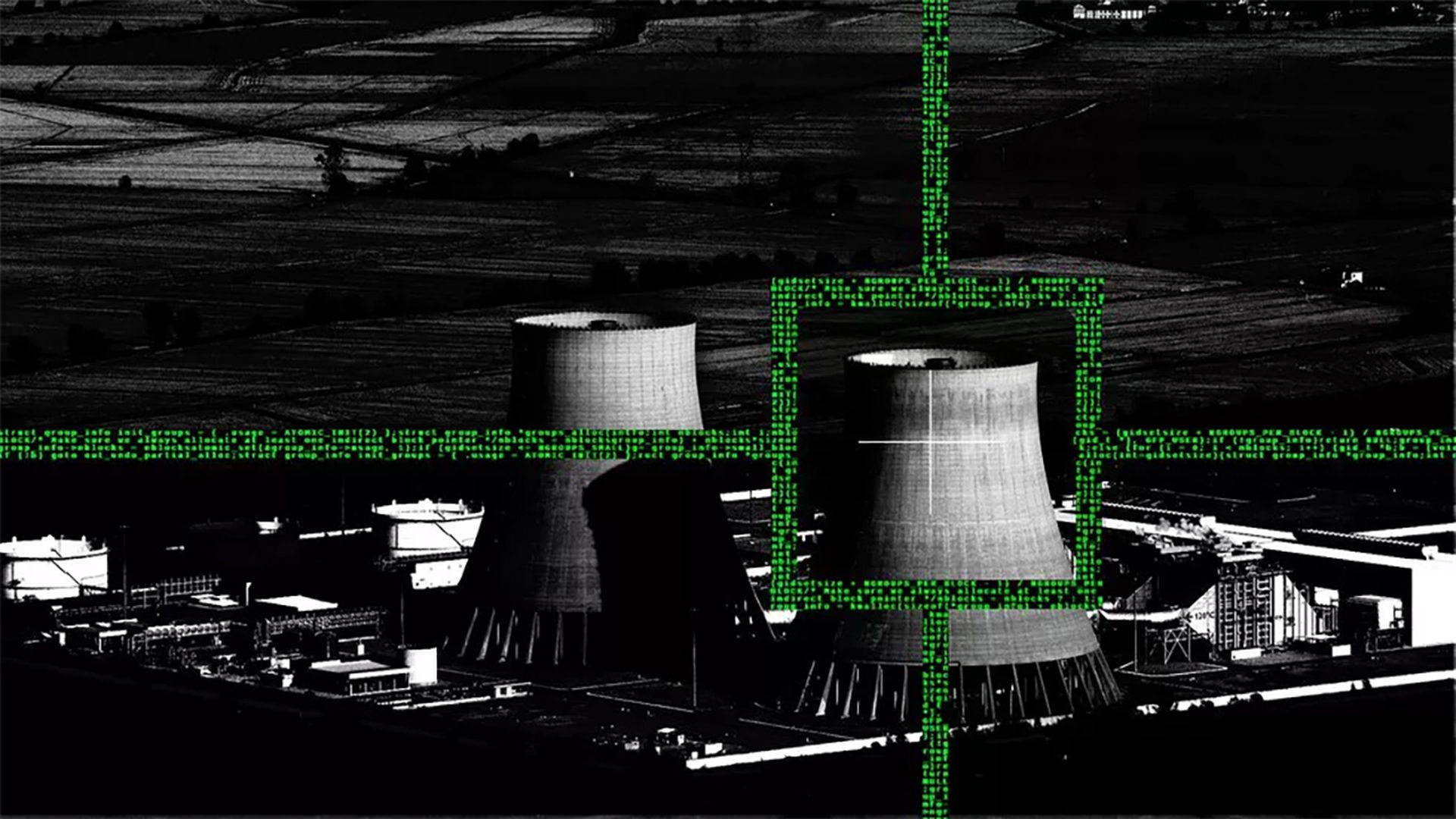 Illustration: Rebecca Zisser/Axios
Why it matters: A decision tied to the current White House Administration's push to expand nuclear power, as Joe Birden did during his term, could put a small but potent reactor near hundreds of backyards in Colorado's third-largest city. [Bias Alert: Fear pandering right off by this author? Notice photo in the crossheirs of a sniper shooting at a nuclear power plant?]
The goal is to provide uninterrupted power to the base, Radiant's chief nuclear officer Rita Baranwal tells Axios. The unit would be portable and designed to withstand extreme weather. Radiant plans to begin testing its reactor at the Idaho National Laboratory this summer, a milestone that would make it the first U.S. company to reach this stage, Baranwal adds.
The company plans to gradually build up the reactor's power capacity, with the eventual goal of generating continuous power for 150 hours. The federal government wants a portable nuclear reactor operational by 2030 or sooner at three potential sites, including Aurora.
Threat level: The public's perception of nuclear power often centers on the risk of catastrophic nuclear meltdowns.
Reality check: The U.S. has never experienced a full-scale commercial nuclear meltdown.
Baranwal says the fuel used by Radiant's model is "meltdown proof."
How it works: Called TRISO particles, this fuel source uses tiny amounts of uranium encased in layers of carbon and silicon carbide, or roughly the size of a poppy seed.
"It's really important that we have a type of fuel that provides a lot of safety and defense," Baranwal tells us.
The intrigue: Some Aurora residents welcomed the announcement, including one man who called it a "cost of living next to a military base."
It's a markedly different response from the backlash to plans last year for a similar reactor at Denver International Airport, although the airport has continued to explore the idea.
The other side: Costs are a concern — although maybe not for the world's richest military, where "cost is no object," former University of Colorado's Renewable and Sustainable Energy Institute fellow Chuck Kutscher tells Axios,[who is a wind and/or solar-funded researcher no doubt]
Even small reactors may not be cost-effective for the amount of power they produce, Kutscher said. A mobile reactor deployed in a war zone — one scenario envisioned for Radiant's technology — could become a target for attacks or misuse by adversaries, he adds.
The bottom line: Kutscher says nuclear power has maintained a strong safety record in the U.S. But the industry still faces unresolved challenges, including how to safely store radioactive waste long-term, something the U.S. has not effectively solved.
{Shame on this author (and AXIOS) for putting out such unadulterated BS].
Managed & Built by I2M Consulting, LLC | © 2010-
