

Fexl reported in early 2026 that the Moon (Luna) is no longer a static celestial body that we admire from a distance. It is a complex geological world with active water cycles, exotic carbon chemistry, potential fusion fuel reserves, and a volcanic history that defies our models. The data returned by the Chang'e missions have systematically dismantled the old view of a dry, dead Moon.
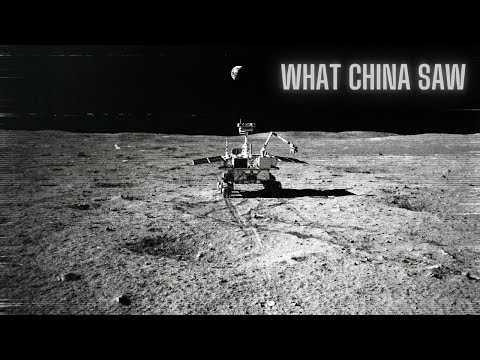
In its place, we have found a world that is rich in resources and ready for habitation. The question is no longer if humanity will return to the Moon to stay. The question is how fast we can build the infrastructure to harvest what we now know is waiting for us.
China's lunar missions reveal unexpected findings on the far side, challenging long-held beliefs about the moon's composition and history. A systematic exploration, including orbiters and sample returns, provides unprecedented data. This program may revolutionize our understanding of the moon's potential for future human settlement.
▀▀▀▀▀▀ Timestamps
0:00 The Moon 1:47 The "Chang'e" Strategy
5:46 The Solar Wind "Batteries"
9:23 The Hydrated Mineral (ULM-1)
12:50 The "Exotic" Carbon (Natural Graphene)
17:30 Chang'e-6 Mission Profile
21:30 Volcanic Activity
25:20 The ILRS & Future Base
▀▀▀▀▀▀
Primary Sources:
He et al. (2023) - Solar Wind-Derived Water: https://www.nature.com/articles/s4156...
Wei et al. (2024) - Molecular Water Mineral (ULM-1): https://www.nature.com/articles/s4155...
Zhang et al. (2024) - Natural Graphene: https://academic.oup.com/nsr/article/...
Chinese Academy of Sciences (2026 Status): https://www.sciencedaily.com/releases...
Managed & Built by I2M Consulting, LLC | © 2010-
