

Bryce opined in late January 2026 that the New York Public Service Commission approved Consolidated Edison’s request for a rate hike that will result in an additional $615 per year in gas and electricity costs for the average New York City resident by 2028. While bureaucrats are insisting that “law, not politics” is driving the cost increases, the truth is that over the past few years, New York’s Democratic politicians have made a series of disastrous energy decisions.
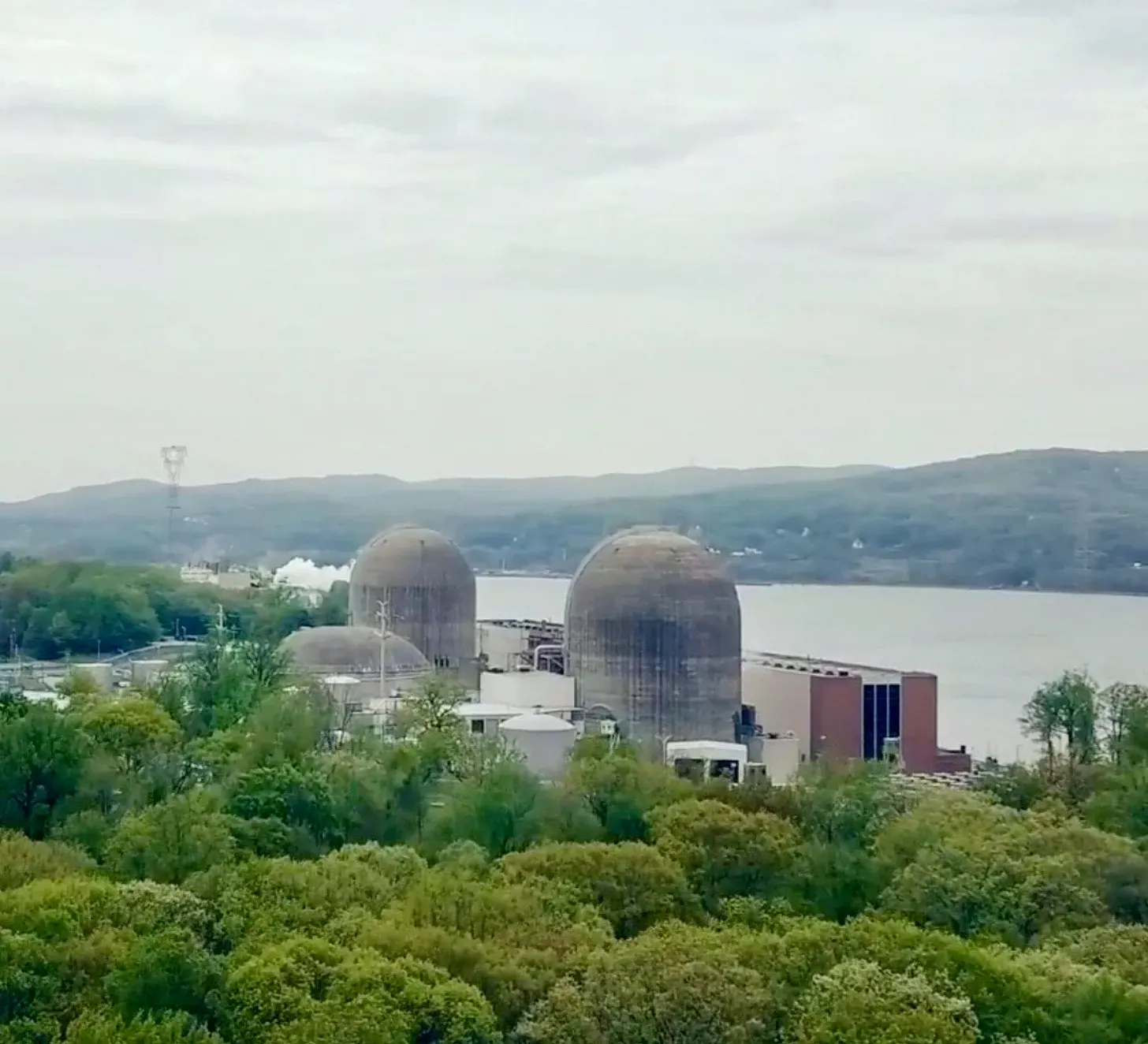 The Indian Point Energy Center in Buchanan, New York, in 2018. The plant
provided about 25% of New York City’s electricity before it was prematurely
shuttered in 2021. Photo credit: Tyson Culver and Juice: How Electricity
Explains The World.
Indeed, despite numerous warnings about the staggering costs that would result from closing the Indian Point nuclear power plant and attempting to force New York’s grid to run solely on weather-dependent sources of generation, they pushed forward with climate policies that are now showing up on consumers’ monthly bills.
I went on to explain that New York’s electricity rates are already among the highest in the country and that they are rising faster than any other state in the US, after only California. I also talked about how the closure of the Indian Point nuclear plant has come back to haunt the state. For me, the closure of that plant is personal. I have been to dozens of industrial sites and power plants over the course of my career. But my visit to the plant in 2018, while we were filming Juice: How Electricity Explains The World, made me understand at a visceral level why nuclear energy is so vital to our future.
This article is (here).
If we are serious about land sparing and providing safe and reliable power to the economy, nuclear has to be a big part of our future energy plans. And yet, for purely political reasons, in a move that was cheered by Kit Kennedy and her fellow know-nothings at the Natural Resources Defense Council (2024 revenue: $204 million), Indian Point was shut down. Here’s how I wrote about it in the Post:
"Of all the bad moves made by New York’s leaders, the worst one — a decision that deserves its own wing in the Energy Foolishness Hall of Fame — is the premature closure of Indian Point in 2021. That move stripped New York City of its single most important energy asset. From a footprint of just one square kilometer on the Hudson River, the two reactors at Indian Point were generating about a quarter of Gotham’s electricity."
Due to space limitations, I couldn’t discuss the land-use battles raging in New York. In previous columns in the Post (see here, here, and here), I have shown how the backlash against solar and wind projects across rural New York is derailing the state’s renewable goals. I have catalogued that opposition in the Renewable Rejection Database, which now includes more than 80 rejections of wind or solar projects in the state since 2015. Of course, there’s also fierce opposition to offshore wind.
I encourage you to read the entire piece in the Post by clicking here.
PowerGen Themes: Soaring Demand, Onsite Generation, & Overwhelmed Contractors
I was in San Antonio this week for a speaking engagement and to attend the PowerGen conference. Some 8,000 people attended the event, which, according to the organizers, was 1,000 more than last year. As you might expect, all of the sessions that focused on data centers were packed. Indeed, one session, captioned “Future-Proofing Onsite Generation For Data Centers,” was standing room only. The overall themes that were repeated throughout the conference were soaring power demand and the need for data centers to generate their own electricity. Those themes were obvious among the exhibitors at the trade show. Many of the exhibitors were showing large natural-gas-fired engines. I will be writing about engines soon.
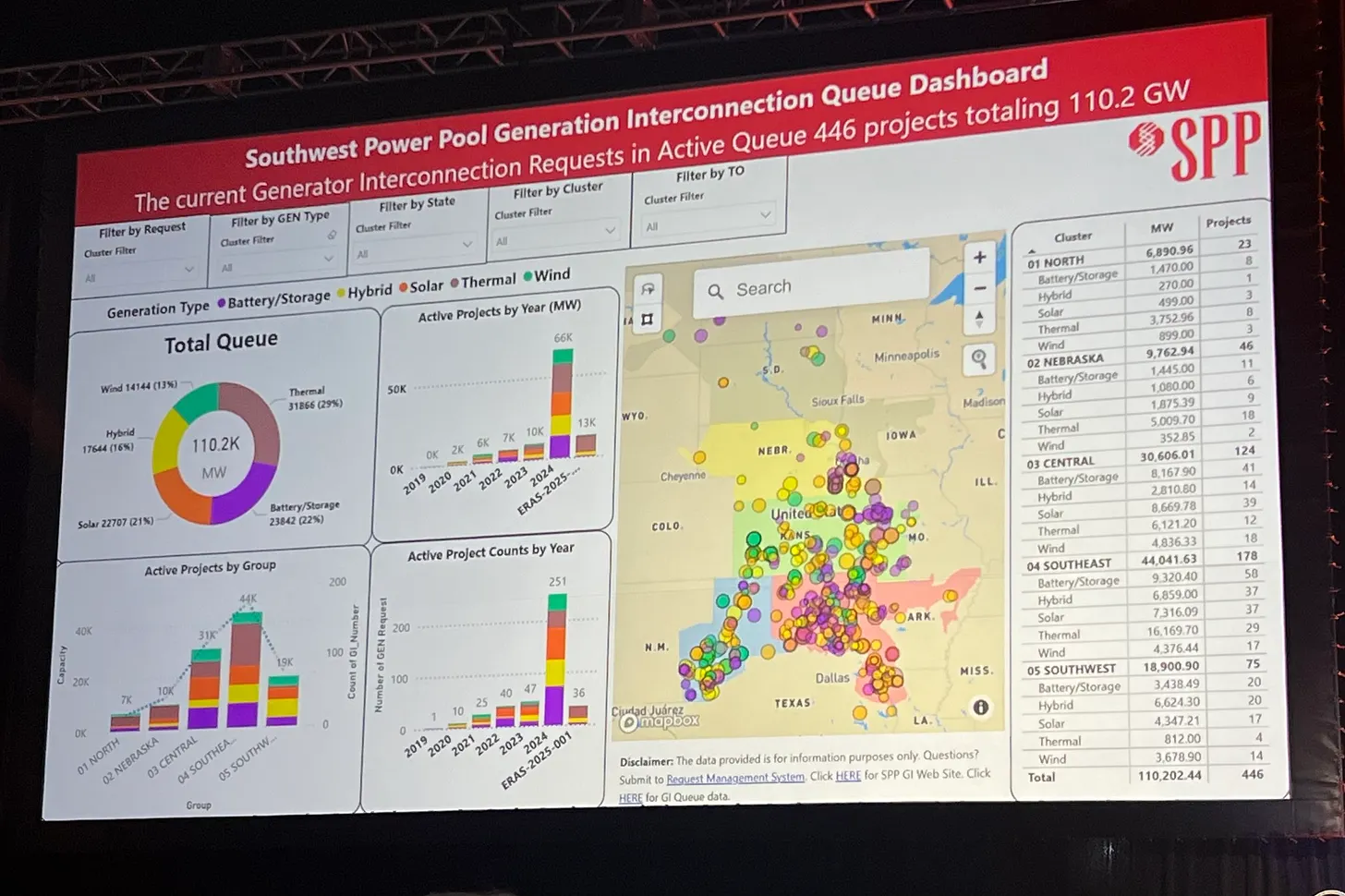
Regarding soaring demand, the slide above was presented by Casey Cathey of the Southwest Power Pool. During a session on Tuesday, he said that SPP is now seeing “4 to 5% load growth. That’s unprecedented for us.” As shown above, SPP now has 110 gigawatts of projects in its interconnection queue. As Cathey explained, “That’s twice our load.” He added that SPP’s reserve margins are being eroded and that the RTO is facing “significant challenges” as it tries to meet soaring demand.
Another theme in San Antonio was the constraints on the system. Big Tech and some of the big utilities are hoping to add dozens of gigawatts of new generation capacity over the next year or two, but the contractors who can build those power plants don’t have the resources to do so. On Wednesday, a good friend of mine who works for a large engineering, procurement, and construction firm told me that in January alone, his firm has turned down four generation projects, each worth between $2 billion and $4 billion. “We are swamped,” he said. “We are up to our necks.”
My friend, who has been in the construction sector for more than 30 years, said, “I don’t have to sell anything anymore….After two decades of begging for work, I’m now telling these CEOs, ‘I can’t do it.’”
Media Hit Resurfaces Down Under
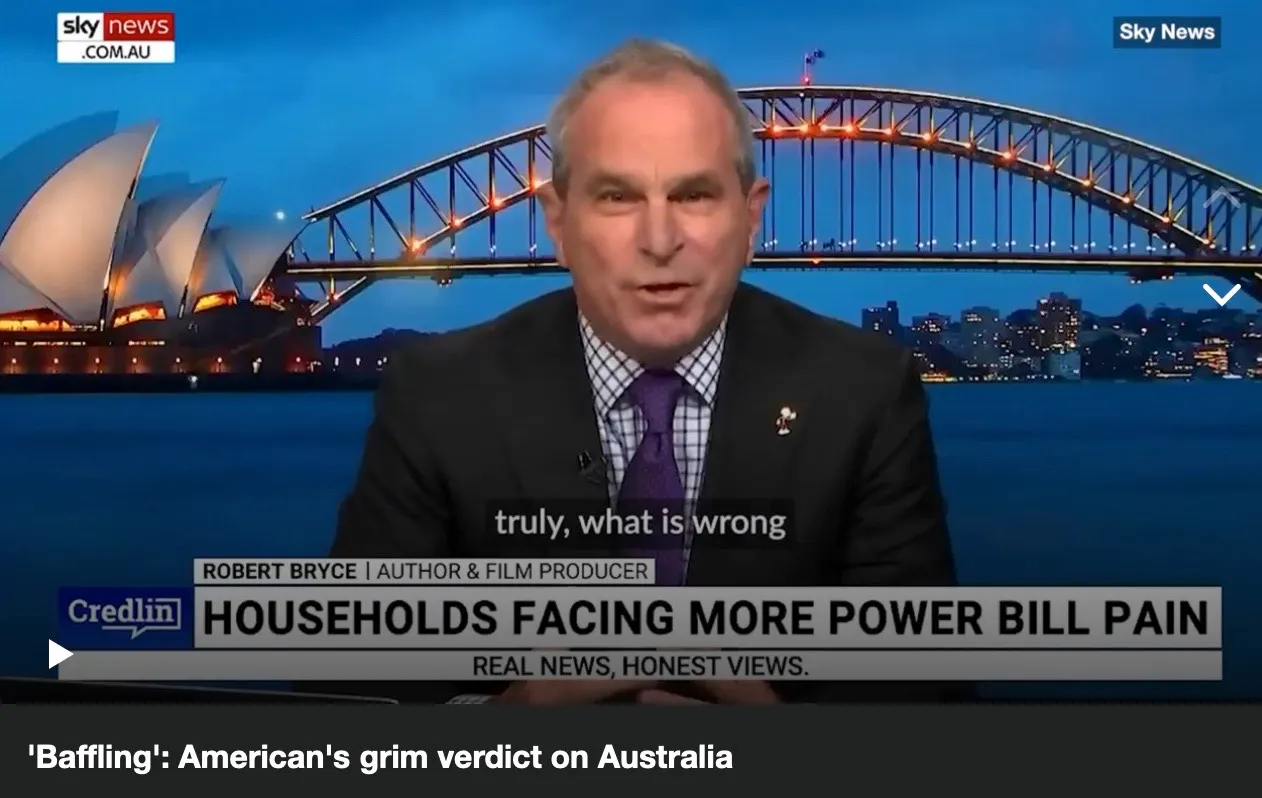
Last June, I spent two weeks on a speaking tour in Australia that was sponsored by the Institute of Public Affairs. While there, I appeared on Sky News to talk about the Aussies’ terrible energy policies and soaring electricity prices. To my surprise, that TV interview has, according to News Corp Australia’s news.com.au, gone “viral.” On January 14, the site published a piece on that interview which began, “He came, he saw, he lambasted.” It continued:
"American author Robert Bryce tore into Australia’s energy policy during a speaking tour hosted by the conservative think tank The Institute of Public Affairs (IPA). In a resurfaced interview with Peta Credlin on Sky News, Mr Bryce made clear what he thought of Australia’s apparent refusal to harness its own natural resources.
“Truly, what is wrong with you Australians? You have natural resources that are the envy of the rest of the world,” he fumed. “You’re the Saudi Arabia of the Southern Hemisphere. You export seven times more coal than you consume, and yet you don’t want to burn coal. You have nearly 30% of the world’s uranium, and you won’t build nuclear reactors."
Lorin and I had a wonderful time during our tour with the IPA. It’s fun to see a reminder of that tour.
Managed & Built by I2M Consulting, LLC | © 2010-
