
Potter reported at the end of July 2025 that China's ambitious unveiling of the CFR-1000, a next-generation fast neutron reactor, promises to reshape the global energy landscape with its potential to power a million homes while advancing nuclear fuel efficiency and sustainability.
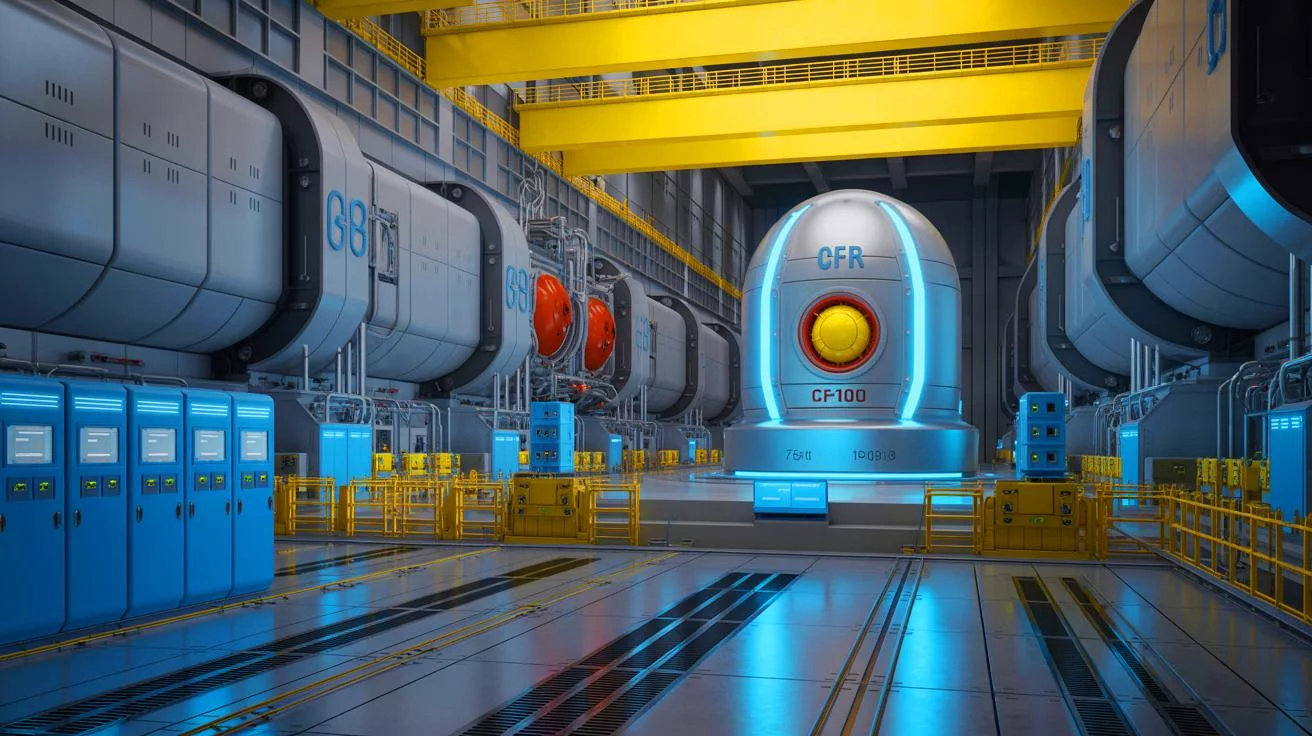 Illustration of China's CFR-1000 nuclear reactor design, generated by artificial intelligence.
China’s unveiling of the CFR-1000 reactor, a next-generation fast neutron nuclear reactor, marks a significant milestone in nuclear energy development. Promising to generate up to 1.2 gigawatts (GW) of power, this reactor could potentially supply electricity to approximately one million homes. As the world grapples with energy demands and environmental concerns, China’s advancement in nuclear technology could reshape global energy strategies. The CFR-1000, still awaiting regulatory approval, is expected to become operational by 2034. As a commercial-scale unit, it distinguishes itself from smaller experimental reactors and could play a crucial role in China’s future energy plans.
The Potential of Fast Neutron Reactors
The CFR-1000 is part of a new wave of fourth-generation nuclear reactors that employ fast neutrons rather than the slow neutrons used in most current thermal reactors. This design eliminates the need for materials like water to slow down neutrons, relying instead on high-speed neutrons to sustain nuclear fission. This has significant implications for fuel efficiency and energy output.
Fast neutron reactors offer a promising path toward closed-loop fuel cycles. They have the ability to “breed” new fuel, such as plutonium-239, from non-fissile materials like uranium-238. This process can significantly reduce nuclear waste and the necessity for fresh uranium mining. The potential to reuse nuclear waste aligns with global efforts to minimize environmental impacts and promote sustainable energy solutions.
Innovative Cooling Techniques
One of the CFR-1000’s notable features is its use of liquid sodium as a coolant, in place of the more commonly used water. Liquid sodium transfers heat more efficiently and enables the reactor to operate at higher temperatures. This results in enhanced efficiency and potential energy output.
The use of sodium also mitigates some of the risks associated with traditional water-cooled reactors, such as the potential for steam explosions. However, it introduces its own set of challenges, including the need for careful handling to avoid chemical reactions. As the CFR-1000 progresses toward operational status, these technical considerations will be closely monitored by both Chinese authorities and international observers.
Challenges and Regulatory Hurdles
Despite its promising features, the CFR-1000 faces significant regulatory scrutiny before it can become operational. Nuclear safety remains a paramount concern, particularly with fast neutron reactors, which have different operational characteristics compared to conventional reactors. The process of obtaining approvals can be lengthy and complex, involving multiple stakeholders and extensive safety evaluations.
Moreover, the international community will be watching closely, not only due to safety concerns but also because of the geopolitical implications of such advancements. China’s leadership in nuclear technology could shift global energy dynamics and influence international policies. The CFR-1000’s journey to approval and operation will likely be a topic of international discourse in the coming years.
Global Implications and Future Prospects
As China advances with the CFR-1000, other nations may need to reassess their nuclear strategies. The potential for fast neutron reactors to provide more efficient and sustainable energy solutions could influence global energy policies. Nations striving for energy independence and reduced carbon emissions may look to similar technologies to bolster their energy portfolios.
The CFR-1000 could serve as a benchmark for future nuclear developments, inspiring further research and investment in this area. As the world seeks to balance energy needs with environmental responsibilities, the role of nuclear power, particularly advanced reactors like the CFR-1000, could become increasingly significant. However, it remains to be seen how other countries will respond to China’s technological leap forward.
The development of the CFR-1000 represents a significant step in nuclear energy innovation. As it moves toward operational status, the reactor could have far-reaching impacts on global energy strategies and environmental sustainability. How will other nations adapt to this shift in nuclear technology, and what role will fast neutron reactors play in the future of energy production?
In summary:
⚡ China unveils the CFR-1000, a fast neutron reactor with the potential to power one million homes.
Also see: https://www.energy-reporters.com/news/theyve-built-a-reactor-that-breeds-its-own-fuel-china-advances-next-gen-gigawatt-nuclear-design-poised-to-redefine-global-energy-landscape/
Managed & Built by I2M Consulting, LLC | © 2010-