

Cruz reported in mid-June 2025 that China's groundbreaking Linglong-1 small modular reactor, poised to revolutionize global energy dynamics, promises unprecedented efficiency and adaptability in the quest for sustainable power solutions. China is leading the charge in the world of nuclear energy with its groundbreaking Linglong-1 modular reactor.
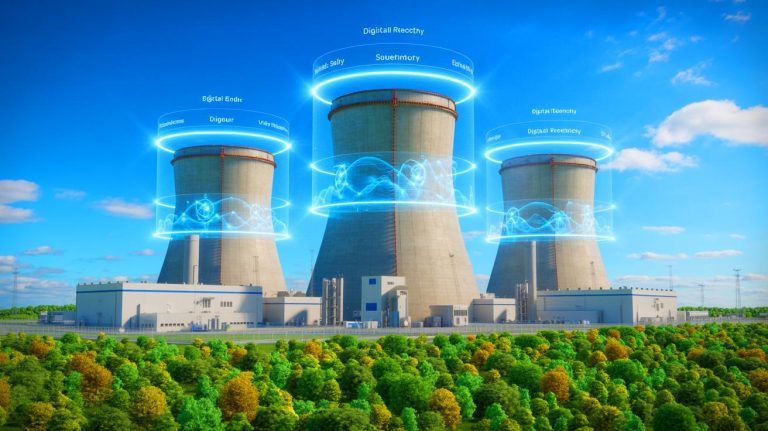 "Reactor Has a Mind Now”: U.S. Nuclear Plants Given Digital Twins That Predict
Failures Before They Even Exist
As nations grapple with climate change and energy demands, China’s innovation in this field is not just an achievement but a signal of a significant shift in power dynamics. The Linglong-1, a compact nuclear reactor, promises to deliver an impressive one billion kilowatt-hours annually, enough to power 526,000 homes. This is a testament to the potential of small modular reactors (SMRs) in revolutionizing how we approach sustainable energy. With Linglong-1, China is not only setting a new standard but also challenging the West to keep up.
The Technological Marvel of Linglong-1
In the world of nuclear energy, size does not always equate to power. The Linglong-1, with its compact design, embodies this truth. This small modular reactor (SMR) is not much larger than a small convenience store, yet it possesses the capability to generate substantial power. The 125,000-kilowatt reactor is poised to deliver a remarkable one billion kilowatt-hours per year. Such innovation underscores China’s commitment to pushing the boundaries of nuclear technology. Importantly, the Linglong-1 isn’t just about power; it’s also about adaptability. Designed to fit into varied landscapes, it can be deployed in remote areas, industrial centers, and even mining sites, making it a versatile solution for regions in need of efficient energy sources.
Moreover, the safety features of this reactor are noteworthy. Unlike traditional reactors, the Linglong-1 boasts a passive safety system. In the event of a malfunction, the reactor is designed to shut down autonomously, eliminating the need for human intervention. This feature not only enhances safety but also builds public trust in nuclear technology. By pioneering such advancements, China is setting a new benchmark in nuclear reactor design, signaling a shift towards more secure and sustainable energy solutions.
A Strategic Component of China’s Energy Plan
The development of Linglong-1 is not an isolated project but a strategic element of China’s broader energy ambitions. It fits seamlessly into the country’s 14th Five-Year Plan (2021-2025), which emphasizes clean energy and technological innovation. China’s focus on SMRs aligns with its objectives to reduce carbon emissions and combat climate change. The commitment to nuclear power is part of a larger strategy to diversify energy sources and enhance self-reliance in energy production.
Interestingly, the international community has taken note of this progress. In 2016, the International Atomic Energy Agency (IAEA) validated the safety of the Linglong-1 project, endorsing China’s approach to next-generation nuclear technology. As the world shifts towards sustainable energy, China’s leadership in SMRs could redefine global energy policies. By investing in cutting-edge nuclear technology, China is not only addressing domestic energy needs but also positioning itself as a leader in the global energy market. This strategic positioning strengthens China’s influence and sets a precedent for other nations to follow.
Environmental Impact and Global Implications
The environmental benefits of Linglong-1 are substantial. By deploying this reactor, China aims to cut carbon dioxide emissions by 880,000 tons annually. This reduction is equivalent to planting 7.5 million trees, illustrating the significant environmental impact of SMRs. The reactor offers a clear message: nuclear energy can coexist with environmental stewardship. As the world seeks to mitigate the effects of climate change, China’s advancements in nuclear technology provide a compelling case for incorporating nuclear power into the renewable energy mix.
Globally, the introduction of Linglong-1 has far-reaching implications. Many countries face the challenge of moving away from fossil fuels while ensuring energy security. The modular design and scalability of SMRs make them an attractive option for nations looking to transition to cleaner energy. China’s success with Linglong-1 could inspire other countries to invest in SMR technology, potentially leading to a worldwide shift in energy production methods. As countries look to China for guidance, the Linglong-1 project represents a pivotal moment in the evolution of nuclear energy.
China’s Ambitions Beyond Its Borders
China’s vision for Linglong-1 extends beyond its domestic energy market. The country is keen to export this technology, making Linglong-1 a model for global adoption. Many nations are exploring alternatives to coal and other fossil fuels, but the cost and complexity of traditional nuclear reactors pose challenges. SMRs like Linglong-1 offer a feasible solution, being more cost-effective and easier to integrate into existing energy infrastructures.
The potential for international cooperation in SMR technology is immense. Countries that once hesitated to invest in nuclear power may find the affordability and safety of SMRs appealing. As China seeks to establish itself as a leader in nuclear technology, the successful deployment of Linglong-1 could pave the way for collaborative efforts in energy innovation. The question remains: will other countries embrace this nuclear revolution, or will China’s advancements widen the gap in global energy leadership?
The advent of the Linglong-1 marks a new chapter in the narrative of nuclear energy. This pioneering reactor not only showcases China’s technological prowess but also offers a glimpse into the future of sustainable energy. As nations grapple with climate change and energy security, the role of SMRs in the global energy landscape is poised for expansion. Will the world follow China’s lead in embracing modular nuclear technology, or will it chart its own course in the quest for sustainable energy solutions, [such as wind and solar, hydrogen, even coal?]
Managed & Built by I2M Consulting, LLC | © 2010-
