

An unknown reporter of Reuters reported that Westinghouse will start building 10 new AP1000 reactors by 2030 in the United States. The White House has encouraged acceleration by the nuclear energy industry and said the U.S. aims to have 10 new large reactors with complete designs under construction by the end of the decade.
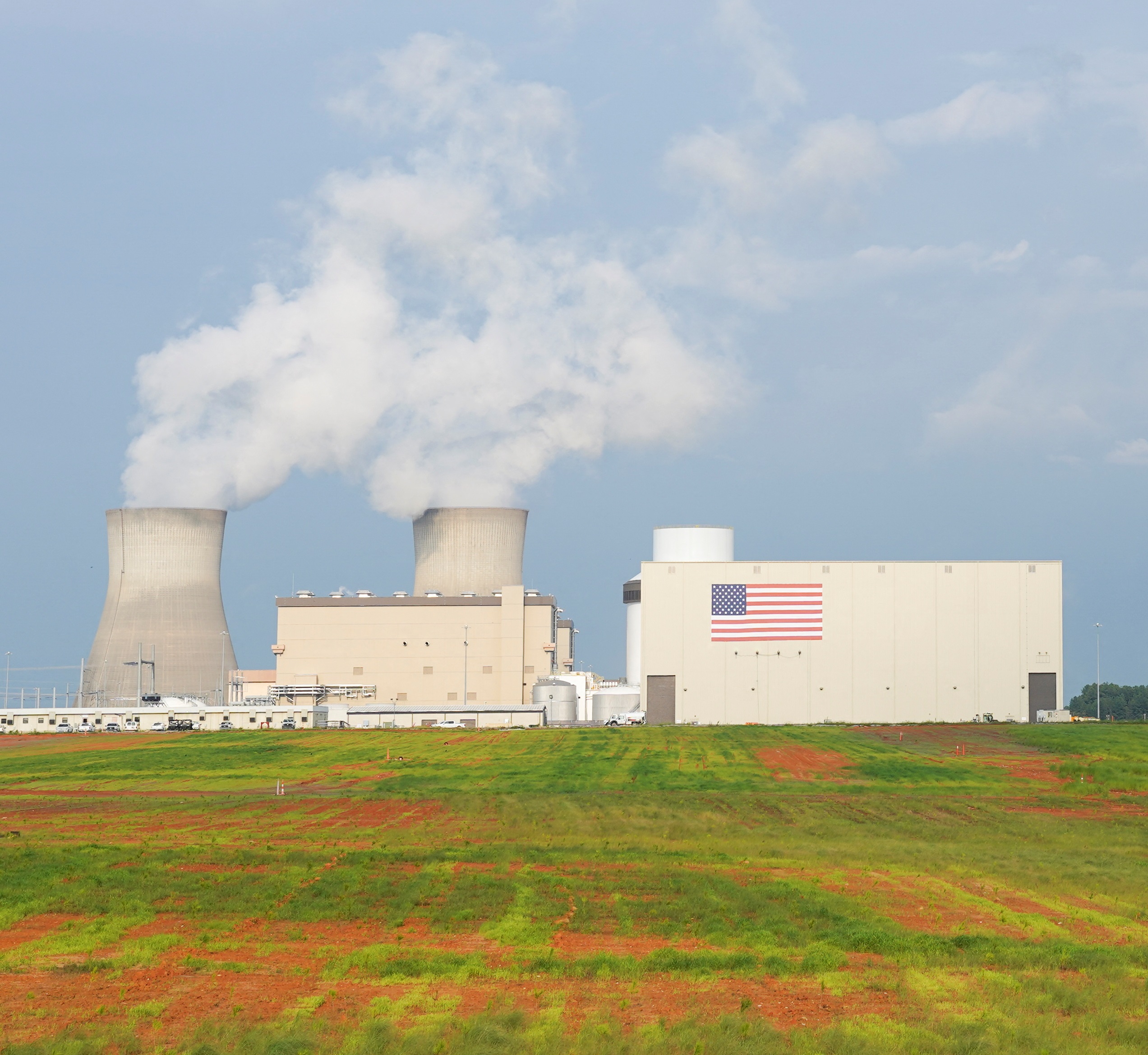 Image: REUTERS/Megan Varner
Westinghouse Interim CEO Dan Sumner said the company plans “to partner with companies across our industry to mobilize a plan to deliver 10 AP1000 reactors in the U.S. with construction to begin by 2030," and later issued a statement re-confirming the plans but did not say what companies it plans to partner with or how it will finance the construction of the reactors, which will cost tens of billions of dollars.
The Vogtle 3 and 4 nuclear units, which feature AP1000 reactors, in Georgia were brought online in 2023 and 2024. Construction was completed seven years behind schedule and costs more than doubled from the initial projection of $14 billion, but their completion left behind a supply chain that could pave the way for the installation of new pressurized water reactors (PWRs), experts told Reuters Events last month.
Westinghouse will also partner with Google Cloud “to accelerate the construction of advanced Westinghouse nuclear reactors and improve operations in our current nuclear fleet,” it said. Westinghouse’s AP300 Small Modular Reactor (SMR) is a 300 MWe pressurized water reactor, designed to be a compact, modular version of the much larger AP1000.
Historically, the nuclear industry has suffered from long timelines and cost overruns, but nuclear companies say strong demand for clean power from Big Tech companies such as Google, Amazon and Microsoft, and higher energy prices, have increased appetite for nuclear construction and helped to derisk projects. Power consumption by data centers is on track to account for almost half of the growth in U.S. electricity demand by 2030, the International Energy Agency (IEA) said in a special report in April 2025.
NRC grants Palisades key restart approval
The U.S. Nuclear Regulatory Commission (NRC) has formally approved Holtec International’s request to transition the Palisades Nuclear Plant from decommissioning status back to an operating license, the company said. Holtec is on track to restart the 800 MW Palisades Nuclear Plant in Michigan this year, a project first announced in 2022. Holtec is also seeking to install two SMR-300 at Palisades in a partnership with Hyundai Engineering & Construction, as part of a plan to build a 10 GW fleet of SMRs in North America through the 2030s.
“The NRC’s action reflects its thorough review of Palisades’ licensing basis under the agency’s existing regulatory framework, marking the first time a previously shut-down U.S. nuclear plant has received approval to return to operations,” the company said in a statement.
While these approvals will allow Holtec to load fuel, “there are still several licensing actions under NRC review and additional requirements that need to be met before the plant can start up under the original operating license, which would expire March 24, 2031,” NRC warned.
U.S. Nuclear Capacity Additions by Year of Initial Operation (1970-2023)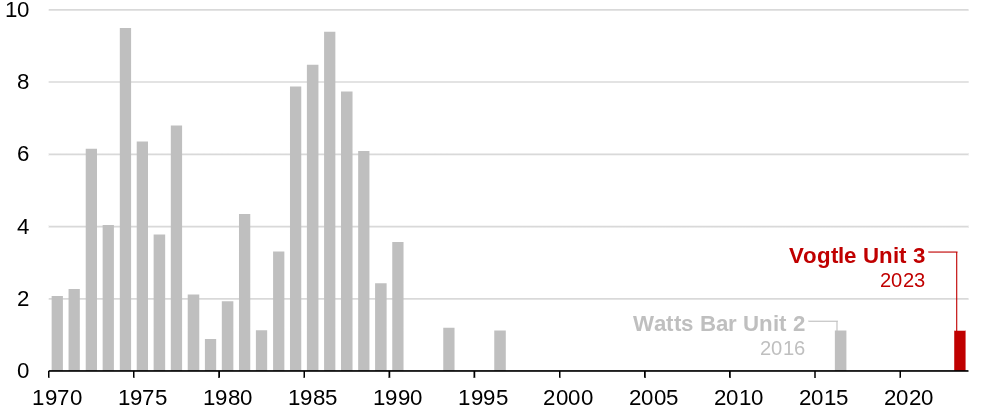 Source: U.S. Energy Information Administration, Preliminary Monthly
Electric Generator Inventory.
In May, the NRC issued an environmental permit for the Palisades restart, clearing a major regulatory hurdle for the project. Holtec signed a multi-decade power purchase agreement (PPA) in 2023 to sell energy from Palisades to Wolverine Power Cooperative, a not-for-profit supplier of energy to rural communities across Michigan.
US national laboratory implements AI to accelerate permitting
Microsoft and the Idaho National Laboratory (INL) have formed a partnership that will apply artificial intelligence tools to help nuclear companies compile documents to secure licenses for new nuclear power plants. The partners will use Microsoft's AI technology to generate engineering and safety analysis reports that are part of the application process to obtain construction and operation licenses from the Nuclear Regulatory Commission (NRC) and the Department of Energy (DOE).
The technology can be used for the licensing of light water reactors (LWRs) and upgrades to existing LWRs, as well as for the licensing of advanced reactors, the INL said in a statement.
“This is a big deal for the nuclear licensing process,” said Jess Gehin, associate laboratory director for Nuclear Science and Technology at INL. “Introducing AI technologies will enhance efficiency and accelerate the deployment of advanced nuclear technologies,” he added.
US Nuclear Power Plants in Operation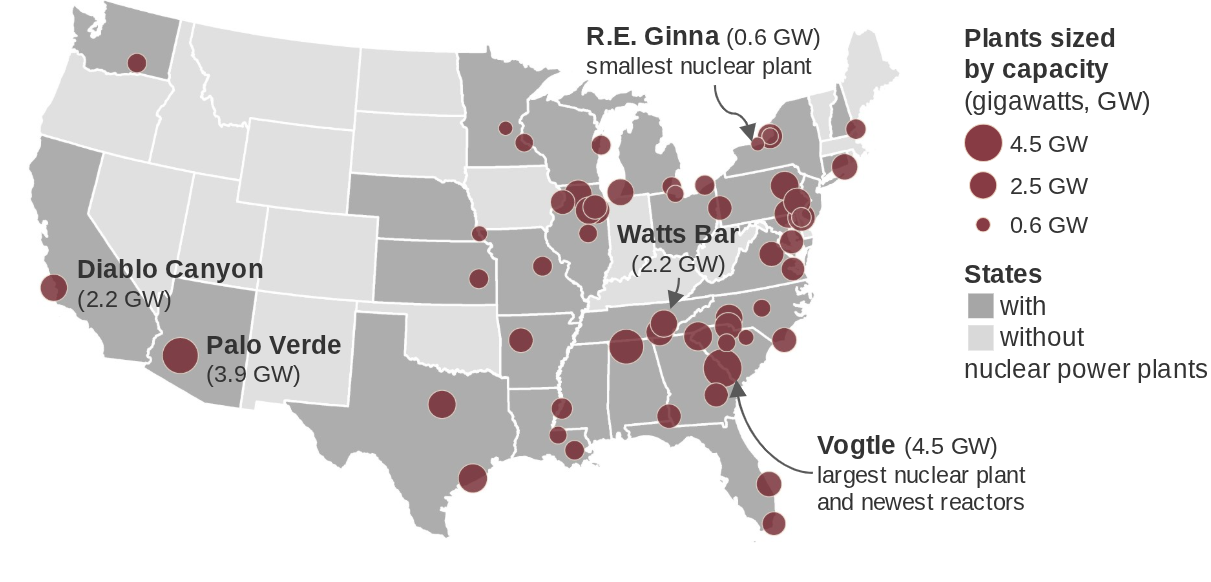 Source: U.S. Energy Information Administration, Preliminary Monthly
Electric Generator Inventory (February 2025)
A week later, INL announced it will work with Amazon Web Services to develop AI tools “to reduce the costs and timeframes of designing, licensing, building and operating nuclear facilities.” These tools could also be used to advance deployment of new advanced reactors and to autonomously operate nuclear reactors. INL’s new partnerships come after President Trump in May signed executive orders to fast-track the licensing process for new nuclear power plants, aiming to shorten what is often a multiyear process into as little as 18 months, as AI data centers create soaring demand for clean energy.
Fusion developer CFS deepens partnership with Google
Nuclear technology developer Commonwealth Fusion Systems (CFS) on June 30 announced a strategic partnership with Google that includes a 200 MW power purchase agreement (PPA) for CFS' 400 MW ARC facility planned in Virginia. The plant is expected to start producing power in the early 2030s.
Google has been an investor in CFS since 2021 and the deal will increase its investment stake in the Devens, Massachusetts-based company and give it the option to purchase additional power from future CFS plants. Financial terms were not disclosed.
“Fusion power is within our grasp thanks in part to forward-thinking partners like Google, a recognized technology pioneer across industries,” Bob Mumgaard, the CEO and Co-founder of CFS, said in a statement.
CFS is now building SPARC, a donut-shaped machine that relies on powerful magnetic fields to generate fusion energy. SPARC, which is the precursor of the future 400 MW ARC facility, is expected to demonstrate net energy gain across the plasma by 2027 – a threshold that would prove that the device can generate more energy than it consumes. CFS said it has raised more than $2 billion in capital since it was founded in 2018.
EDF to spend 6 billion euros to upgrade 20 nuclear reactors
French utility EDF on July 3 said it plans to spend 6 billion euros ($7.05 billion) to extend the life of 20 nuclear reactors in France whose operating licenses are set to expire between 2026 and 2040. The announcement comes after France’s nuclear regulator ASN said that state-owned EDF could proceed with the upgrade of safety standards at its 1.3 GW reactors so they could operate beyond their original 40-year lifespan.
EDF, which operates a fleet of 56 reactors, issued a statement saying that complying with this new safety request would cost an estimated 6 billion euros, adding that preparatory work on the first of the reactors had already begun last year. French President Emmanuel Macron has vowed to expand the country’s nuclear energy sector, both by extending the lifetimes of existing sites and building at least six new reactors in the coming decades.
Bernard Fontana, who took over as EDF CEO in May, has been tasked with jumpstarting company efforts to boost nuclear energy generation and is currently seeking ways to secure funding for upgrades and new builds, including possible asset sales.
Managed & Built by I2M Consulting, LLC | © 2010-
