

Capital.com editors reported that uranium has surged over 400% since 2020, breaking out of a 15-year base. In this video, they explore the powerful supply and demand dynamics driving uranium’s rally, the future of nuclear energy, and the technical setup that could signal even more upside ahead.
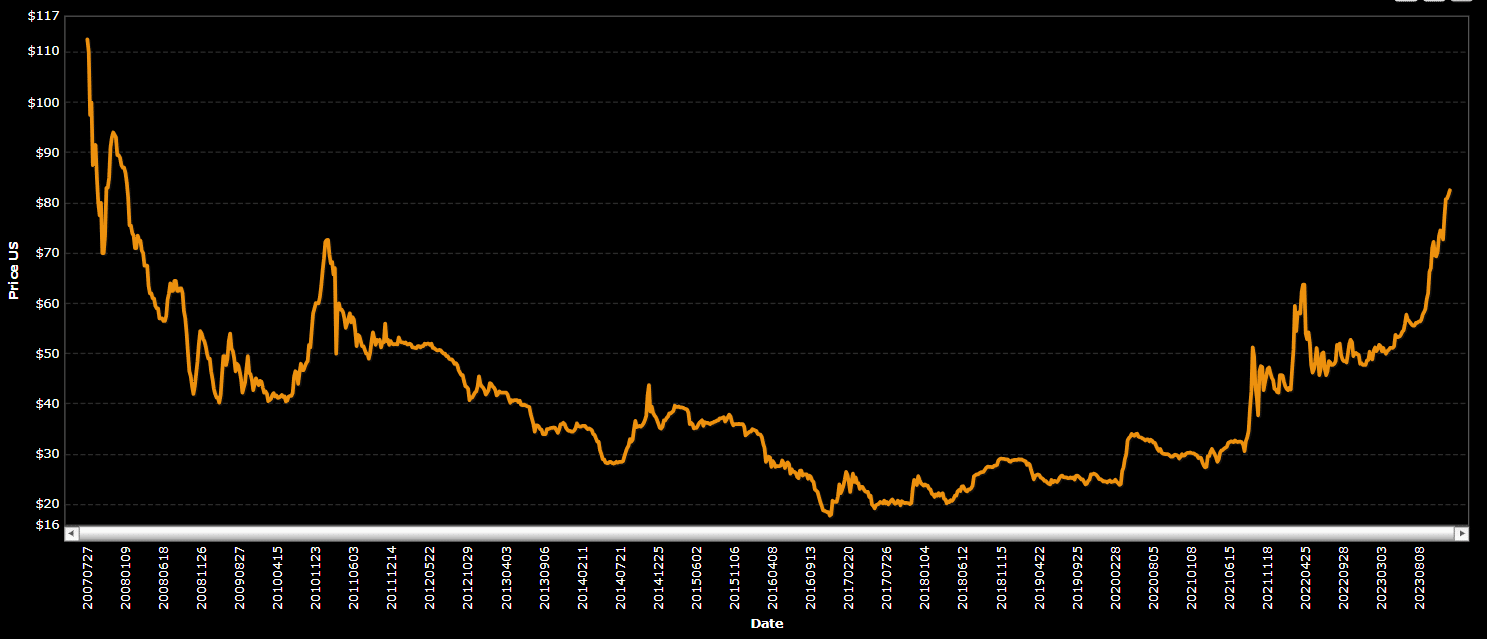
Is uranium’s bull market over?
Key Takeaways
Market Pressure and Stabilization:
The uranium spot price slipped 0.83% in March due to policy and geopolitical uncertainty but stabilized around $65/lb in early April.
- Structural Bullish Case: Despite market pressures, uranium's term price remains stable at $80/lb and global supply is constrained below demand levels.
- Uncorrelated Nature: Uranium remained resilient amid broader market volatility, highlighting its uncorrelated nature and inelastic demand.
- Long-Term Outlook: Uranium and uranium equities have outperformed broader commodity benchmarks and global equity markets over the past five years, reflecting a structural supply deficit and growing global policy support.
Looking Ahead: Resiliency, Clarity and Reacceleration
Kitco reported that the uranium market enters the second quarter on more stable footing, with improving visibility across several key fronts. Tariff-related uncertainty, which kept utilities sidelined for months, has begun to clear.
From a macro standpoint, uranium remains one of the few commodities largely insulated from traditional economic cycles. Demand for nuclear fuel is inelastic. The fears that have triggered volatility across equities, bonds, and commodities, namely, slowing global growth and resurgent inflation, have minimal bearing on uranium. There is no substitution, thrifting, or immediate response from demand, regardless of broader macro conditions.
This resiliency is one reason uranium remains an uncorrelated asset, both fundamentally and behaviorally. This quality stands out in a world of increasing correlation and policy risk.
At the same time, the long-term demand picture continues to strengthen. China shows no signs of slowing its buildout of new reactors. In the U.S., the Trump administration has reaffirmed its support for nuclear energy as a strategic priority. Large technology companies, such as Amazon, Google, and Meta, have joined the chorus, backing the expansion of tripling nuclear power by 2050 to meet growing baseload power needs11.
On the supply side, few new projects are moving forward, and the market continues to face material barriers to production expansion. Juniors like NexGen, Deep Yellow and Paladin have all announced delays, while Kazatomprom's guidance leans toward the lower end amid ongoing input supply and cost constraints.
In our view, these conditions collectively support the next leg of the bull market. With global uranium mine production well short of the world's uranium reactor requirements, the supply deficit building over the next decade, and near-term supply inhibited by long lead times and capital intensity, we believe that restarts and new mines in development are critical. The uranium price target as an incentive level for further restarts and greenfield development is a moving target, and we believe that we will need higher uranium prices to incentivize enough production to meet forecasted deficits. Over the long term, increased demand in the face of an uncertain uranium supply may likely continue supporting a sustained bull market (Figure 4).
Figure 4. Uranium Bull Market Continues (1968-2025)
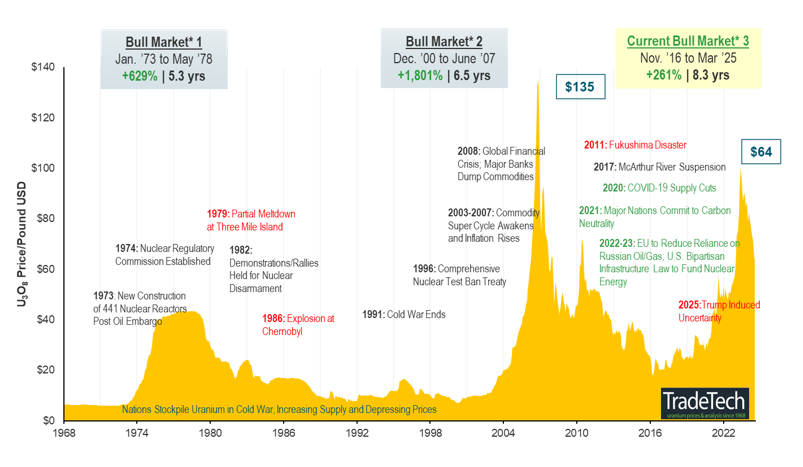 Note: A "bull market" refers to a condition of financial markets when prices generally rise. A "bear market" refers to a condition of financial markets when prices are generally falling. See YTrade-Tech for (more).
Managed & Built by I2M Consulting, LLC | © 2010-
