

Blas reported in late 2024 that predictions of declining demand for the world’s most polluting fossil fuel, coal, are premature.The UK celebrated Oct. 1 as the first day in nearly 150 years when its power plants didn’t burn a single lump of coal to generate electricity. The moment was hailed by politicians as a sign of the progress against fossil fuels. It was also completely irrelevant.
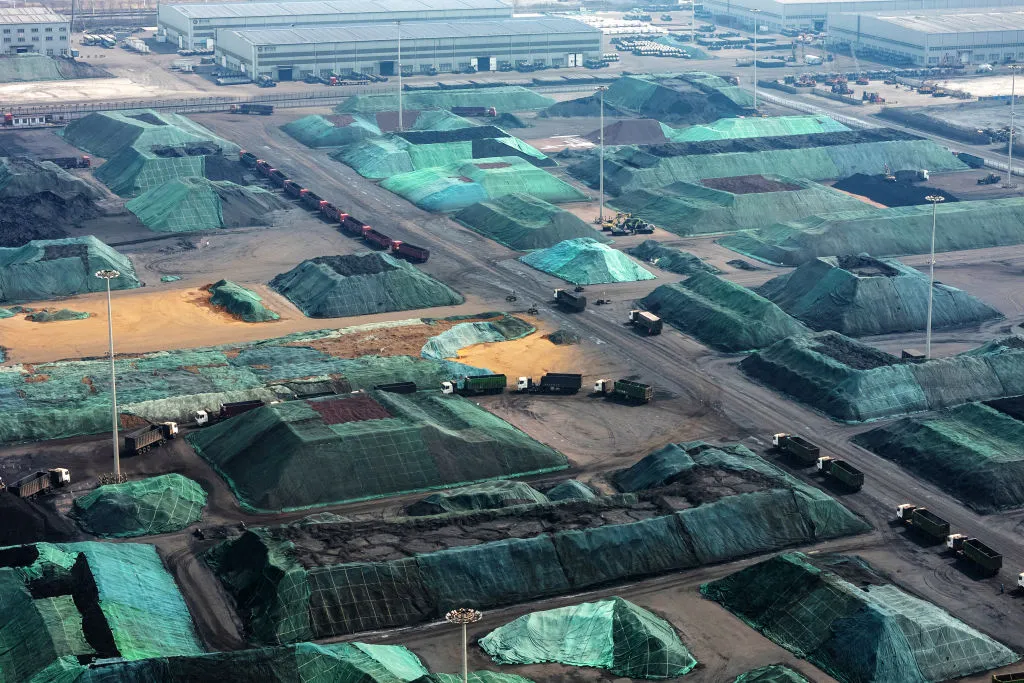 Stockpiles of coal in Hebei, China. Source: Bloomberg/Bloomberg
The very same day the UK went without coal-fired electricity, the world burned roughly 24 million metric tons of coal. Let me put the statistics into perspective: The world consumed on Oct. 1, 2024 in one single day nearly five times more of the rock than Britain used during the whole of 2023. Yes, five times more in one day than in a year (more).
Coal demand set a record high in 2024, according to the International Energy Agency’s annual report published on Wednesday. Considering the commodity is the most important contributor to global warming, its consumption trends matter enormously for the fight against climate change. The report makes for a depressing reading: The planet is losing to our unquenchable demand for king coal. Forget all the slogans about consigning coal to history. We’re on a path to consigning the planet to history.
King Coal Consumption
The International Energy Agency has revised higher its historical coal demand data and its forecast from those published in earlier years. As the IEA puts it, “coal is often considered a fuel of the past, but global consumption of it has doubled in the past three decades.” Worse, not only has usage grown a lot – particularly in China and India – but demand will keep rising for the foreseeable future.
The IEA now estimates that global coal demand surged to an all-time high of 8,771 million metric tons this year, up 1% from 2023, as electricity demand rose faster than expected. That shouldn’t be a surprise: The energy transition requires electrifying everything. Renewables are doing some of that job, but coal remains, the go-to fuel to power the energy transition. Worse, the IEA revised higher its historical data, so the increase comes from a significantly higher baseline than before. The world is consuming a lot more coal than we thought – and therefore, it’s polluting the atmosphere a lot more than we thought, too.
While last year the IEA initially estimated consumption in 2023 at 8,563 million tons, it pegs it now at 8,687 million. The difference equals roughlythe annual demand of Japan, the world’s fourth-biggest coal consumer.
The IEA is trying to paint an optimistic outlook about the future. But the numbers say otherwise. In rose-tinted prose, the agency says that global coal demand could “plateau” over the next three years. Well, that’s if you don’t mind that the plateau is uphill rather than fairly level. In reality, the IEA forecasts fresh records for coal demand in 2025, 2026 and again in 2027.
True, the annual increase for each of the next few years is small. But the trend is, nonetheless, higher. The electricity sector has been the main driver, with power generation from burning the fossil fuel set to reach an all-time high of 10,700 terawatt-hours in 2024.
China is the King In Coal
China accounts for more than half the world's coal demand, with the US and the European Union accounting for a fraction of global consumption. The higher-for-longer matters because it represents a U-turn for the IEA. Last year, the agency said that the deployment of solar panels, wind turbines and other sources of green energy was “likely to push global coal consumption on a downward trajectory,” adding: “This would imply that coal is likely to peak in 2023.” Not anymore.
The extra consumption is truly shocking. Let’s compare the forecast for 2026 published last year (at 8,344 million tons) to the one for the same year just published (at 8,847 million). The difference (503 million tons) equals the combined annual use of the US and Japan.
The IEA has been calling for a peak in coal use, particularly in China, for more than a decade. Considering that record of wrong calls, it would be prudent for the agency to err on the side of caution. Flagging higher demand isn’t cheerleading fossil-fuel consumption – it’s candidly conceding to reality.
The biggest problem is China. The country, worshiped by some green enthusiasts thanks to its embrace of electric vehicles, wind turbines and solar panels, is the world’s big polluter. China alone consumes nearly 30% more coal than the rest of the world together. That’s not ending anytime soon. Now, the IEA assumes that Chinese coal demand will set an all-time high every year until at least 2027. For Beijing, coal is energy security. It’s time to acknowledge that. And acknowledge that China’s promises to reduce its coal consumption any time soon just don’t stand up to scrutiny.
Managed & Built by I2M Consulting, LLC | © 2010-
