

Thompson reported in late April 2024 that nuclear power has always been a divisive issue, with disputes about safety, environmental effects, and the future of energy supply. [Bias Alert ! See below].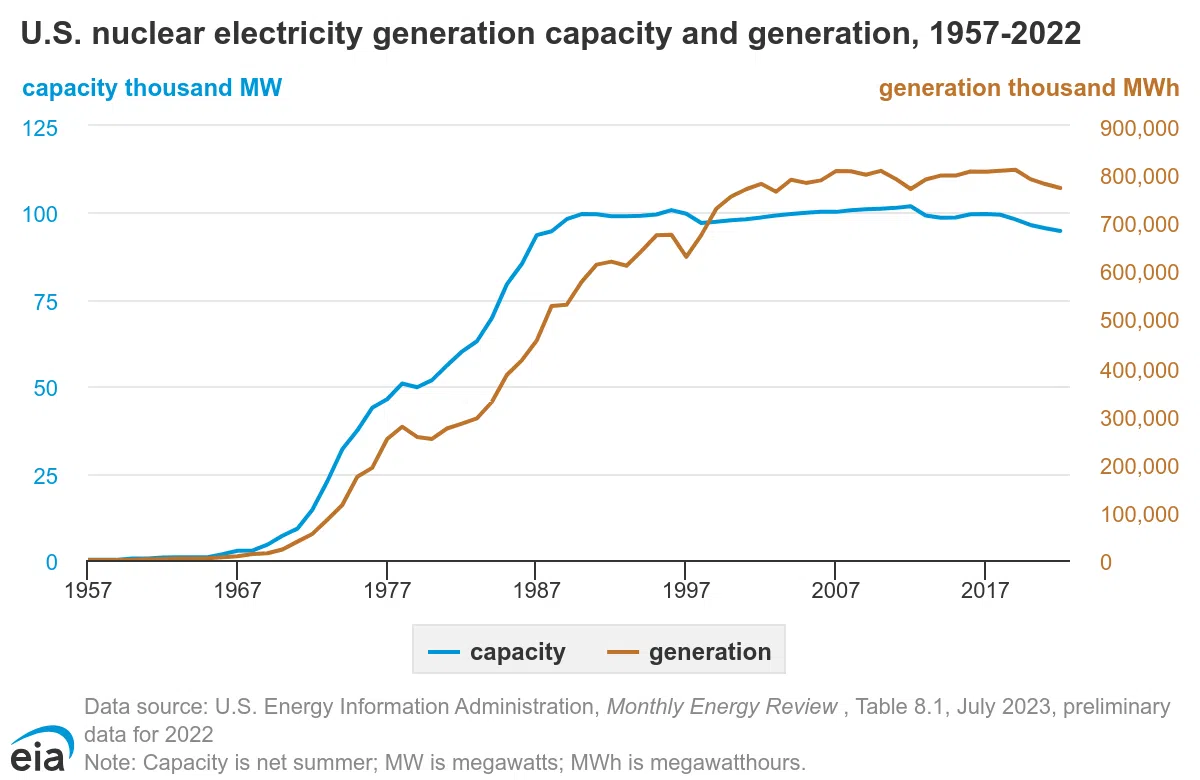
[Note: Bias Alert - pandering missinformation: nuclear power has the highest safety record for all major energy sources, radioactivity issues do not indicate "environmental effects," and the future is bright for nuclear power because of its reliability, its long life-time, and its profitability over the long period of its operation. Author is promoting a wind and solar view by attempting to defame nuclear power].
For decades, nuclear power plants in the United States have played an essential role in the energy landscape, generating a significant part of the country’s electricity. Despite the problems and controversy surrounding nuclear energy, there are compelling reasons to reconsider its place and potential in the US energy mix.[Yes, where nuclear-power systems (both large and SMRs) will replace wind and solar over the years to come because of their inherent shortcomings, e.g., short-system lifetimes, unreliability of such systems (due to weather impacts (storm gust impacts on wind blades, hail damaging of solar panels, the need for constant operation and maintenance attention (such as cleaning dust off panels, maintenace on wind turbines, etc), and their need for battery back-up.]
The Legacy of Power and Controversy
Both successes and failures define the history of nuclear power plants in the United States. The first commercial nuclear power plant, the Shipping Port Atomic Power Station in Pennsylvania, began operations in 1958, ushering in a new age of energy generation. Over the next several decades, the United States extended its nuclear fleet, with dozens more reactors coming online nationwide. However, the 1979 Three Mile Island accident [No one was injured, no one died, massive press histeria, the issues were handled] and the 1986 Chernobyl tragedy placed a pall over the sector, heightening worries about the safety and environmental risks linked with nuclear energy [More missinformation. But Yes, it was a disaster, but becasue the Soviet Union made major mistakes in shortcutting design and and management (even though they had been warned about the potential for problems for years by the West). Once the details were unveiled, the safety of the western nuclear power plants were confirmed, but many leaders had some residual doubts. As the years passed, the positive safety record became clear.] These accidents heightened regulatory scrutiny, increased public awareness, and slowed the development of new nuclear reactors.[This was unfortuately true. Residual, unfounded fear of radioactivity remained. But nuclear power remained in the energy mix as the plot above clearly shows. Then as electricity demand increased in the U.S. and around the world, nuclear power has begun to expand again. In the meantime, wind and solar have boomed because of their rapid installation and relatively low cost, of albeit flimsy systems. It is clear that wind and solar are filling a short-term need in transition to the new nuclear technologies, both large and SMRs, which will likely be ready for installation as small grids thoughout a city, but more likely in the subsurbs, towns, and remote areas by the end of the decade.]
Challenges and Opportunities
Today, the US nuclear fleet faces numerous obstacles. Many nuclear power facilities need help financially due to ageing infrastructure [Built for long a long life], high operating costs, and competition from low-cost natural gas and renewable energy sources. Several plants have closed prematurely in recent years, raising concerns about the loss of carbon-free power generation and its impact on climate change. [Many of those are being brought back online]
Despite these limitations, nuclear power has the potential to play an essential part in the United States’ energy transition. [Now the author is supporting nuclear power....? Has introduced "concerns."]. Nuclear energy is a low-carbon source of electricity that produces almost no greenhouse gases during operation. As the need to cut carbon emissions to combat climate change grows, nuclear power is vital for decarbonizing the electrical industry. Furthermore, advances in nuclear technology hold the potential for safer and more efficient reactors. Next-generation designs, such as small modular reactors (SMRs) and advanced molten salt reactors, can overcome many of the issues raised by traditional nuclear plants, including safety, proliferation, and waste management.
Economic Considerations
While nuclear power confronts economic problems, such as high initial costs and competition from less expensive options [that are short-term solutions], it also provides significant financial benefits to the communities where facilities are located. Nuclear power plants provide jobs, generate tax income, and help local economies, making them critical contributors to regional prosperity.
As of August 1, 2023, the United States had 93 nuclear reactors spread across 54 nuclear power plants in 28 states. Among these plants, 19 have a single reactor, 31 have two reactors, and 4 have three reactors. Since 1990, nuclear energy has consistently provided about 20% of the total annual electricity in the U.S.
In 2021, 33 countries had commercial nuclear power plants, with 15 of these countries deriving at least 20% of their total annual electricity generation from nuclear energy. The United States had the largest nuclear power generation capacity and produced more nuclear electricity than any other country. Furthermore, nuclear power provides energy security by lowering reliance on imported fossil fuels, susceptible to price volatility and geopolitical threats. By diversifying the energy mix and improving grid stability, nuclear energy can help assure a consistent electricity supply, even during high demand or outages in other sources.
For list of Nuclear Power Plants in the US: Locations and Capacities see the report in URL
Conclusion
In conclusion, nuclear power plants have been a staple of the US energy landscape for decades, providing millions of Americans with dependable, low-carbon electricity. While the sector faces economic viability and public image obstacles, nuclear energy has excellent promise as a crucial contributor to a sustainable energy future. By embracing innovation, reducing regulation, encouraging public acceptability, and incentivizing deployment, the United States can realize nuclear power’s full potential and ensure that it remains an essential component of the country’s energy mix for future generations. As we face the pressing challenge of climate change, nuclear power is poised to play a vital role in enabling a cleaner, more sustainable future.
Additional Articles:
Nuclear Waste Disposal Challenges (here) .....Answer, see below Parts 1-3.
What Is Nuclear Power Waste And How It Is Processed? (here) Answer: (Part 1), (Part 2), and (Part 3).
Managed & Built by I2M Consulting, LLC | © 2010-
