
Cooban opined in mid-May 2024 that the world is facing a shortage of the minerals needed to make the electric vehicles, wind turbines, solar panels, and other clean energy technologies essential to ending its reliance on fossil fuels. The Paris-based International Energy Agency said in a report published Friday that steep drops in the prices of lithium, cobalt, nickel, and graphite last year were “good news for consumers” but discouraged investment in the mining of those critical minerals.
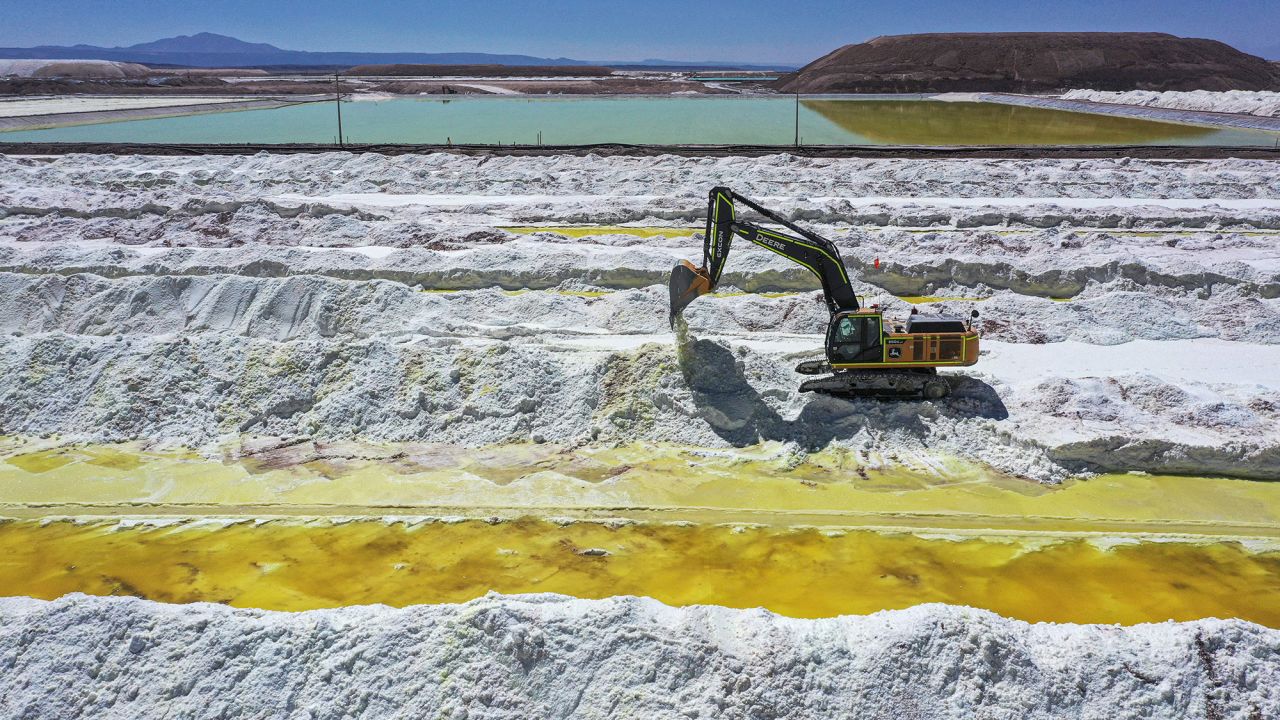 The lithium mine of the Chilean company Sociedad Quimica Minera in the
Atacama Desert, Chile, seen in September 2022.
The world is on track meet only 70% of global copper demand and 50% of lithium demand by 2035, the agency added. [Note: Lithium is no longer in short supply because there have been numerous discoveries and realizations that lithium can be found in groundwater and even in oil & gas fracking waste fluids....It is only the supply chain than needs to be improved /constructed quickly to avoid shortfalls in the industries needing lithium].
“The world’s appetite for technologies such as solar panels, electric cars and batteries is growing fast — but we cannot satisfy it without reliable and expanding supplies of critical minerals,” Fatih Birol, the IEA’s executive director, said in a statement. Investment in critical minerals mining grew 10% last year, a rate the agency says is “healthy, but slower than in 2022.”
The IEA forecast that investors would need to pour $800 billion into mining projects between now and 2040 to stand a chance of limiting the rise in global temperatures to 1.5 degrees Celsius above pre-industrial levels.
Prices for some critical minerals have returned to their lower pre-pandemic levels, the IEA noted, with those needed to make batteries falling particularly sharply. The price declines were caused by a “strong increase” in supply that outpaced growth in demand over the past two years, the IEA said. However, “today’s well-supplied market may not be a good guide for the future, as demand for critical minerals continues to rise,” it added.
Demand for graphite, for example, is projected to quadruple by 2040 from the current level if the world takes steps to avoid warming above 1.5 degrees.
The price of lithium cratered 75% in 2023 [because of the growing over supply], while prices for cobalt, nickel and graphite plunged between 30% and 45%. Those falls helped drive down the price of batteries by 14%, according to the IEA.
Concentration risks
Concentration of critical minerals production in a small number of countries increases the risk of shortages, the agency warned. It expects that, between now and 2030, as much as 75% of growth in the supply of lithium(?), nickel, cobalt, and rare-earth elements will come from just a handful of countries [but, on the other hand, it looks like the U.S. has numerous sources of REE under investigation]. For the types of graphite used in batteries, nearly 95% of supply growth will likely come from China, the IEA said.
“These high levels of supply concentration represent a risk for the speed of energy transitions, as it makes supply chains and routes more vulnerable to disruption, whether from extreme weather, trade disputes or geopolitics,” the agency said. “High market concentration means there is a risk of significant shortfalls in supply if, for any reason, supply from the largest producing country is interrupted.”
Scientists consider warming of 1.5 degrees a threshold beyond which extreme heat, floods, droughts, wildfires, and food and water shortages would have catastrophic consequences. [What "scientists"? A little fear-pandering here, I suppose?]
Related Articles:
-China restricts exports of graphite as it escalates a global tech war (here).
- Critical minerals summaries (here).
Managed & Built by I2M Consulting, LLC | © 2010-