

Hurler reported in mid-2022 that AstroForge is claiming that demonstrations of its technology could begin as early as January 2023. California-based startup AstroForge can get started on its ambitious plan to mine near-Earth asteroids, thank to a rapid influx of seed funding.
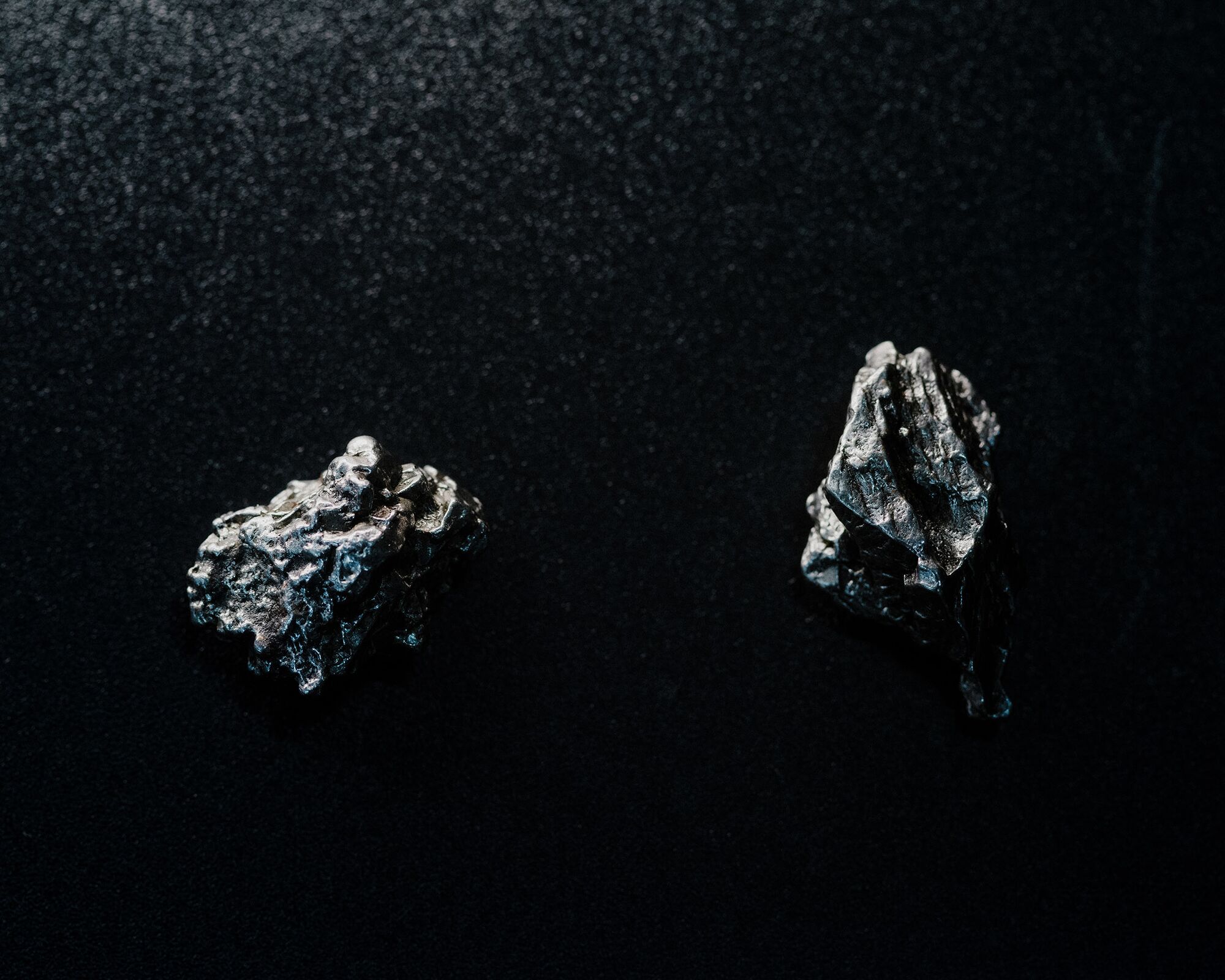 Fragments of Piguem Nonralta at AstroForge’s office in Pasadena, California.
Photographer: Damien Maloney for Bloomberg Businessweek (in Lorinc (2023)).
AstroForge, founded by Matt Gialich and Jose Acain in January 2022, has raised $13 million, which will be used to further the company’s goal of mining asteroids for platinum-group metals.
“Platinum-group metals are used across the board—they reduce vehicle emissions, they’re used in chemotherapy drugs, and every electronic device you have has a number of these elements,” cofounder Gialich explained to me on a video call.
Gialich and Acain—former Virgin Orbit and SpaceX/NASA employees, respectively—want AstroForge to be the first private asteroid mining company to get off the ground, and they’re hoping to begin demonstrations as early as January 2023.
“The $13 million that we just raised is going to allow us to expand our testing facility, to hire multiple people, and to complete this first demo launch,” Gialich said to me. “The real dream here for us is to go and utilize deep space for resources.”
AstroForge is tight-lipped about its plans, but according to TechCrunch, its founders claim to have developed a technique for mining asteroids measuring 66 to 4,920 feet (20 to 1,500 meters) in diameter. Instead of landing mining probes onto the surface, the company would break asteroids apart from a distance and collect the valuable aggregate materials. Its demonstration in January 2023—should it happen—would involve the launch of a “refinery payload” that will work on an asteroid-like sample in orbit, as Gialich described it to me. The company has already booked a flight on a SpaceX rocket to launch the test, according to Space.com.
That asteroid mining will be worth the trouble is not immediately obvious. The cost of launching objects to space remains high, while the steady influx of space metals is likely to cause a dramatic drop in their value [see Campbell, et al. (2013) p. 191)]. Now that said, asteroids have the potential to be hugely valuable sources of rare metals; some near-Earth asteroids could be worth trillions of dollars, and, according to NASA, there are currently over a million identified asteroids in our solar system, some of which could contain motherlodes of valuable metal.
Managed & Built by I2M Consulting, LLC | © 2010-
