

NASA's Lunar Reconnaissance Orbiter (LRO) launched to the moon on June 18, 2009, on a mission to map Earth's natural satellite and look for resources that could be valuable for future human missions to the moon.

The orbiter uses seven instruments to examine the lunar surface and its radiation environment. Among the probe's notable achievements is finding extensive evidence of water ice on the moon's surface. See photos from NASA's prolific lunar orbiter here! For Earth-rise, see (here).
Sunlight on lunar poles:

Maps of the lunar poles show how much sunlight specific regions receive in a lunar year. White areas have constant sunlight while black areas are in permanent shadows.
Strange Areas:
The crater Einthoven is near the aptly named Einthoven cold spot anomaly. The LRO's camera captured an overhead, night-time view of the strange spot, where the temperature is about 45 degrees Fahrenheit (7 degrees Celsius).
New Views of Appolo Moon Landing Sites (here).
Reliving history:
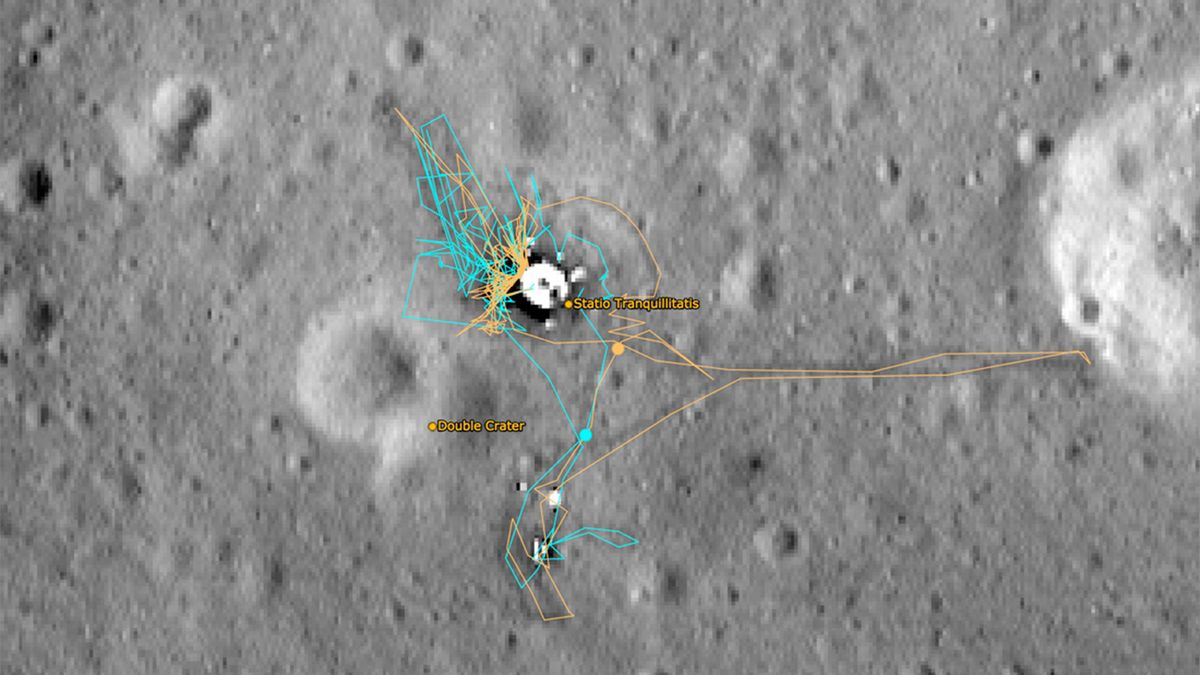
Using the LROC Featured Sites' new feature allows observers to relive the Apollo 11 surface traverse, which was carefully reconstructed by the LROC team. Experience the path the Apollo 11 astronauts traveled during the 1969 mission.
See full article for details.
Managed & Built by I2M Consulting, LLC | © 2010-
