
Rare Earth Elements - The Unsung Heroes of this Tech Boom - 2024
Rare Earth Deposits & Mining
Date posted: 04/05/24
Casey, in an especially well illustrated update on the rare-earth industry for Zimtu and Commerce Resources, reported on April 4, 224 that in the grand narrative of the technological boom that defines our era, certain stars shine with an unmistakable brilliance: the latest smartphones, electric vehicles (EVs), and cutting-edge renewable energy solutions. Yet, behind the scenes, a group of unsung heroes plays a pivotal role in powering this technological revolution.
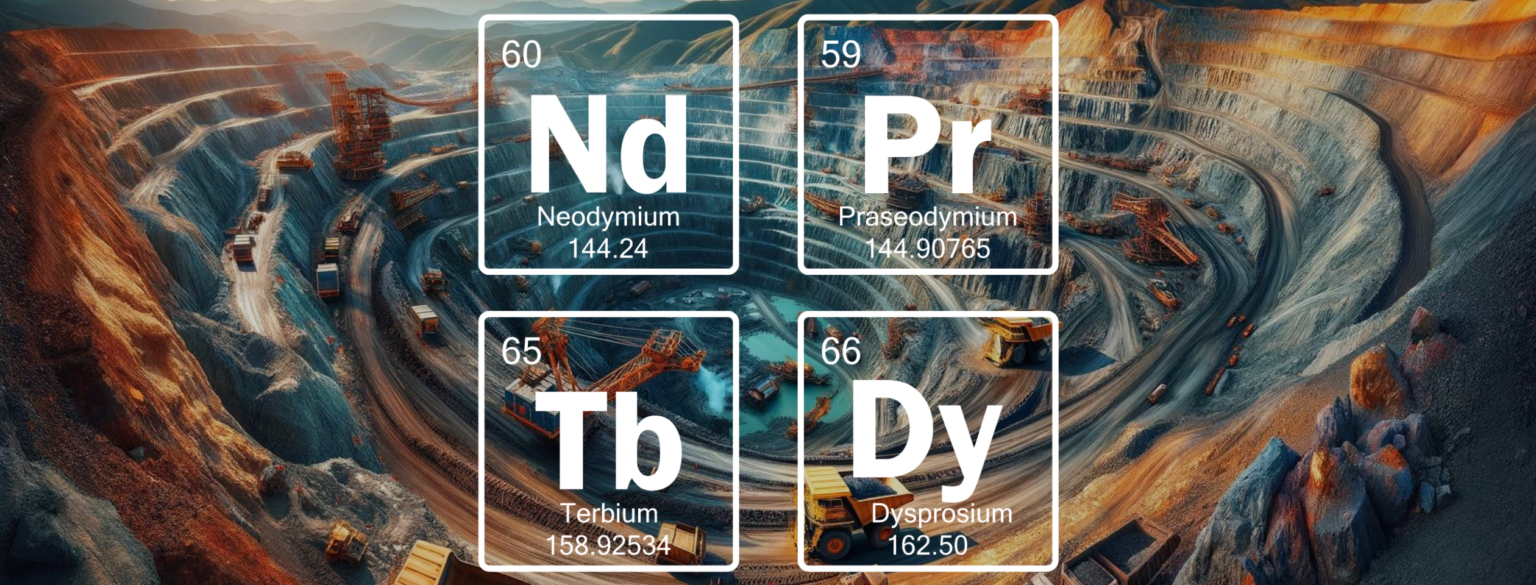

Rare Earth Elements (REEs), a suite of seventeen elements with unique chemical and physical properties, are the hidden linchpins of modern technology, imbuing our gadgets with functionalities that were the realm of science fiction merely a few decades ago. Despite their name, these elements are relatively abundant in the Earth’s crust, but their significance cannot be overstated—they are indispensable in the manufacture of a wide array of high-tech devices, from the smallest consumer electronics to the largest wind turbines.
As the demand for these elements continues to soar, driven by the relentless push for innovation and the global transition to green technologies, the complexities surrounding their supply, extraction, and global distribution have brought them to the forefront of international discourse.
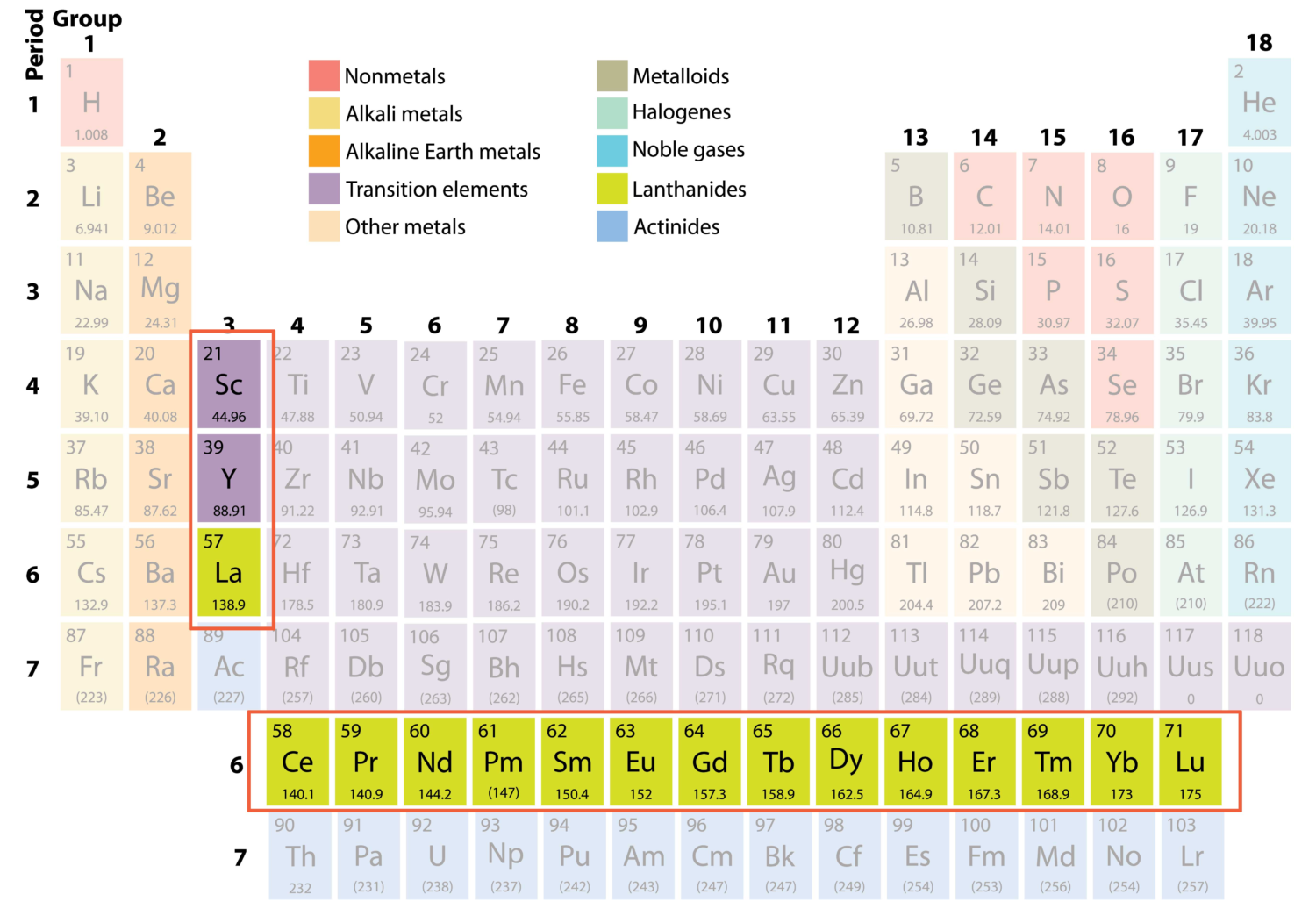 17 Rare Earth Elements Highlighted
Understanding Rare Earth Elements
Rare Earth Elements (REEs), a term that sparks curiosity and intrigue, refers to a group of seventeen chemical elements in the periodic table, specifically the fifteen lanthanides plus scandium and yttrium. Despite their name, these elements are not as rare as one might appear; they are fairly abundant in the Earth’s crust. However, their “rare” designation stems from the challenge of finding them in concentrations high enough to make their extraction economically viable.
The Elements Defined
The lanthanides, which run from lanthanum (La) to lutetium (Lu) on the periodic table, alongside scandium (Sc) and yttrium (Y), share similar properties but are distinct in their applications. These elements are key components in a myriad of technological applications due to their unique magnetic, phosphorescent, and catalytic properties. For instance, neodymium is prized for its strong magnetic properties, essential in the manufacture of powerful magnets used in wind turbines and hard disk drives, while europium is crucial for its role in producing the vibrant colors on smartphone and television screens.
Unique Properties
What sets REEs apart are their exceptional magnetic, luminescent, and electrochemical properties. Their ability to withstand demagnetization at high temperatures makes them invaluable in the production of permanent magnets. Additionally, their luminescent properties are essential for producing high-quality lighting and displays. These unique attributes make REEs indispensable in modern technology, with no viable substitutes for many of their applications.
A Geological and Mining Overview
Geologically, REEs are typically found in three types of ore deposits: carbonatites, bastnäsite [and allanite, etc. in Campbell, et al., (2021)], and monazite, with mining concentrated in areas where these deposits are found in significant quantities. Extracting and refining these elements is a complex and often environmentally challenging process, involving a series of chemical reactions and physical separations to produce the pure, usable forms of these metals. [For more REE deposits in the world, see the I2M Web Potal Search (here).]
The Scarcity Misconception
The misconception of rarity comes not from the abundance of these elements in the Earth’s crust, but from the scarcity of economically extractable deposits. This scarcity, coupled with the environmental and technical challenges associated with their extraction and processing, contributes to the complexities of the REE supply chain. [See Campbell, et al., 2020 and Campbell, 2021].
Rare Earth Elements are a cornerstone of modern technology, hidden within the devices and technologies that define our contemporary lifestyle. Their unique properties make them irreplaceable in a wide range of high-tech applications, from consumer electronics to green energy solutions.
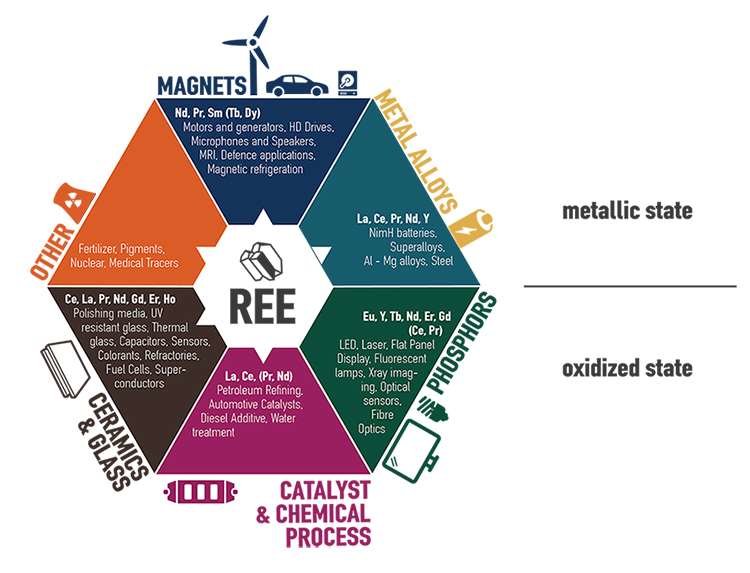
Rare Earth Elements usage in various technologies
REEs in Modern Technology
The Backbone of High-Tech Devices:
- Smartphones and Computers: Gadgets that are integral to our daily lives, such as smartphones, tablets, and laptops, rely on REEs for their functionality. For instance, neodymium and praseodymium are used to create the powerful magnets that drive the vibration and sound in speakers and headphones, while europium and terbium are crucial for the vibrant displays.
- Electric Vehicles (EVs): The push towards sustainable transportation has elevated the importance of REEs. Electric vehicles utilize REEs like dysprosium and neodymium in their electric motors and batteries to enhance performance, efficiency, and range.
- Renewable Energy Systems: Wind turbines and solar panels are at the forefront of the renewable energy transition. The powerful permanent magnets made from neodymium, boron, and iron in wind turbines enable the efficient conversion of wind energy into electricity. Similarly, some solar panels use REEs to improve their heat resistance and efficiency.
Advancements in Healthcare
The medical field benefits from the unique properties of REEs through enhanced imaging and diagnostic tools. Gadolinium, for instance, is a contrast agent in magnetic resonance imaging (MRI) scans, improving the clarity and detail of the images, [but damages ailing kidneys. A new approach is under development]. Additionally, REEs are used in the development of new medications and treatments, showcasing their versatility beyond just electronic applications.
The Vibrant World of Displays
One of the most visible applications of REEs is in the display technology found in TVs, monitors, and smartphones. Phosphors made from europium and terbium are responsible for the red and green colors in LED screens, contributing to the high-definition quality that consumers have come to expect.
The widespread use of Rare Earth Elements in modern technology underscores their critical importance in the advancement and sustainability of our global society. From powering the devices that keep us connected to enabling the transition towards renewable energy, REEs are truly the unsung heroes of the tech boom. As technology continues to evolve, the demand for these elements is set to increase, highlighting the need for sustainable mining practices and innovation in recycling and alternative materials.

How Rare Earth Elements Shape our Daily Lives
The Global Supply Chain of REEs
The intricate web of the global supply chain for Rare Earth Elements (REEs) is as complex as it is critical. Dominated by a few key players and fraught with geopolitical tensions, the supply chain for these indispensable elements is a focal point for nations and industries alike.
Geographical Concentration of REEs:
- Dominance of China: China holds a commanding position in the global supply chain of REEs, controlling a significant portion of the world’s production and processing capabilities. This dominance extends beyond mining, encompassing the entire spectrum of the supply chain, from extraction to the production of advanced materials and components.
- Other Key Players: While China is the most prominent player, countries like Australia, the United States, Russia, and India also contribute to the global supply of REEs. Each of these countries has varying degrees of reserves and production capabilities, but none match the scale or integration of China’s supply chain.
Mining and Processing Challenges:
- Extraction Difficulties: Mining REEs is a challenging and costly process, compounded by the fact that REEs are often dispersed and not found in concentrated deposits. This dispersion necessitates large-scale mining operations to obtain commercially viable quantities.
- Environmental and Health Concerns: The extraction and processing of REEs pose significant environmental and health risks. The production process generates toxic waste, including radioactive byproducts, necessitating stringent environmental controls and raising concerns about the long-term sustainability of REE mining.
Geopolitical Tensions and Supply Security:
- Supply Vulnerability: The concentration of REE production and processing in a single country poses significant risks to global supply chains, especially in times of geopolitical tension. Nations dependent on REEs for critical technologies face vulnerabilities in access and pricing.
- Strategic Moves by Nations: In response to the supply risks, countries and regions are taking strategic steps to secure their supply chains. Initiatives include the development of alternative sources, investment in domestic mining and processing capabilities, and diplomatic efforts to diversify supply sources.
Efforts to Stabilize and Diversify Supply:
Exploration and New Mining Ventures: To mitigate supply risks, there is an ongoing effort to explore and develop new REE deposits outside of China. Countries with potential reserves are investing in exploration and feasibility studies to diversify the global supply chain.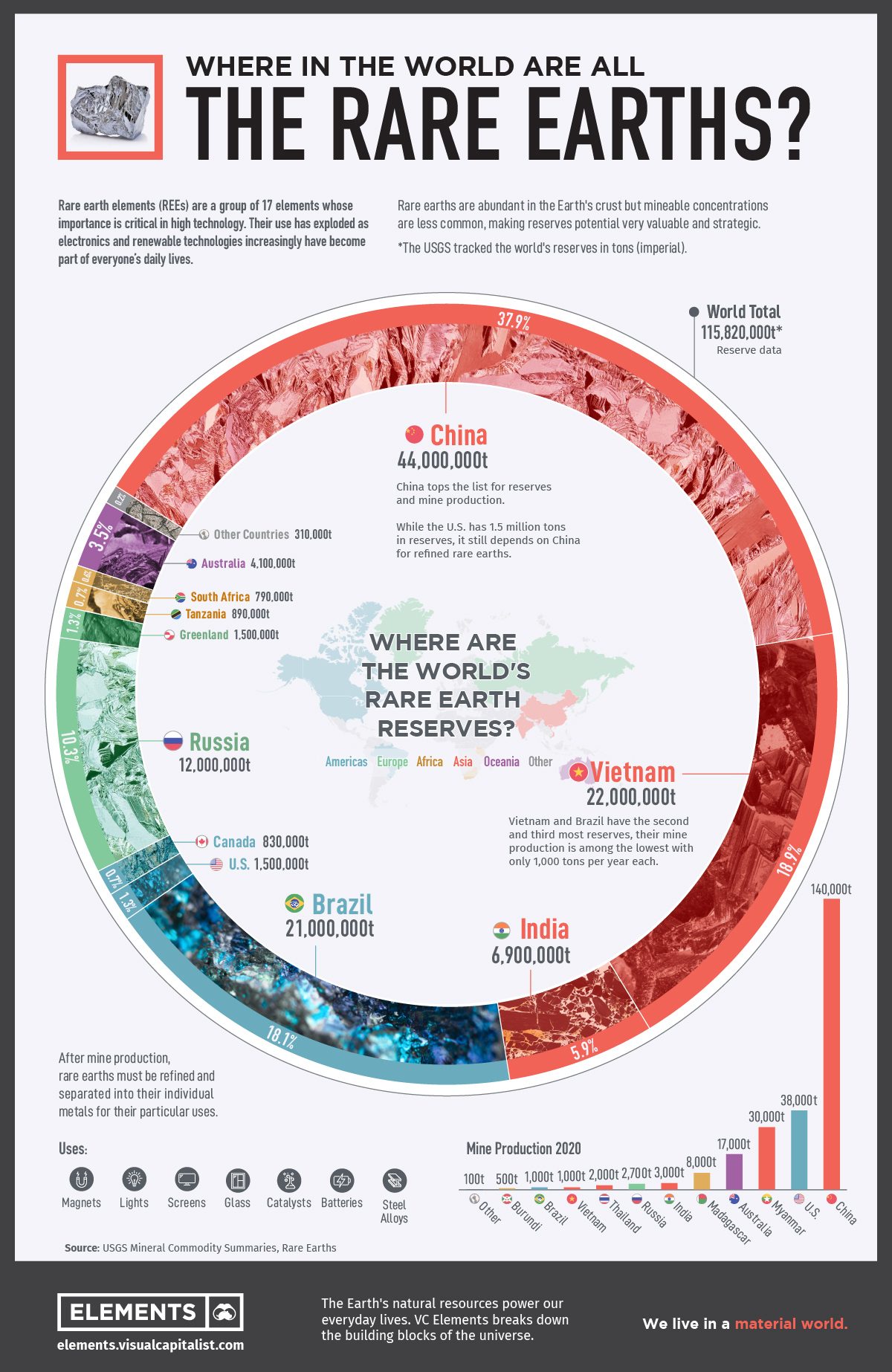
Where in the World are all the Rare Earths?
Innovation in Recycling and Alternative Materials:
Recognizing the challenges of REE supply, research into recycling REEs from electronic waste and developing alternative materials that can substitute REEs in certain applications is gaining momentum. These efforts aim to reduce dependency on primary sources and promote sustainability.
Innovations and Advancements in REE Mining:
Technological Breakthroughs in Extraction and Processing:
- Enhanced Separation Techniques: Scientists and engineers are developing more efficient methods of extracting REEs from ore, which promise to reduce the environmental impact and lower costs. These include bioleaching, where bacteria are used to extract REEs from ore, and ionic liquids, which offer a less toxic alternative to traditional solvents.
- Recycling REEs from Electronic Waste: With the growing awareness of the finite nature of REEs and the environmental impact of mining, there is increasing focus on recycling REEs from discarded electronics. Innovations in recycling technologies are making it more feasible to recover these elements from smartphones, hard drives, and other electronic waste, reducing the need for new mining.
- Automated and Remote Mining Operations: Advances in robotics, AI, and remote operations are being applied to REE mining, allowing for more precise extraction with minimal human exposure to hazardous conditions. These technologies also enable the exploitation of REE deposits in more remote or challenging environments.
Sustainable Mining Practices and Environmental Stewardship:
- Minimizing Water Use and Contamination: New processing technologies aim to reduce the volume of water required in REE mining and mitigate the risk of water pollution. Closed-loop systems and advanced wastewater treatment methods are examples of how the industry is striving to become more water-efficient and environmentally responsible.
- Reducing Energy Consumption and Carbon Footprint: Efforts to make REE mining more energy-efficient include the adoption of renewable energy sources for mining operations and the development of more efficient ore processing technologies that consume less energy.
- Land Rehabilitation and Ecosystem Restoration: Post-mining land rehabilitation is becoming a priority, with companies investing in restoring ecosystems and biodiversity after mining operations conclude. This includes reforestation, soil restoration, and the creation of conservation areas to promote wildlife return.
Policy and Regulation to Support Innovation:
- Government Incentives for REE Projects: Recognizing the strategic importance of REEs, governments are providing incentives for research in REE mining technologies, recycling, and exploration. These include grants, tax breaks, and support for public-private partnerships.
- Environmental and Safety Regulations: Enhanced regulatory frameworks are being implemented to ensure that REE mining adheres to strict environmental and safety standards. These regulations encourage the adoption of best practices and technologies that minimize the environmental footprint of mining activities.
Investing in REEs: Opportunities and Risks
Market Dynamics and Demand Trends:
- Rising Demand in High-Tech and Green Industries: The accelerating adoption of electric vehicles (EVs), renewable energy technologies, and advanced electronics is driving up the demand for REEs. This surge underscores the growth potential for companies engaged in the extraction, processing, and recycling of these elements.
- Supply Chain Vulnerabilities: The concentration of REE supply in a few countries, particularly China, introduces geopolitical risks that can affect availability and prices. Any disruption in the supply chain, whether due to political tensions or environmental regulations, can lead to volatility in the REE market.
Investment Opportunities
- Mining and Exploration Companies: Investing in companies involved in the mining and exploration of REEs offers direct exposure to the market. These investments can range from established players with operational mines to junior miners focused on exploration and development of new deposits like Commerce Resources.
Commerce Resource’s Unique Position
Commerce Resources, based in Vancouver, British Columbia, is an exploration and development company with a particular focus on deposits of rare earth elements and rare metals. The Company is specifically focused on the development of its Ashram Rare Earth and Fluorspar Deposit Project at the Eldor Property in Quebec. The company, traded as TSXV: CCE, has a notable milestone of being the World’s 6th largest rare earth project with the Ashram project in Quebec, and the most valuable rare earth element project in North America. Located in the northern region of the province, Ashram is one of the largest rare earth deposits in the world with a fluorspar component which is also ranks as one of the largest defined globally.
 The Ashram Rare Earth Element & Fluorspar Deposit
The Future of REEs
As we stand at the crossroads of technological innovation and environmental sustainability, the future of Rare Earth Elements (REEs) is more relevant than ever. These elements are pivotal in driving advancements in green technologies, electronics, and national defense, making their sustainable and ethical supply a global priority.
The future of Rare Earth Elements is intricately linked to the trajectory of global technological progress and the collective commitment to environmental sustainability. While challenges remain in terms of supply chain security, environmental impact, and geopolitical tensions, the ongoing efforts in innovation, recycling, and international cooperation hold promise for a more sustainable and equitable REE industry. As we advance, the continued importance of REEs in enabling the technologies of tomorrow underscores the need for vigilant management of these critical resources, ensuring they contribute to a sustainable and technologically advanced future for all.
Disclaimer: This article, along with any associated content, contains forward-looking information or forward-looking statements (collectively “forward-looking information”) within the meaning of applicable securities laws. Such forward-looking information is typically identified by terms such as: “believe”, “expect”, “anticipate”, “intend”, “estimate”, “potentially”, and similar expressions, or statements that events or conditions “may”, “will”, “could”, or “should” occur. Both Zimtu and Commerce Resources caution readers and investors that any forward-looking information provided herein is not a guarantee of future results or performance, and that actual results may differ materially from those in the forward-looking information due to various factors. Readers are referred to ‘Commerce Resources’ public filings for a more comprehensive discussion of potential risk factors and their potential effects, which may be accessed through its profile on appropriate regulatory websites.
Please read the full disclaimer within the entirety of this content, as fundamental risks and conflicts of interest exist. The author of this article has been compensated by Zimtu for the preparation, publication, and distribution of this content. Zimtu has been paid by Commerce Resources for various services, including the distribution of this article. Note that Zimtu likely holds a financial interest related to Commerce Resources and will profit from volume and price appreciation. Readers and investors are advised to conduct their own independent research and due diligence before making any investment decisions related to the content of this article.
Managed & Built by I2M Consulting, LLC | © 2010-
