

Chapter 6 - Nuclear Energy: The Ultimate Technological Fix? In the book:The Rise & Fall of the Carbon Civilization - 2011
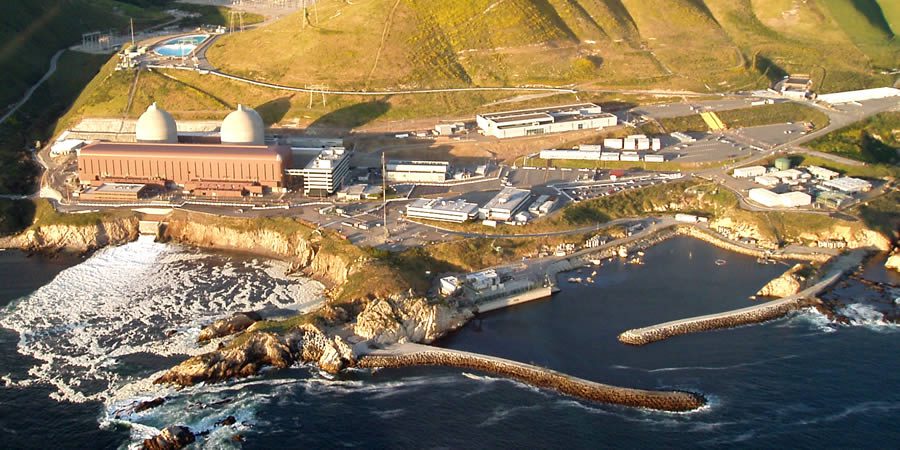 Diablo Canyon Nuclear Power Plant, California
In Chapter 3 we saw that radioactive decay of elements like uranium in the Earth’s crust was partly responsible for geothermal heat. Uranium, however, can also be used as a source of energy in its own right—not from radioactive decay heat (although this has been used as an energy source in satellites), but from the heat of nuclear fission. From its origins in the development of nuclear weapons in the 1940s, nuclear fission power has been the most controversial of all energy sources, which makes it particularly difficult to forecast its future. Controversy has embroiled all aspects of nuclear power: the safety of reactors, the extent of uranium resources, the effects on health of low levels of ionising radiation, the likelihood of nuclear weapons proliferation, and the effectiveness of various nuclear waste disposal methods.
Most reactors operating today are of a type that use very little of the energy potentially available from nuclear fission of the fuel. Some efficiency improvements can be made by raising operating temperatures and leaving the nuclear fuel in the reactor for longer, but if nuclear power is to have a long-term future as a major energy source, the presently-used thermal reactors must be seen as only a transition technology to so-called fast reactors, which, it is claimed, can extend the world’s limited resources of uranium by perhaps a factor of 30 [36]. If a major shift to nuclear energy demands construction of breeder reactors, the experience gained in the first half century of nuclear power plant design will be of much less use.
Because nuclear energy is an established technology, this chapter looks in detail at the operation of nuclear plants, and the numerous problems they have en-counted. It also examines the prospects for both fast and fusion reactors, new technologies, which, it is claimed, can alleviate many of the difficulties facing present reactor designs.
Managed & Built by I2M Consulting, LLC | © 2010-
