

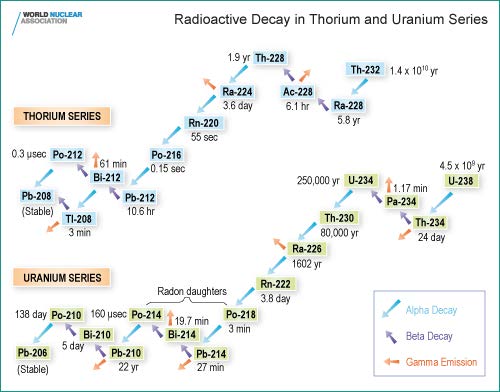
Technologically Enhanced Naturally Occurring Radioactive Materials (TENORM) contamination in U.S. oil production waste came to the attention of industry and government in 1986. During routine well work in Mississippi, barium sulfate scale in tubing was found to contain elevated levels of radium-226 and thorium-232. Surface disposal of radioactive sludge/scale and produced water (as practiced in the past) could have led to ground- and surface-water contamination.
Those at risk could include oil and gas maintenance workers and nearby residents or office workers. This reference guide is an update to the 2008 Naturally Occurring Radioactive Materials (NORM) Guidance Document and Summary of State Regulations for NORM in Oil and Gas. In IOGCC’s continuing effort to ensure that the latest information is available, volunteers of a subcommittee of the Environment and Safety Committee reviewed the 2008 document and determined that updates were warranted.
One big change is that this updated reference guide uses the term “TENORM” to mean technologically enhanced naturally occurring radioactive materials. “NORM” or naturally occurring radioactive materials is any of the radionuclides or radioactivity present in soils, rocks, and materials since the formation of the earth and undisturbed as a result of human activities. NORM occurs everywhere in the environment. When NORM is disturbed or altered from natural settings or present in a technologically enhanced state due to human activities, the material is known as TENORM.
“Technologically enhanced” refers to a relative increase in radionuclide concentrations above background radiation levels as a result of changes to the radiological, physical, and chemical properties of the radioactive material. Oil and gas TENORM are materials that are technologically enhanced due to oil and gas activities.
Radium levels in the soil and rocks vary greatly, as do their concentrations in scales and sludges. The U.S Environmental Protection Agency (EPA) indicates that radiation levels may vary from background soil levels more than 4 becquerels per gram (Bq/g), or several hundred picocuries per gram (pCi/g). The
variation depends on several factors, including concentration and identity of the radionuclides; chemistry of the geologic formation; and characteristics of the production process.
A 1988 publication estimates that 30% of conventional domestic oil and gas wells produced some TENORM. In surveys of production wells in 13 states, the percent reporting high concentrations of radionuclides in the wells ranged from 90% in Mississippi to none or only a few in Colorado, South Dakota, and Wyoming. However, 20 to 100% of the facilities in every state reported some TENORM in heater/treaters.
Facilities in the U.S. have been characterizing the nature and extent of TENORM in oil and gas waste, evaluating the potential for exposure to workers and the public, and developing methods for properly managing these low specific-activity wastes. While the majority of TENORM waste streams generated by the oil and gas industry do not pose a risk to workers or the general public, proper handling, processing, and disposal protocols based on screening, monitoring, and analytical data can eliminate or reduce TENORM exposures to workers and the public below acceptable radiation protection levels.
Many state regulatory agencies regulate TENORM waste in oil and gas production facilities. Many of these regulations are based on Part N Subcommittee of the Conference of Radiation Control Program Directors (CRCPD) model state regulations for the control of TENORM (Part N of Suggested State Regulations for Control of Radiation, 2004). For example, the State of Texas has NORM regulations similar to the Part N regulations. Other states are evaluating the scope of TENORM wastes generated within their boundaries to determine whether new TENORM regulations, or updates to existing regulations, are necessary.
This document provides information related to that effort. Other changes in this reference guide include updates to the discussion of health risks from exposures and environmental impacts; the science behind exemption levels; remediation technologies; final disposition or disposal options; regulatory and regulatory developments or implementation; safety training; data collection and analysis; and jurisdiction and enforcement coordination with other agencies.
This document also includes updated information on operations associated with unconventional oil and gas exploration and production, which combine horizontal drilling with enhanced stimulation. These unconventional operations have changed the profile of oil and gas wastes – both in terms of radioactivity and volumes produced.
This reference guide provides thoughtful and feasible solutions based on the best available information from various sources, including radiation protection authorities. For example, the CRCPD’s E-42 Task Force published a Review of TENORM in the Oil and Gas Industry in June of 2015, which includes recommendations related to radiological, environmental, regulatory, and health and safety issues to address changes in TENORM issues after 2003, centering on unconventional oil and gas exploration.
Managed & Built by I2M Consulting, LLC | © 2010-
