

Davies and 6 co-authors reported in 2020 that mobilization of large volumes of bedrock, regolith and soil has long been a characteristic feature of metal mining. Prior to the 20th century this was most efficiently achieved through harnessing the motive power of water. Large-scale water use in mining produced waste sands, gravels and silts that were flushed downstream, triggering changes in stream and floodplain morphology and function.
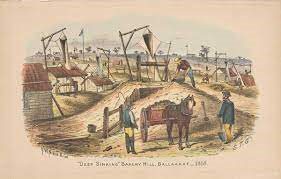
During the 19th century the shift from artisanal to industrialized mining resulted in a rapid increase in the scale and extent of environmental change. The authors presented the results from their multi-disciplinary research program investigating the environmental effects of 19th-century gold mining on waterways in south-eastern Australia.
Archaeological and geospatial landscape survey are combined with historical data modelling and geomorphological analysis to examine the extractive processes that produced sediment in headwater regions and how this influenced fluvial processes operating on downstream waterways and floodplains. Our case study of the Three Mile- Hodgson Creek system on the Ovens (Beechworth) goldfield in north-east Victoria indicates that miners mobilized up to 7.3 million m3 of sediment in this small catchment alone.
The authors concluded that tailings dams and sludge channels in the subject catchment area contain important archaeological evidence for early attempts to manage industrial waste.
Managed & Built by I2M Consulting, LLC | © 2010-
