

Kyser and 5 co-authors reported in 2009 that in the third uranium exploration cycle from 2003 to 2009, over 600 projects spent about $5.75 billion on uranium exploration and deposit delineation. During this period, more than 400 new junior companies were formed or changed their focus to raise over $2 billion for uranium exploration.
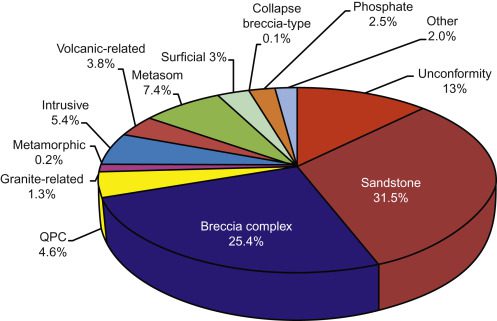
Uranium deposits are mined using three broad types of mining methods: open pit, underground, and in situ leaching. Exploration for mineral commodities, including uranium, typically uses extensive, systematic geophysical and geochemical surveys that cover very large areas, often entire countries. The "roll-front" model, which represents the underground shape and orientation of uranium ore deposits within sedimentary rocks, is an effective way to pinpoint where the best ore is located.
They concluded that because U deposits are geochemical anomalies, they are best discovered using strategies that integrate geochemistry as a significant part of the exploration repertoire. Exploration for U deposits, as with any type of deposit, requires the integration of geology, geophysics and geochemistry and must embrace technologies and research results to be effective and competitive.
Although “serendipity” will always be a factor, exploration must be more purposeful, especially as the need to find deposits undercover becomes more urgent. The last boom period was witness to limited success and in predominately brownfield areas. We should prepare ourselves for the next boom by refining models and finding key factors that promote formation of large deposits and the physical and chemical indicators of areas where deposits reside.
Managed & Built by I2M Consulting, LLC | © 2010-
