

Lufkin produced a book on ore microscopy, which has been described by several of his colleagues as a “lost art”. Lufkin agreed that is an accurate description, and an unfortunate one because it still has an important role to play in the study of ore deposits.
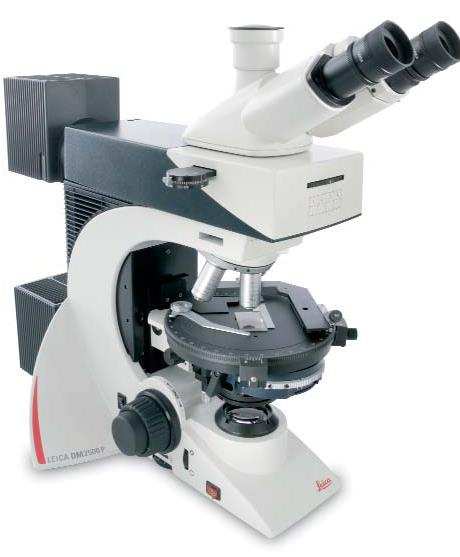 The study of ores in reflected light began many decades ago, but now only a few schools offer the subject, usually on an alternate year basis.
The purpose of this book was to introduce senior-level college and graduate students, as well as professional exploration geologists to the qualitative techniques of mineral identification in reflected light, since the vast majority of ores are opaque and do not transmit light. There are several disadvantages to studying ores, compared to the transparent silicate minerals. Over 35 years ago, Lufkin heard Paul Barton, distinguished USGS scientist and authority on ore petrology, state at a Short Course on Sulfide Mineralogy at the GSA Meetings in Miami, Florida:
“It is certain that ore textures present much information, but it is equally certain that there are few areas of scientific endeavor that are more subject to misinterpretation than the study of ore textures. The interpretation of ore textures is the most maligned, most difficult, and most important aspect of the study of these (sulfide) rocks” (Barton, 1973, p. B-3).
There are three main reasons for this pessimistic outlook on ore microscopy by a leading practitioner:
1) most sulfides and oxides are opaque to transmitted light, and therefore, have to be studied optically in reflected light; thus the important third
dimension is lost to observation (Figures 1.1 and 1.2);
2) in reflected light there are fewer optical properties with which to identify the minerals, compared to transparent phases; the three main properties by which ore minerals are identified include color, relative hardness, and isotropic/ anisotropic effects. And these parameters can be anything but distinct in many of the opaque minerals; for example, most of the opaques are not distinctively colored, but shades of gray; and
3) the sulfides are much more reactive (ie., low refractability) and subject to change under changing T-P conditions than the oxide and silicate groups (Figure 1.3). (Refractability may be defined as a mineral’s resistance to change in texture and/or composition).
Therefore, in many, if not most cases, we cannot observe the original texture that developed during ore deposition. For the above reasons then, the interpretation of ore textures becomes very challenging indeed, particularly when dealing with the wide variety of intergrowth textures that may develop,
either by exsolution, replacement, or other processes.
The greatest utilization of the microscope is that, with some practice, the economic geologist/mineralogist can readily learn to identify at least 50 of the most common ore minerals in a rather short period of time; in my course at Colorado School of Mines, Lufkin found that the typical student can identify at least 30 of the opaque minerals by sight after a week of concentrated study. With more study, the ore microscopist can take a good photomicrograph of the polished section, observe interesting textures, and work out a pretty detailed history of the deposit and the time sequence, or paragenesis of minerals
that cannot be determined in any other way!
At the same time, it should always be remembered that there are many occasions when the opaque mineral cannot be identified solely with microscopy, and one must resort to other techniques, such as x-ray diffraction (XRD), SEM, and/or electron microprobe.
[The book is well-illustrated and well written.]
Managed & Built by I2M Consulting, LLC | © 2010-
