

Brown reported in mid-January 2024 that the UK Government previously denied evidence countries with nuclear weapons favor atomic power over renewables. There is long running debate about whether nuclear power has a role in combatting the climate crisis [Actually the debate has been settled, except in the circles of wind and solar advocates.] The UK government decided last week it was vital and is planning a vast expansion. Most environmental groups remain skeptical, preferring quicker and cheaper renewables, [although the latter is not a reliable energy source, and although the O&M costs have been skyrocketing since because the operating and maintenance costs have gone under estimated and overlooked in the systems design and economic feasibility studies]
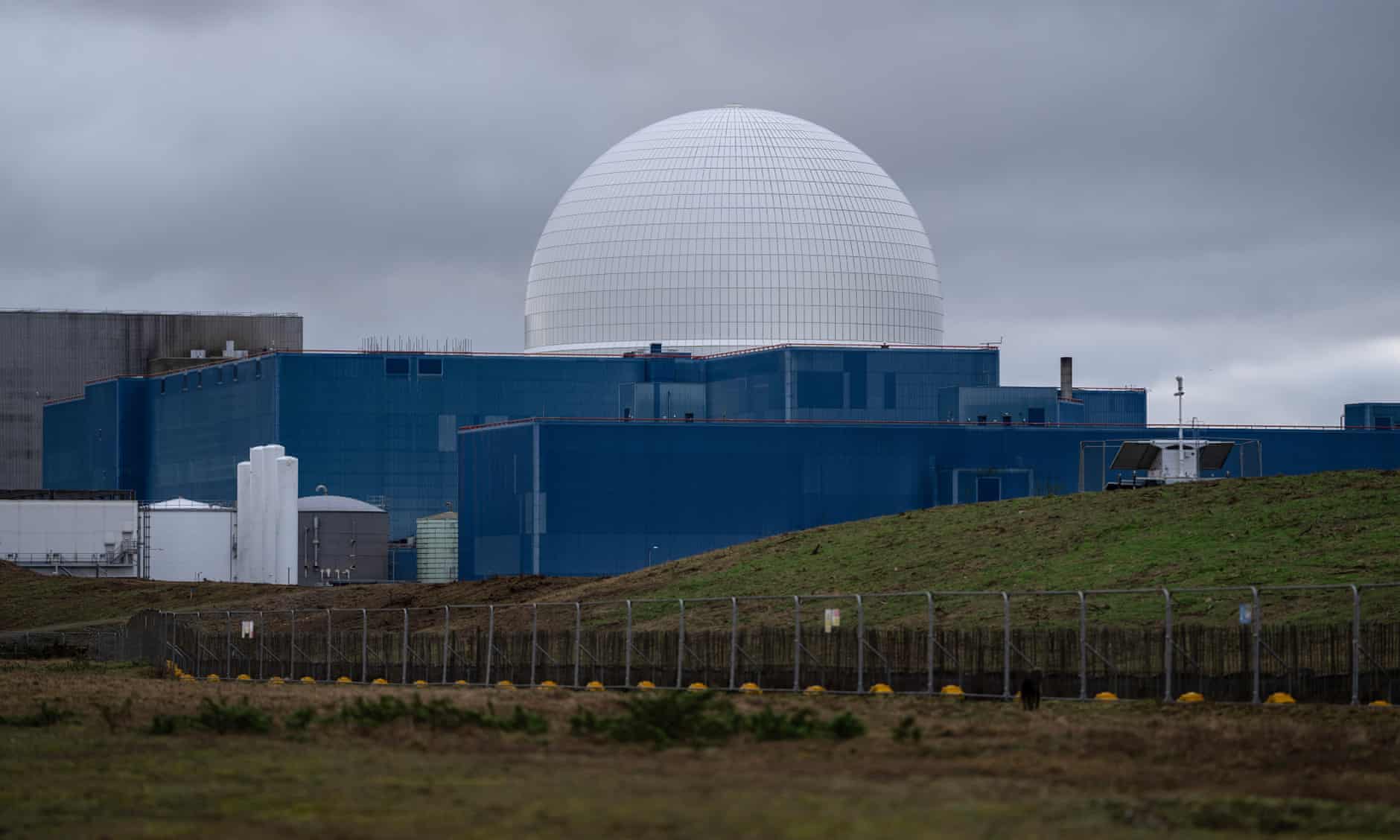
Whatever the merits of the case there was, buried deep in the government’s nuclear roadmap, a complete somersault [reversal?] on the relationship between civil and military nuclear power. Back in the 1980s and 1990s when the Guardian carried reports from Sussex University’s Science Policy Research Unit (SPRU), among others, showing there was a link between the two, the government continuously denied it. SPRU persevered with its work and noted that despite the UK’s denials, across the world it has become more obvious that states with nuclear weapons remain keen on atomic power while those without them put renewables center stage.
Last week the government’s arguments in favor of new civil nuclear power swept aside any lingering doubt its predecessors had been covering up the link. The roadmap policy document mentioned 14 times in different sections the need to continue to strengthen the existing cooperation and tie-ups between the civil and military industries to the benefit of both. The logic is to keep to a minimum the training and development costs for both the weapons and power sectors. [These speculations require confirmation of the reasons behind adding new nuclear plants to the UK energy plans.]
[Separating the two has always been important because one provides carbon-free electricity and medicines, while the other provides a weapon of massive death. Combining the two serves as a win for wind and solar advocates, and it makes it more difficult to market the former without mentioning that uranium fuel (a maximum of 7% 235U3O8) can be uprated to bomb-grade to +90% 235U using centrifuges and other complex and dangerous systems. In the past the advocates have been criticized for conflating the two, but UK has apparently blown that up.]
Managed & Built by I2M Consulting, LLC | © 2010-
