

Alekseev and Alekseev reported in late 2023 that they examined the accessory wodginite and the discovery of titanium-bearing wodginite and Fe and Ti-bearing wodginite in lithium-fluorine granites from the Abu Dabbab and Nuweibi massifs in Eastern Egypt.
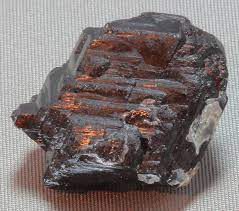
The wodginite group’s mineral association includes tantalum-bearing cassiterite and tin-bearing tantalum–niobate minerals: tantalite-(Mn), columbite-(Mn), and microlite. Three forms of wodginite crystallization were identified:
1) rims around columbite-(Mn) and tantalite-(Mn) varying from 1.5 to 21.9 µm in thickness,
2) micro-inclusions in cassiterite ranging from 5.4 to 27.0 µm in size, and
3) autonomous crystals measuring 3–124 µm in length.
Wodginite in the Nuweibi massif is mainly found in porphyritic granite of late-stage porphyry intrusion. It has a similar composition to the worldwide wodginite of rare-metal granites, but exhibits a lower content of TiO2 (average 0.54%) and is a mineral indicator of rich tantalum ore deposits. In contrast, wodginite in the Abu Dabbab massif is replaced by titanium-bearing wodginite (Ti/(Sn + BTa + Ti + Fe3+) = 0.23) and is associated with Fe and Ti-bearing wodginite. Wodginite and Ti-bearing wodginite are maximally enriched in manganese (Mn/(Mn + Fe2+ +Ca) = 0.95), expressed in all intrusive phases of the massif, and are mineral indicators of tantalum-bearing granites with associated cassiterite-quartz mineralization.
Managed & Built by I2M Consulting, LLC | © 2010-
