U.S. House Panel Advances Raft of Pro-Nuclear Bills - 2023
Nuclear Power Industry
Date posted: 11/01/23
NN reported on October 31 [after the U.S. House had by closed by the Republicans for almost 30 days, has now begun bipartisan work to move nuclear power projects along].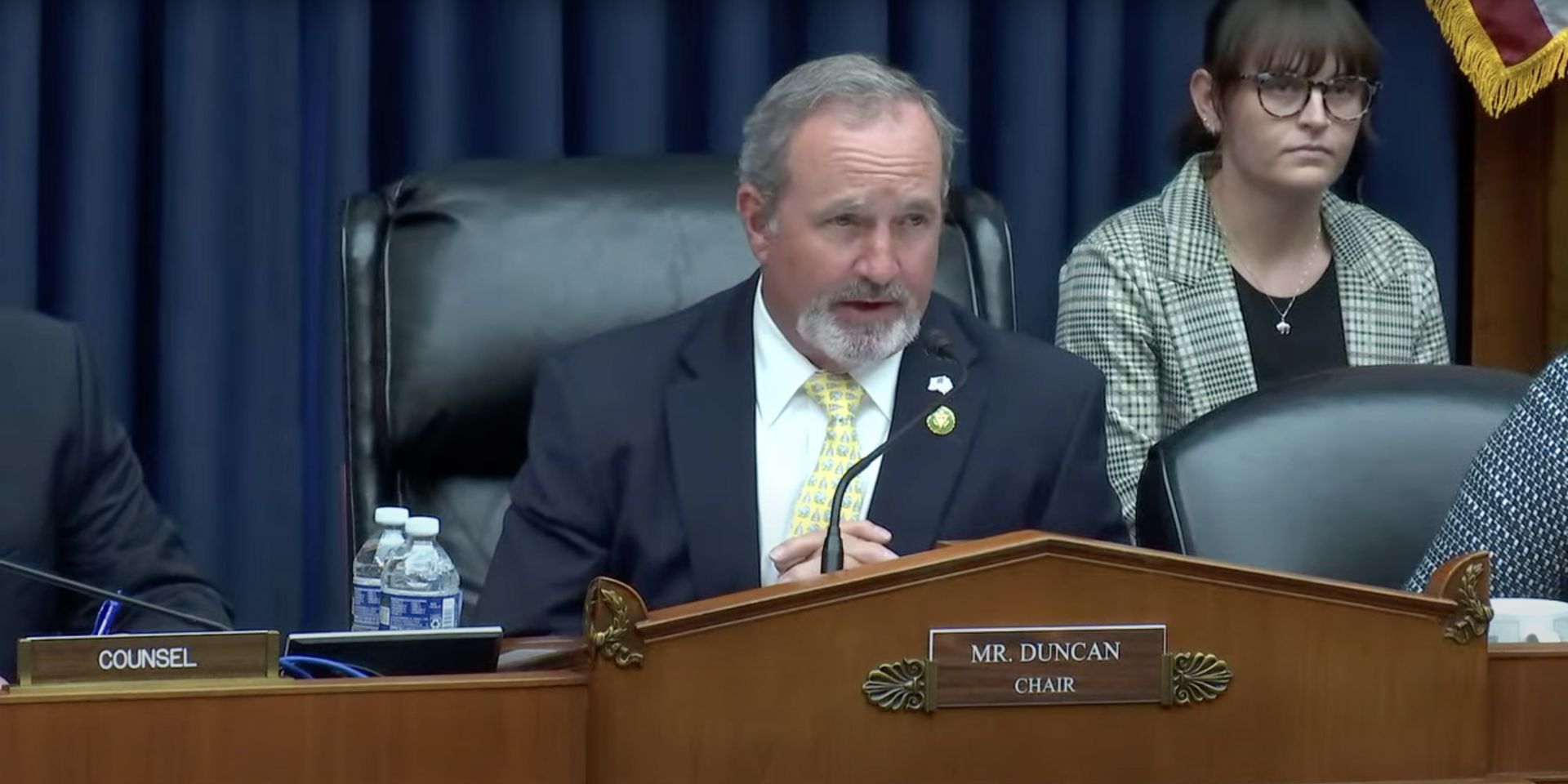

At a legislative markup session, a House Energy and Commerce subcommittee approved 17 energy bills for consideration by the full E&C committee, including 12 measures to boost and streamline the deployment of nuclear power. The nuclear-related bills cleared the subcommittee by voice vote with bipartisan support.
“Our shared goal in this committee is to advance bipartisan, durable policy that will expand nuclear energy and its benefits for the nation,” said Rep. Jeff Duncan (R., S.C.), chair of the E&C’s Energy, Climate, and Grid Security Subcommittee, in his opening remarks on October 24. “Chair Rodgers, ranking members Pallone and DeGette, and I sent a bipartisan request for information to a variety of stakeholders this past April. Based on feedback from this request and the hearings we’ve had since, it’s clear that more can be done to modernize the Nuclear Regulatory Commission and Department of Energy to advance nuclear energy in this country.”
The clean dozen: The following legislation was reported out of the subcommittee. (Additional information on the bills can be found here.)
- The Advanced Reactor Fee Reduction Act amends the Nuclear Energy Innovation and Modernization Act (NEIMA) to reduce the hourly rate for fees assessed and collected by the NRC from applicants for advanced nuclear reactor licenses.
- The Advanced Nuclear Reactor Prize Act authorizes the secretary of energy to make targeted awards to cover fees assessed by the NRC and collected from a nonfederal entity or the Tennessee Valley Authority for the first technologies that are licensed and made operational in five categories: the first advanced nuclear reactor licensed; the first advanced nuclear reactor to use isotopes derived from spent nuclear fuel as fuel for a reactor; the first advanced reactor that is part of an integrated energy system; the first advanced reactor that is used for nonelectric applications; and the first nuclear reactor licensed under the new technology-inclusive framework required by NEIMA.
- The Nuclear for Brownfield Site Preparation Act directs the NRC to identify and report on regulations, guidance, or policy necessary to license and oversee nuclear facilities at brownfield sites, including sites with retired fossil fuel facilities, and at retired fossil fuel sites, where one or more electric generation facilities are retired or scheduled to retire.
- The Strengthening American Nuclear Competitiveness Act requires the secretary of energy to assess and report on recommendations regarding requirements, policies, and practices that affect the competitiveness of civilian nuclear technology and the role of emerging U.S. technologies on these activities.
- The NRC Mission Alignment Act directs the NRC to update its mission statement to include that licensing and regulation of nuclear energy activities be conducted in a manner that is efficient and does not unnecessarily limit the potential for nuclear energy to improve the general welfare or benefits of nuclear energy to society.
- The Nuclear Licensing Efficiency Act amends the Atomic Energy Act (AEA) to require that the NRC provide efficient, timely, and predictable reviews and proceedings for licensing and for the modification of its rules and regulations. It would require the NRC, when licensing a facility where there are already licensed nuclear facilities, to use information that was part of the licensing basis for those facilities to the extent practicable.
- The Advanced Nuclear Deployment Act amends NEIMA to authorize funding to the NRC to support preapplication activities and early-site permit reviews for advanced reactors that will be located on either DOE or critical national security infrastructure sites.
- The Modernize Nuclear Reactor Environmental Reviews Act directs the NRC to submit a report and conduct a rulemaking to facilitate efficient, timely environmental reviews of nuclear reactor applications pursuant to the National Environmental Policy Act (NEPA). The report would include a description of actions taken to implement recent amendments to NEPA and to consider additional measures to facilitate timely reviews while meeting the obligations of NEPA, including through use of categorical exclusions, environmental assessments, and generic environmental assessments, as well as process efficiencies to reduce duplicative reviews.
- The Advancing Nuclear Regulatory Oversight Act directs the NRC to submit a report that examines any changes, including temporary changes, the agency made to its regulatory oversight processes or procedures during the COVID-19 pandemic and that explains how the NRC will incorporate resulting lessons identified into its oversight processes and procedures to become more efficient.
- The Global Nuclear Energy Assessment and Cooperation Act directs the secretary of energy to conduct a comprehensive study of the global status of civilian nuclear energy and supply chains and to recommend measures to increase the role of U.S. nuclear energy in strategic energy policy, to remove regulatory barriers to development of U.S. nuclear supply chains, to align nuclear energy with national security objectives, and to mitigate foreign competitors’ strategic use of civil nuclear for geopolitical purposes.
- The Nuclear Fuel Security Act provides authorizations for the secretary of energy to increase domestic production of HALEU by certain annual quantities and to support availability of supplies of domestically produced, converted, and enriched uranium for existing reactors, as necessary, particularly to respond to supply disruptions. (The Senate’s fiscal year 2024 National Defense Authorization Act contains its version of the Nuclear Fuel Security Act—introduced this February by Sens. Joe Manchin [D., W.Va.], John Barrasso [R., Wyo.], and Jim Risch [R., Idaho]. At this writing, the two chambers have yet to hammer out a compromise NDAA bill to send to the president.)
- The Strengthening the NRC Workforce Act amends the AEA to authorize an exception to the Office of Personnel Management’s competitive hiring process for the NRC to recruit individuals, provided the NRC chair certifies a severe shortage of candidates or a critical hiring need to carry out NRC responsibilities.
Related Articles from Source:
- House approves FY 2024 energy funding bill
With a new speaker finally seated, the GOP-led House of Representatives recently passed the fiscal year 2024 Energy and Water Development and Related Agencies Appropriations Act (H.R. 4394) in... - Westinghouse launches microreactor “accelerator hub”
To help speed up commercialization of its eVinci microreactor, Westinghouse Electric Company this week launched a new design and manufacturing facility for the project near downtown... - White House backs HALEU enrichment with a request for $2.2 billion
Just a few hours after a new Speaker of the House of Representatives was elected on October 25, the White House sent a list of funding priorities for “critical domestic needs” to Congress... - HALEU enrichment begins at the American Centrifuge plant in southern Ohio
American Centrifuge Operating (ACO), a subsidiary of Centrus Energy, has started enriching uranium hexafluoride gas to high-assay low-enriched uranium (HALEU) levels at the Department of... - Nuclear’s fortunes looking up, says IAEA
The International Atomic Energy Agency has released the 2023 edition of its annual look at nuclear’s prospects in the coming decades—Energy, Electricity and Nuclear Power Estimates for the... - NRC moves ahead on HALEU enrichment, rulemaking, and guidance
The Nuclear Regulatory Commission is requesting comments on the regulatory basis for a proposed rule for light water reactor fuel designs featuring high-assay low-enriched uranium (HALEU),... - Atoms: Get more from your fuel
From the pages of the September 2023 issue of Nuclear News.For decades, more energy has meant more fuel: fossil fuels.But nuclear fuel—unlike coal, oil, or even natural uranium—is a feat... - U.S. supports Ghanaian nuclear program with $1.75 million
The U.S. Embassy in Ghana last week announced $1.75 million to support establishing the West African nation as a small modular reactor regional training hub and center of excellence for the... - Recap of UT Baker School's forum on nuclear energy's future
The Baker School of Public Policy and Public Affairs at the University of Tennessee—Knoxville hosted a presentation titled “A Conversation of the Future of Nuclear Energy in the United... - Lawmakers request info from agencies on NEPA reforms
A trio of GOP House lawmakers is asking four federal agencies to report on their progress toward implementing National Environmental Policy Act (NEPA) reforms included in the 2023 Fiscal... - SHINE looks to license used fuel recycling facility
Managed & Built by I2M Consulting, LLC | © 2010-