

Coates, Caron and McCabe opined in mid-2022 that Small Modular Reactors (SMR) and Advanced Reactors (AR) are now shaping a new nuclear energy landscape, with designs no longer just targeting electricity generation. Vendors are exploring markets outside electricity supply, which exploit reactor features not offered by conventional large-scale nuclear power plants (NPP).
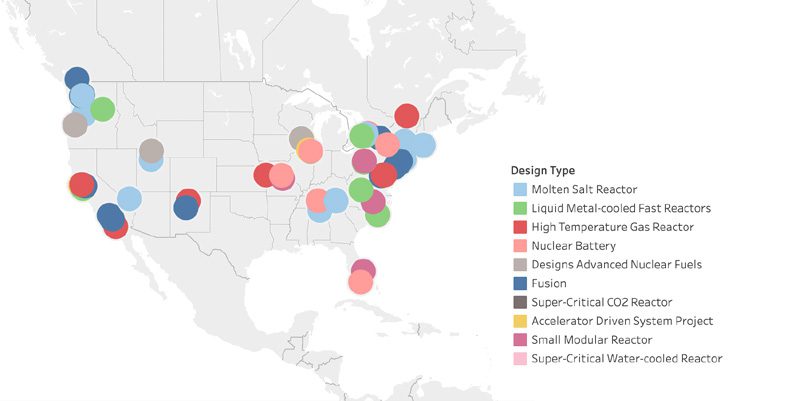 SMRs Under Development in the United States
This whitepaper examines potential off-grid market applications of SMRs and ARs that could provide more than just power to remote communities and mining projects in Canada, as well as to U.S. military operations. Argentina, China and the Russian Federation are on course to begin commissioning the world’s first SMRs, and more additional designs are advancing through licensing and construction.
North America will likely be the next to deploy an SMR, as the U.S. is looking to 2026 for the start of operations while Canada pursues its progressive regulatory regime to start up demonstration reactors in the same year. As SMR and AR deployments become commercial realities, potential off-grid markets are opening up off the back of reactor applications that go beyond electricity supply. Russia’s KLT-40S pressurized-water reactor (PWR) has been developed for deployment on a floating nuclear power plant. However, its design also enables cogeneration of power and heat to remote, off-grid communities, power generation on oil rigs, as well as desalination. Likewise, China’s ACP100 is designed for deployment in remote areas that have limited energy supply options or a lack of industrial infrastructure. Its applications also include desalination, cogeneration and district heating, as well as steam production.
The SMR has great potential to bring stable and sustainable energy to hundreds of remote, off-grid communities in the provincial north of Canada, a region
that runs from British Columbia to Labrador. All but one or two of these communities use very high-cost energy sources since most are in areas without ready access to transportation networks and bringing in diesel fuel is expensive. These communities endure extreme cold weather conditions for the majority of the year and they are seriously concerned about the increasingly urgent need to secure reliable and affordable energy.
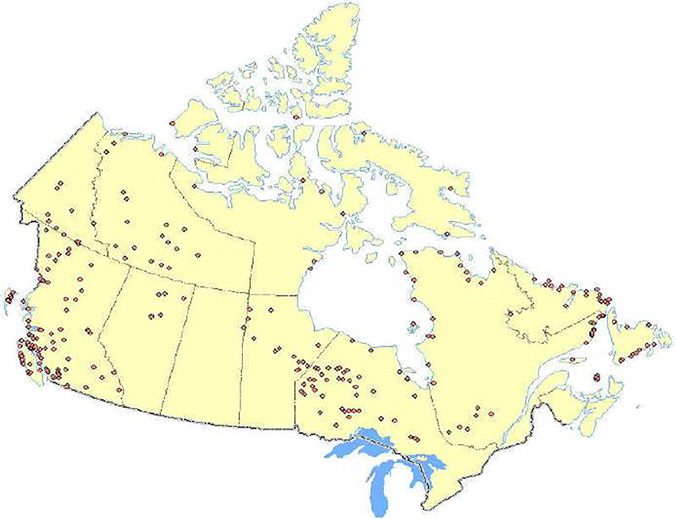 SMRs Under Development in Canada
Although renewable energy sources are also possible long-term solutions, hydroelectric power is an expensive proposition while early solar power
installations in the far north have not worked due to the accumulation of snow and ice. Similarly, the geography and geology do not easily lend themselves to installing wind power.
Therefore, even though the SMR is not yet a practical solution to meeting energy demand in Canada, it has potential to provide a cheap and reliable long-term solution to remote northern communities. Further to issues raised during initial consultations with stakeholders and potential SMR end-users
reported by the Canadian Small Modular Reactor Steering Committee in its roadmap published in 2018, some communities are now reaching out and actively looking for engagement with the government and private industry.
People living in the remote north are attending industry conferences and asking for more information and support to learn more about SMR technology. Government agencies are engaging in conversations about a full range of potential solutions, which include but are not exclusively about nuclear
power. In addition, SMR vendors and private companies are cultivating interest in SMRs rather than cultivating markets. Conversations between remote communities and industry are still in at a preliminary stage rather than exploring new features or tailoring designs to meet specific needs. Industry is anxious not to over-sell and is proceeding at an appropriate pace that ensures the science, the engineering, regulations and economics are right. The
latter is a fair concern due to the capital expenditure necessary to install an SMR, which is not yet a proven technology.
It is likely that the first implementations will be for remote mining companies and other potential end-users will watch the SMR at work for a year or two before confirming it is a real solution. Alternative applications are being actively explored, with heat generation almost equal to electricity in terms of the potential benefits of SMRs. Heat is central to people living in temperatures that drop 40°C to 50°C below zero during winters that stretch from end-
September to end-May.
There is also a lot of interest in natural resource development in the remote north and an SMR could dramatically change the economics in the region for projects including hydroelectric development, mining, and oil-sands development. The interesting challenge in the case of the north is that because all the energy has been so dear for so long and people are heavily reliant on diesel, there is not yet an entrepreneurial culture waiting to exploit all the SMR opportunities. The high cost of electricity and inconsistency of supply makes it really expensive to live in the north. However, the overall cost of living will diminish with a reliable, safe and cheaper supply of energy and electricity. Also, current business opportunities to develop food factories or greenhouses
to grow fresh produce are limited to the ability to capture waste heat from buildings. The dynamics change completely if there is an SMR and a flood of
interest and creativity is likely once the standard and obvious uses of the reactor have been justified and proven.
The most important part of the route to installing an SMR in a remote community is that it controls the project. This is a big issue for First Nations generally
in that they are tired of relying on everybody else all the time. The other part of the process relevant to most places is that there is pressure on so many issues beyond power and energy that although people are very interested in the energy side of an SMR, they are not far enough along to be looking at nuclear as part of the puzzle overall.
The authors concluded that SMRs and ARs present the nuclear industry with diverse market opportunities, especially for those vendors willing to engage with potential end-users so designs can be tailored to specific applications. Business models that include reactor innovations which adapt to and exploit those niche off-grid sectors with an urgent need for safe, reliable and sustainable energy, have a head start in the marketplace. Bringing down costs will also prove attractive to clients and consumers, while additional features will enhance the commercial viability of SMRs and ARs. Once the benefits of off-grid applications are clearly demonstrated, demand is likely to grow rapidly (more on SMRs and Large Nuclear Power Plants).
On an international scale, governments, industries and communities that are actively seeking carbon-free energy sources to reduce their carbon emissions
have an expanding range of advanced reactor technology that not only meets their demand for power, but also offers a widening range of applications. SMRs and ARs have the potential to secure a long-term future for the nuclear industry and its supply chain if the technology can be proven in a rapidly evolving energy landscape. This future will be further enhanced if alternative applications are fully developed to attract more alternate end users.
Managed & Built by I2M Consulting, LLC | © 2010-
