

There are 1,902,184 properties in Texas that have greater than a 26% chance of being severely affected by flooding over the next 30 years. This represents 26% of all properties in Texas. In addition to damage on properties, flooding can also cut off access to utilities, emergency services, transportation, and may impact the overall economic well-being of an area.
CURRENT PROTECTIONS
Flood Protection Measures for Texas
Communities that adapt to higher risks can limit damage and lower flood insurance costs. Texas is already investing in flood risk reduction projects, but more may be needed. Learn more about solutions.
Adaptation measures: 498
Known adaptation measures: 566,542 Properties protected by adaptation.
WHERE TO START
Steps for Communities to Enhance Flood Resilience
Lowering flood risk starts with higher standards. Some places plan to a higher standard (a “500 year” standard) that lowers the number of properties at severe risk. Protecting homes to this level would reduce the risk to the 1,902,184 severely affected properties.
Flood Event: 100 year --- chance of flooding in a given year: 1.0%, but chance of flooding over 30 years: 26%
Flood Event: 500 year --- chance of flooding in a given year: 0.2%, but chance of flooding over 30 years: 6%
CURRENT & FUTURE RISK
Anticipating Changes in Flood Risk for Texas
Deeper floods from major events, like hurricanes, are less likely to occur, but affect more properties than more shallow flood events, like heavy rains.
Properties at risk:
1.88M
Today
1.92M
In 30 years
Note: 566,542 properties in this area are protected by an adaptation. While the above projections take into account this reduction, risks may substantially increase in the event of failure.
Properties at risk
1.88M
Today
1.92M
In 30 years
Note: 566,542 properties in this area are protected by an adaptation. While the above projections take into account this reduction, risks may substantially increase in the event of failure.
HISTORIC FLOODS
Historical Flood Events in Texas
Based on a recreated model of the flood, 770,910 properties were impacted by Hurricane Harvey in September, 2017.
Hurricane Harvey: September 2017 770,910 Properties impacted in Texas
Note: 566,542 properties in this area are protected by an adaptation.
ENVIRONMENTAL CHANGES
Understanding the Factors Behind Changing Flood Risks
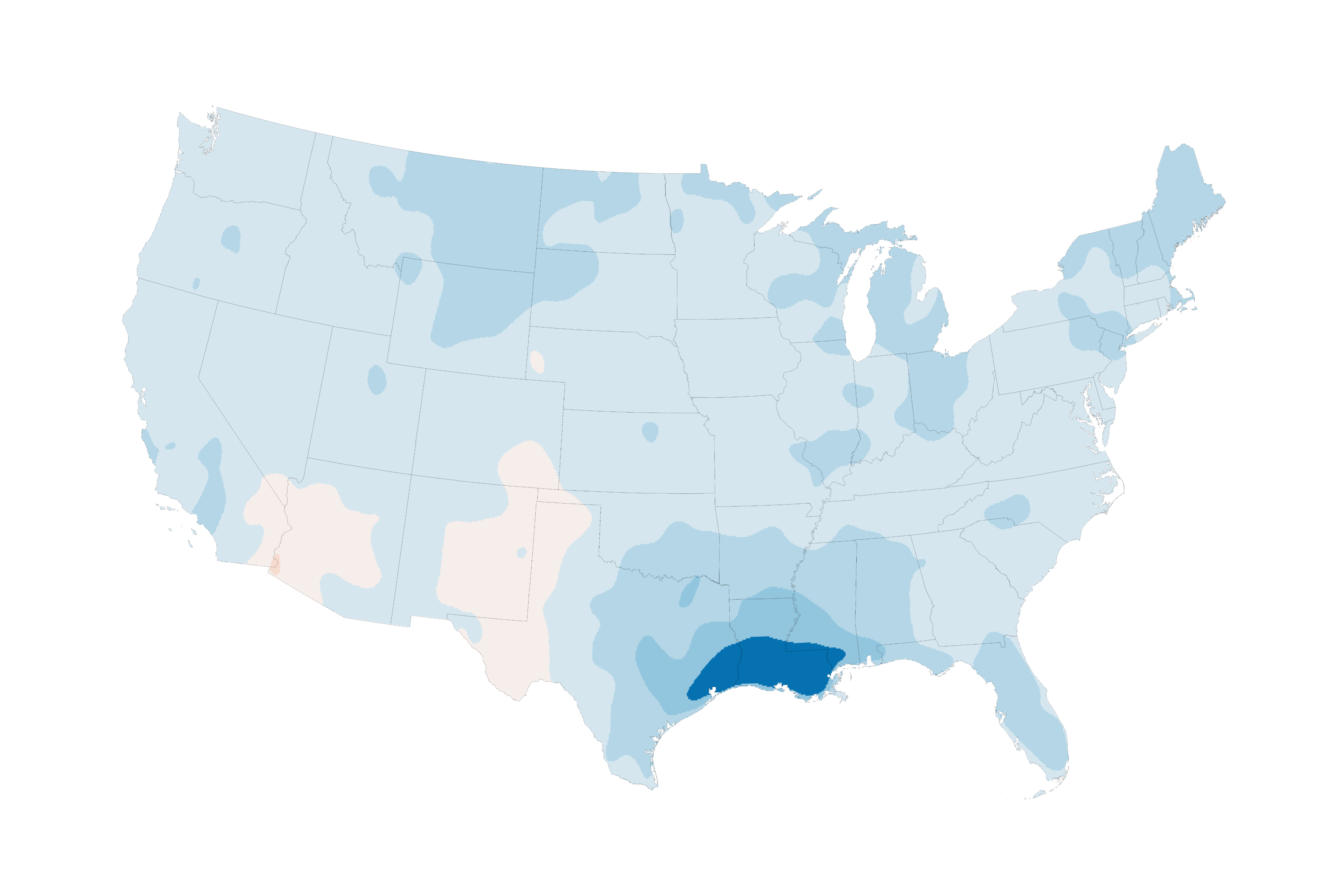
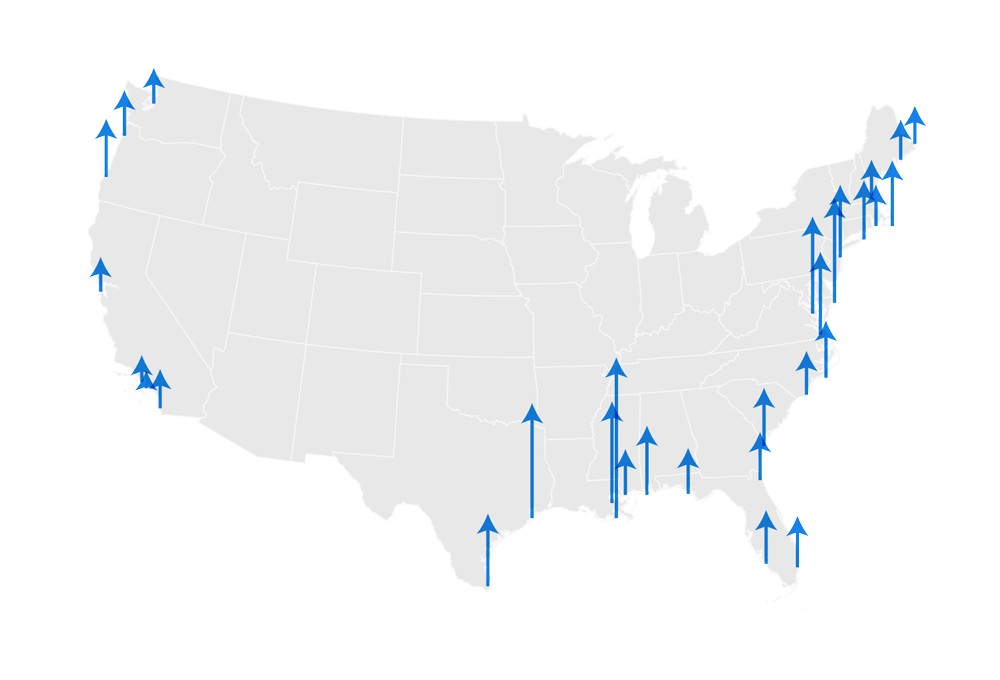
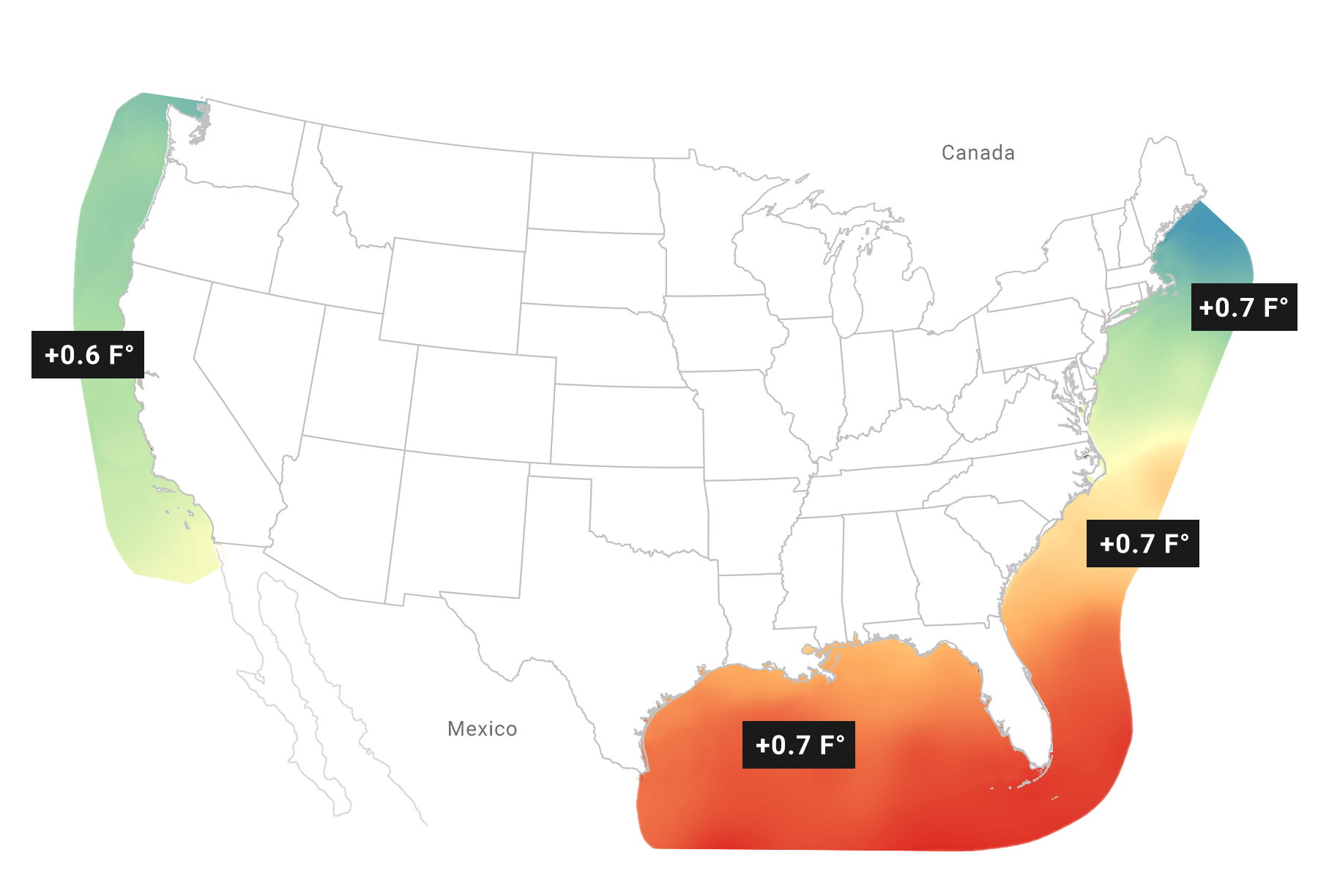
A changing environment means higher seas, new weather patterns, and stronger storms. As the atmosphere warms, there is more evaporation and more water available when it rains. A warmer atmosphere also means warmer oceans, which can intensify flooding from hurricanes and offshore storms. Sea level rise also increases coastal flood risks, as higher seas mean there’s more water available when high tides and coastal storms cause flooding.
Learn more about the environmental factors increasing flood risk here.
Precipitation Change
Sea Level Rise
Sea Surface Temperatures
Source: The Global Downscaled Projections for Climate Impacts Research (GDPCIR) dataset.
COMMUNITY SOLUTIONS
Additional Community Measures to Address Flooding
Individuals, mayors, governors, and Congress can work together to build protections before flooding, build back stronger after flooding, and create plans that future-proof communities.
Green
Green infrastructure is a cost-effective and sustainable flood management approach that gathers and removes water at its source.
Grey
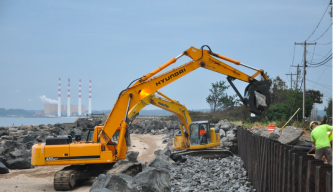
Grey infrastructure uses concrete or steel structures to control flooding. These engineered structures are costly, take time to build, and require regular maintenance.
Resilience
Resilience measures are community-wide, non-structural strategies that help people bounce back more quickly after floods.
Explore more solutions here.

Managed & Built by I2M Consulting, LLC | © 2010-
