

Shellenberger opined on January 2, 2023 that CBS 60 Minutes last night, brodcast that scientists claimed that humans are causing a “sixth mass extinction” and that we would need the equivalent of five planet earths for all humans to live at current Western levels.
“No, humanity is not sustainable to maintain our lifestyle — yours and mine,” claimed Stanford University biologist Paul Ehrlich. “Basically, for the entire planet, you'd need five more Earths. It’s not clear where they're gonna come from.”
Both claims are wrong and have been repeatedly debunked in the peer-reviewed scientific literature.
The assertion that “five more Earths” are needed to sustain humanity comes from something called the Ecological Footprint calculation. Shellenberger debunked it 10 years ago with a group of other analysts and scientists, including the Chief Scientist for The Nature Conservancy, in a peer-reviewed scientific journal, PLOS Biology. We broke down the six measures that comprise the Ecological Footprint and found that five of the six, including food and forestry, were either in balance or surplus. The only thing out of balance was humankind's carbon emissions.
But reducing carbon emissions requires neither that rich nations become poor nor that poor nations remain poor. Rather, it simply requires that we move toward energy sources that produce fewer carbon emissions, namely natural gas and nuclear.
To its credit, CBS notes how wrong Ehrlich has been over the years. “The alarm Erlich sounded in 1968 warned that overpopulation would trigger widespread famine,” noted CBS News’ Scott Pelley. “He was wrong about that. The Green Revolution fed the world.” But Pelley goes on to claim that Ehrlich is right about humans causing a “sixth mass extinction.” He’s not. He’s wrong about that, too.
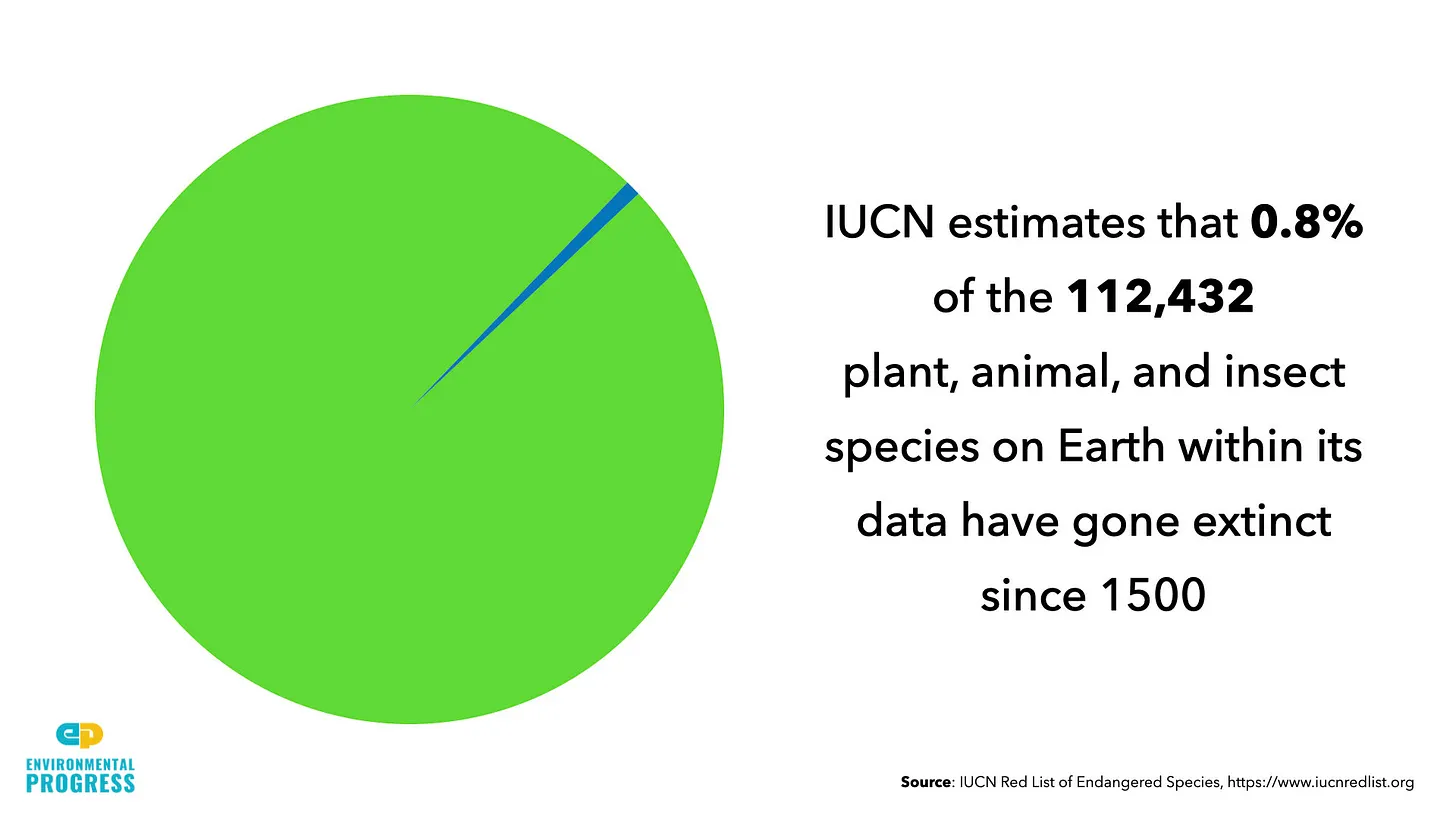
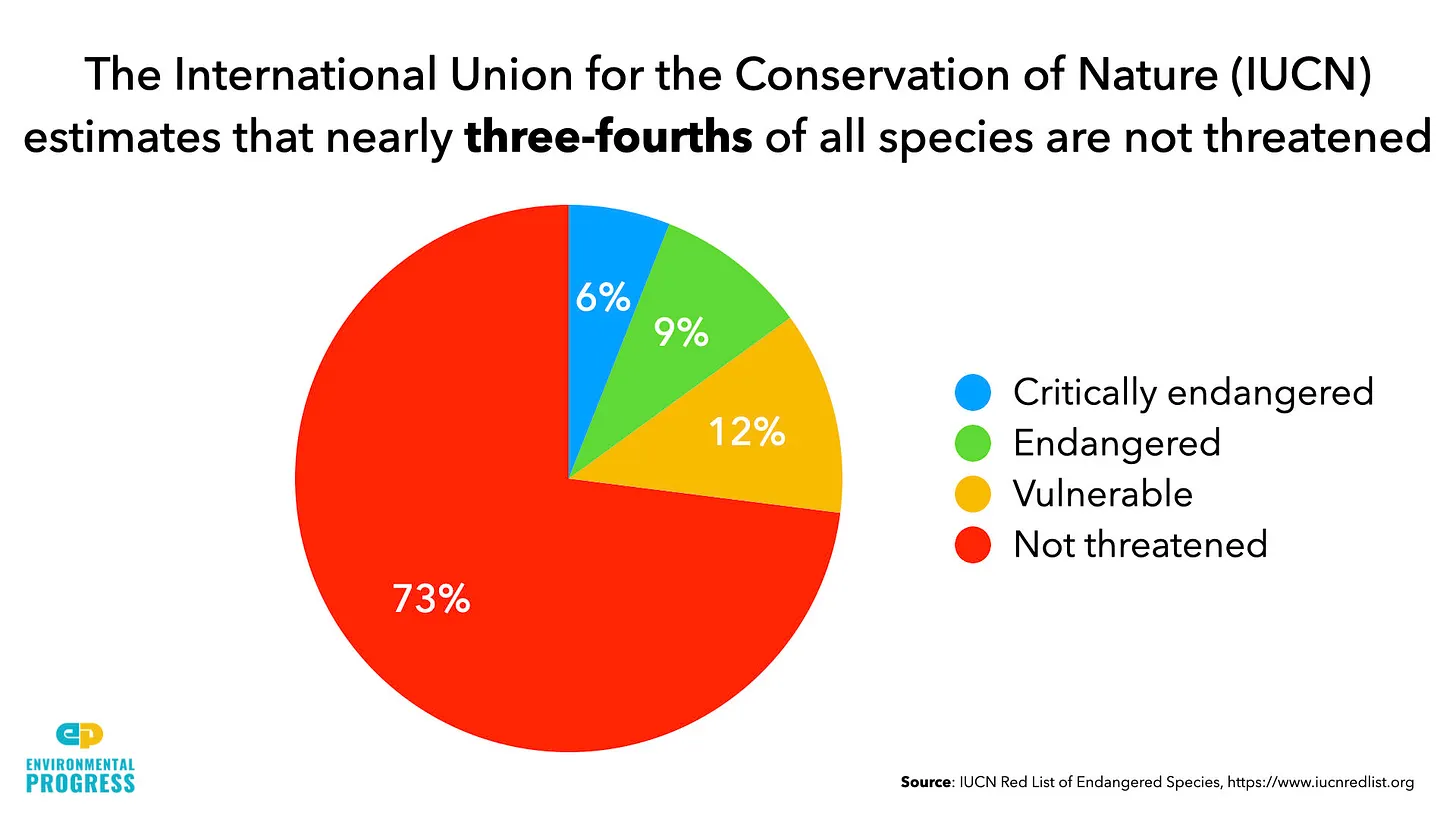
To cause a “mass extinction,” humans would need to be wiping out 75-90% of all species on Earth. The International Union for Conservation of Nature (IUCN), the main scientific body that tracks species, says just 6% of species are critically endangered, 9% are endangered, and 12% are vulnerable to becoming endangered. Further, the IUCN has estimated that just 0.8% of the 112,432 plant, animal, and insect species within its data set have gone extinct since 1500. That’s a rate of fewer than two species lost every year for an annual extinction rate of 0.001%.
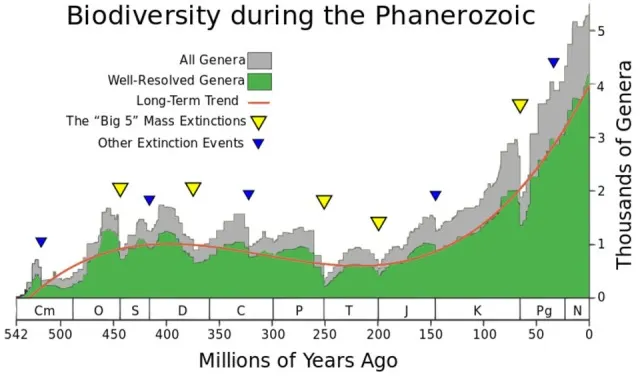
The huge increase in biodiversity during the last 100 million years massively outweighs the species lost in past mass extinctions. The number of genera, a measure of biodiversity more powerful than species count alone, has nearly tripled over the course of this time period. After each of these past five mass extinctions, the biodiversity in the fossil record dips between 15 to 20%. But each extinction is followed by much larger growth.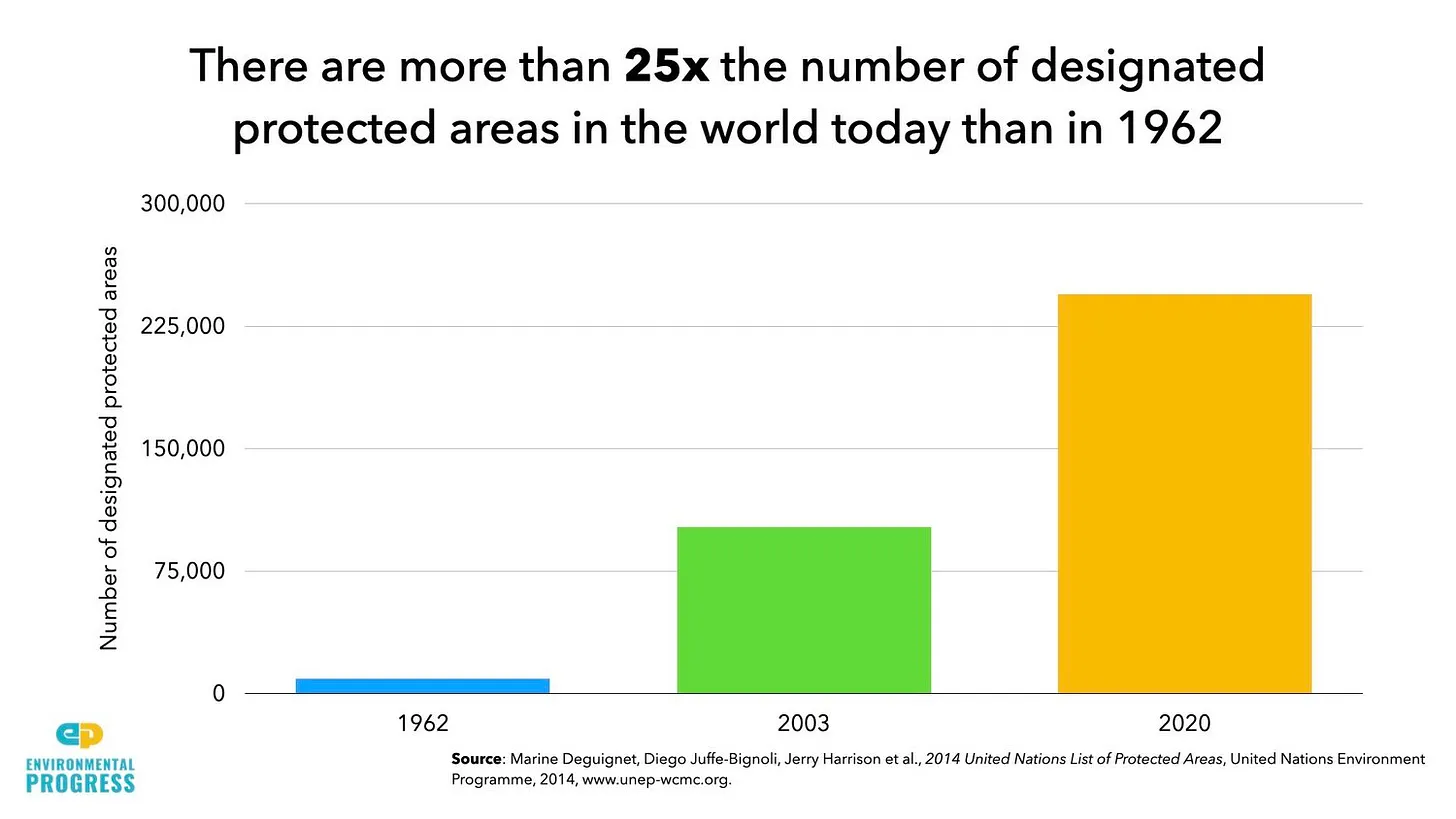
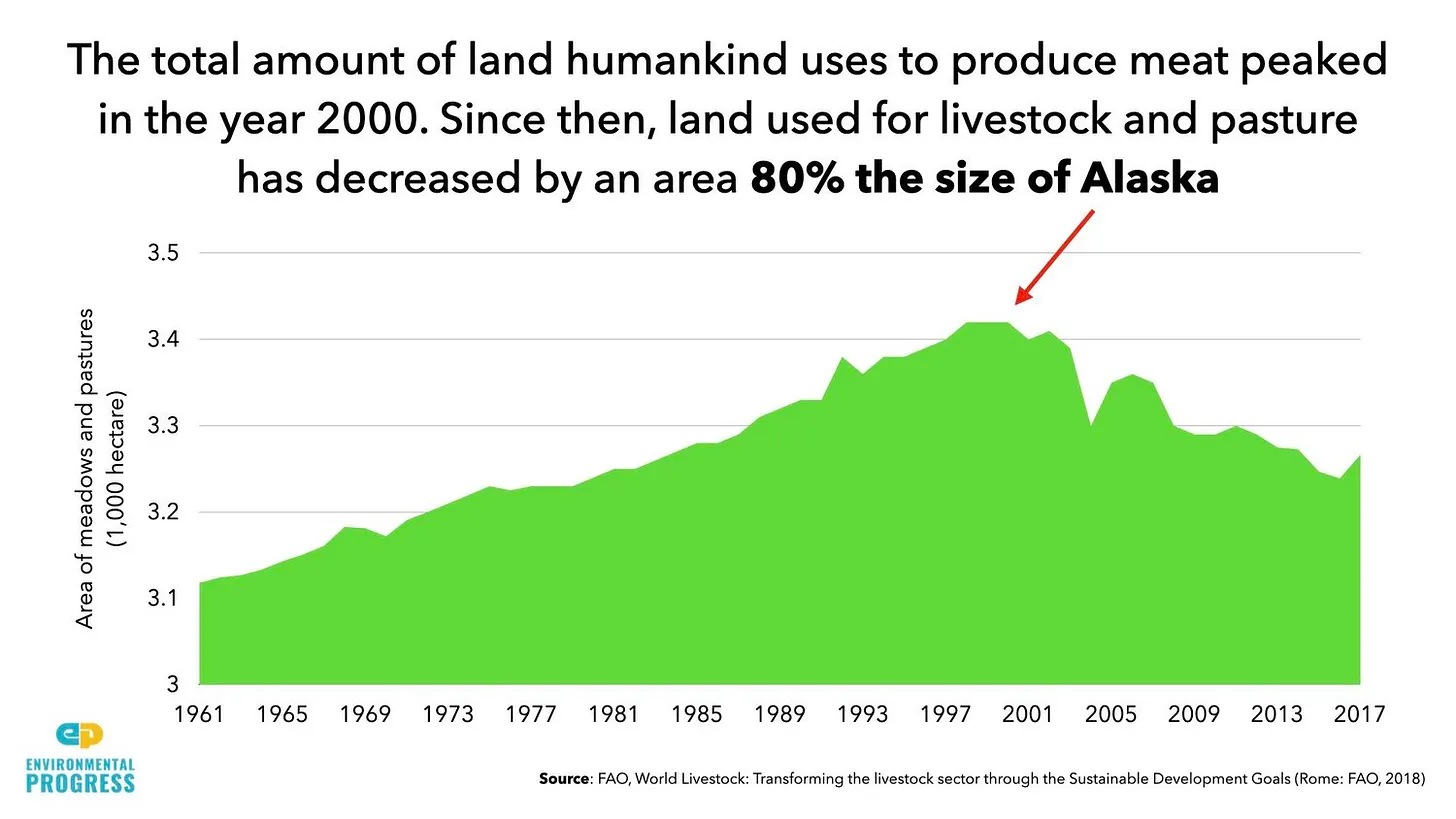
Conservationists, it turns out, are skilled at maintaining small populations of animals, from yellow-eyed penguins of New Zealand to mountain gorillas of central Africa. The real challenge is expanding the size of their populations. But it’s not the case that humankind has failed to conserve habitat. By 2019, an area of Earth larger than the whole of Africa was protected, an area that is equivalent to 15 percent of Earth’s land surface. The number of designated protected areas in the world has grown from 9,214 in 1962 to 102,102 in 2003 to 244,869 in 2020.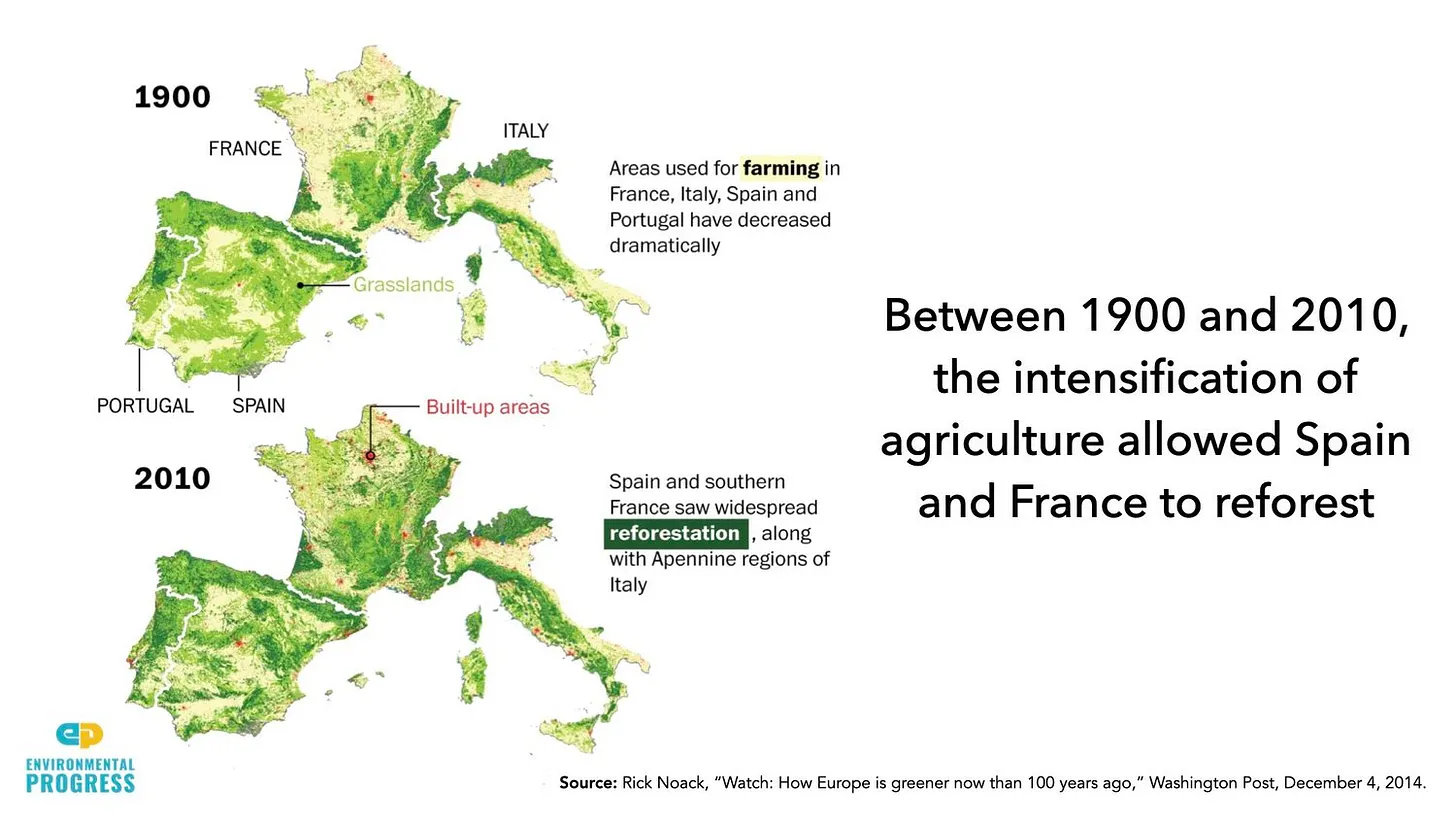 In fact, in rich nations around the world, wild areas are coming back, thanks to the more efficient use of land for producing food in general and meat in particular. Humans use about half of the ice-free land surface of the Earth. Of that half, we use about half for meat production, which is one the greatest threats to endangered species. But the amount of land humans use for meat has declined massively in recent decades, nearly an area the size of Alaska.
But if we’re not creating a “sixth mass extinction,” or using up “five earths,” why do so many people, including “60 Minutes,” believe we are? The United Nations promoted wood fuel in the 1987 report,
“Our Common Future,” authored by Gro Brundtland, the former
Prime Minister of Norway, a nation which just a decade earlier
had grown wealthy thanks to its abundant oil and gas reserves.
The scientific basis for the “sixth mass extinction” claim comes from a 2019 report from something called the Intergovernmental Science-Policy Platform on Biodiversity and Ecosystem Services (IPBES). The rate of species extinction “is already at least tens to hundreds of times higher than it has averaged over the past 10 million years,” said the IPBES summary. Earth could lose 40 percent of all amphibians, 30 percent of marine mammals, 25 percent of mammals, and 20 percent of reptiles, IPBES warned.
Elizabeth Kolbert, author of the 2014 book "The Sixth Extinction: An Unnatural History," writes, “By disrupting these systems—cutting down tropical rainforests, altering the composition of the atmosphere, acidifying the oceans—we’re putting our own survival in danger.” But claims that the extinction rate is accelerating and that “half a million terrestrial species . . . may already be doomed to extinction” all rest upon something called species area model, which has been debunked.
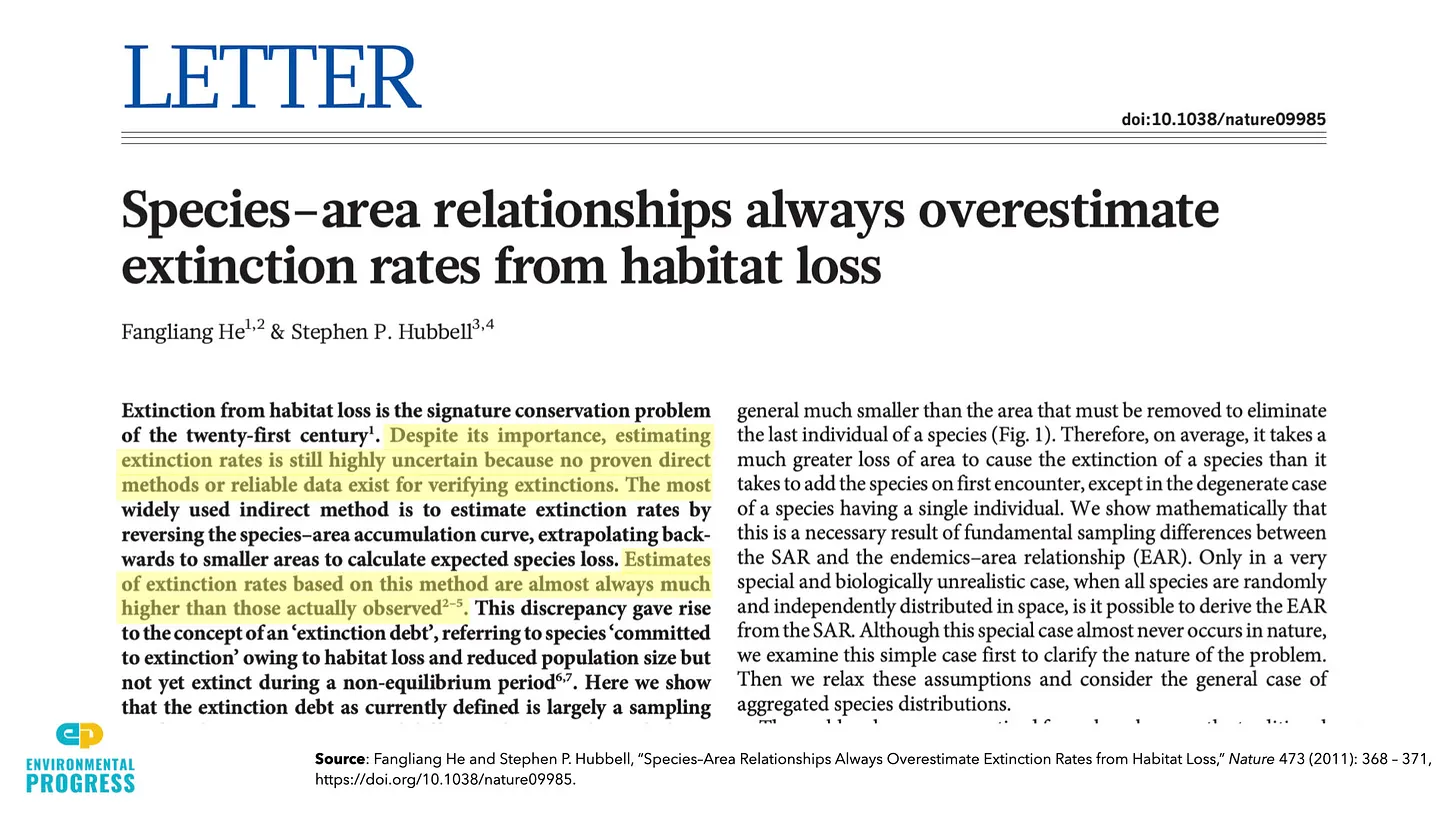
Conservation biologists Robert H. MacArthur and E. O. Wilson created the model in 1967. This model rests on the assumption that the number of new species that migrate to an island would decline over time. The idea was that as more species competed for declining resources, fewer would survive. In 2011, the British scientific journal Nature published an article titled “Species-Area Relationships Always Overestimate Extinction Rates from Habitat Loss.” It showed that extinctions “require greater loss of habitat than previously thought.”
Around the world, the biodiversity of islands has actually doubled on average, thanks to the migration of “invasive species.” The introduction of new plant species has outnumbered plant extinctions one hundredfold. The “invaders” didn’t crowd out “natives,” as Wilson and MacArthur feared.
“More new plant species have come into existence in Europe over the past three centuries than have been documented as becoming extinct over the same period,” noted a British biologist.
Kolbert acknowledges the failure of the species-area model. “Twenty-five years later it’s now generally agreed that Wilson’s figures . . . don’t match observation,” she writes. Kolbert says the model’s failure “should be chastening to science writers perhaps even more than to scientists.” And yet it was not chastening enough for her to modify her book’s title claim.
In truth, nobody needed to know the model’s fine workings to know it was wrong. If the species area model were true, then half of the world’s species should have gone extinct during the last two hundred years, notes an environmental scholar.
What about the claim that “five Earths” are needed to sustain humanity? How did the creators of the Ecological Footprint hide what they had done? By implying that the way to solve climate change is by expanding forest cover to absorb industrial carbon emissions. All of the supposed "overshoot" of resources is from carbon emissions that the Footprint converts into forest area needed to offset the emissions. The Footprint thus leads readers to ignore all the other ways of absorbing or never emitting CO2.
It gets worse. Different forests absorb carbon dioxide at different rates over time. But the Ecological Footprint arbitrarily chooses a single number to represent the rate of carbon uptake for all forests around the world for all time. The Ecological Footprint method is best known as "garbage in, garbage out."
The implication of the Ecological Footprint is thus either that everyone in wealthy developed nations like the US, Europe, and Australia should try to live like Cubans and Nicaraguans or that we should convert all of the world's old-growth forests to fast-growing tree farms, which would be a disaster for endangered species.
The Ecological Footprint and Earth Overshoot Day were created at the same time that Western European nations and the United Nations embraced a neo-Malthusian approach to environmental problems. In a 1987 report called “Our Common Future,” the UN denounced nuclear energy and insisted that poor nations should use wood fuel more sustainably. “The wood-poor nations must organize their agricultural sectors to produce large amounts of wood and other plant fuels.”
The lead author of “Our Common Future” was Gro Brundtland, former Prime Minister of Norway, a nation which just a decade earlier had become fabulously wealthy thanks to its abundant oil and gas reserves.
Figures like Brundtland promoted the idea that poor nations didn’t need to consume much energy, which turned out to be howlingly wrong. But Energy consumption is as tightly coupled to per capita GDP today as it was when today’s rich nations were themselves poor. There is no rich nation that depends primarily on wood for energy, just as there is no poor nation that depends primarily on fossil fuels or nuclear.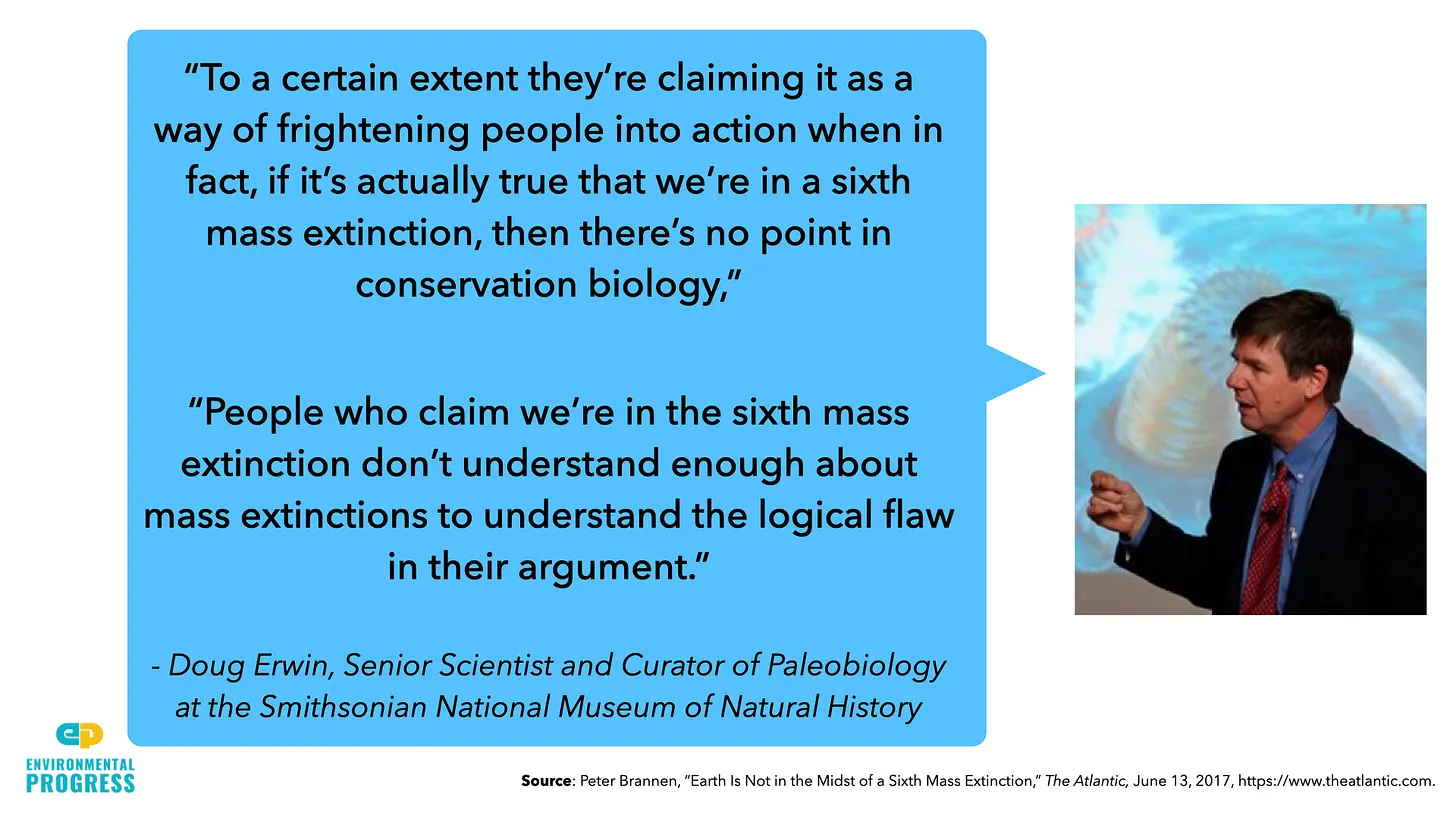
The real problem is not extinction but rather the decline in animal populations and their overall habitat. The populations of wild mammal, bird, fish, reptile, and amphibian species declined by roughly half between 1970 and 2010. The worst impacts were in Latin America, which saw an 83 percent decline in wild animal populations, and in South and Southeast Asia, which saw a 67 percent decline. This reality has led some environmentalists to claim species are threatened by fossil fuels and economic growth. In 2014, the Oscar-nominated documentary film Virunga depicted the possibility of oil-drilling in Virunga Park as a major threat to the mountain gorilla, and thus mountain gorilla tourism. But Virunga was misleading. “The areas where the gorillas are have never had prospects of oil,” primatologist Alastair McNeilage, of Wildlife Conservation Society, told me:
“The gorillas are on an escarpment so there is no danger or desire of drilling or disturbing the area where the gorillas live,” he said. “And nobody makes that clear. A lot have fought oil companies in the name of the gorillas, but the oil companies just aren’t interested in those areas.”
The real threat to the gorillas and other wildlife isn’t economic growth and fossil fuels, Shellenberger learned during his visit in December 2014, but rather poverty and wood fuels. In the Congo, wood and charcoal constitute more than 90 percent of residential primary energy. “The place where gorillas are located,” noted his guide, “is near villages that need charcoal for cooking.”
Many scientists believe the erroneous claims of a sixth mass extinction undermine conservation efforts. “To a certain extent they’re claiming it as a way of frightening people into action when in fact, if it’s actually true that we’re in a sixth mass extinction, then there’s no point in conservation biology,” noted one scientist. “People who claim we’re in the sixth mass extinction don’t understand enough about mass extinctions to understand the logical flaw in their argument.”
Managed & Built by I2M Consulting, LLC | © 2010-
